

 Select a city
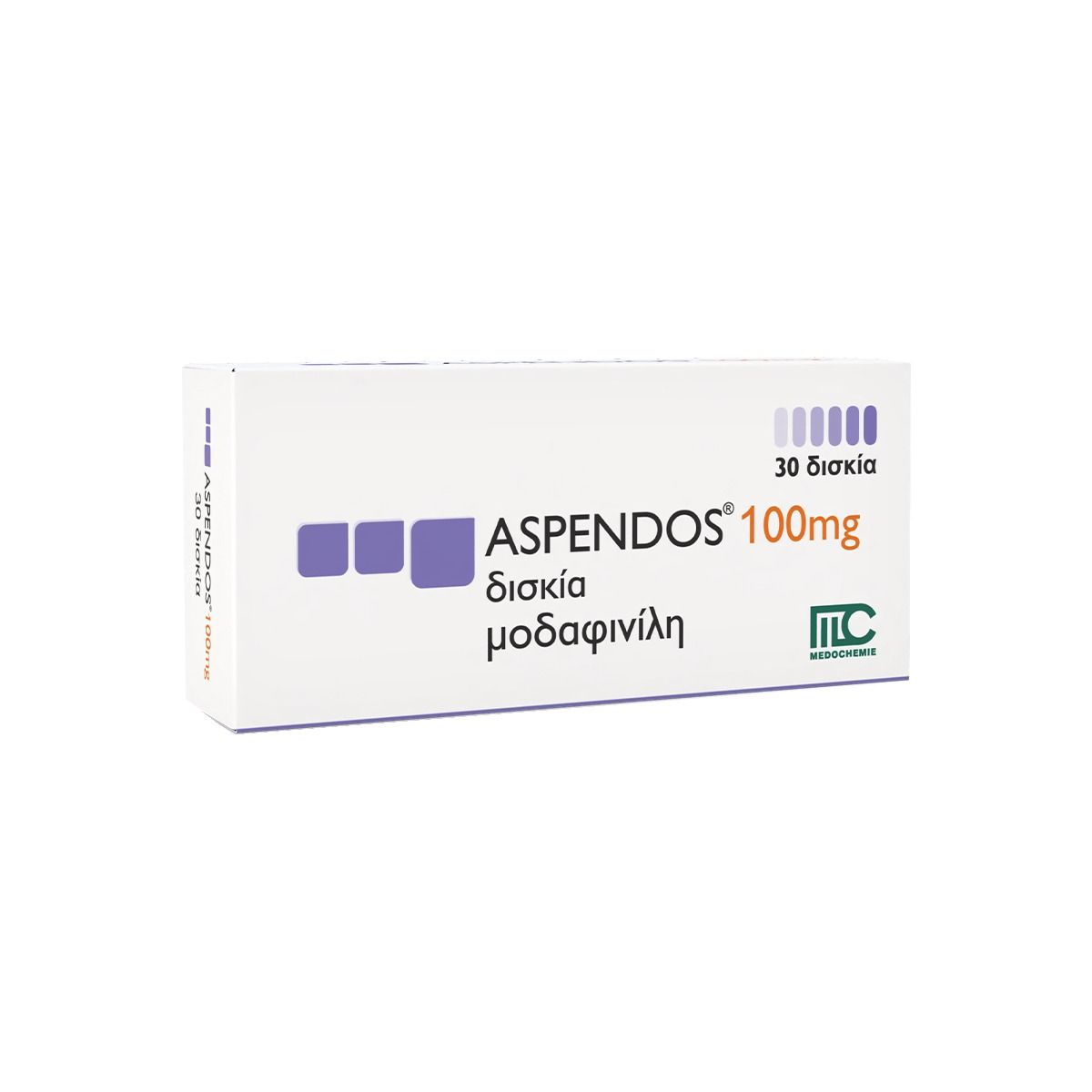
Aspendos - Aspendos Oral 100mg 30 Tablets
| Status | Select a city |
| Brand country |  Cyprus |
| Quantity and shape | 30 tablets |
| Generics | modafinil |













- Description
- Reviews
Aspendos l00 mg tablets
Modafinil
Package leaflet: Information for the user
Read carefully before you start taking this medicine this leaflet, because it contains important information for you.
- Keep this leaflet. You may need to read it again.
- If you have any further questions, ask your doctor or pharmacist.
- This medicine has been prescribed for you only. Do not pass it on to others. It may harm them even if their symptoms are the same as yours.
- If you experience any side effects, talk to your doctor or pharmacist. This includes any possible side effects not listed in this leaflet. See section 4.
What is in this leaflet:
1. What Aspendos is and what it is used for
2. What you need to know before you take Aspendos
3. How to take Aspendos
4. Possible side effects
5. How to store Aspendos
6. Contents of the pack and other information
1. What Aspendos is and what it is used for
The active substance in the tablets is modafinil.
Modafinil can be taken by adults who suffer from narcolepsy to help them stay awake. Narcolepsy is a condition that causes excessive daytime sleepiness and a tendency to fall asleep suddenly in inappropriate situations (sleep attacks). Modafinil may improve your narcolepsy and reduce the likelihood of sleep attacks, but there may be other ways to improve your condition that your doctor will advise you about.
2.What you need to know before you take Aspendos
Do not take Aspendos:
• if you are allergic to modafinil or any of the other ingredients of this medicine (listed in section 6).
• If you have an irregular heart rhythm.
• If you have uncontrolled, moderate or severe high blood pressure (hypertension).
Warnings and precautions
Talk to your doctor before taking Aspendos if:
• You have heart problems or high blood pressure. Your doctor should regularly check these indicators during treatment with Aspendos.
• You have ever had depression, low mood, anxiety, psychosis (loss of contact with reality), mania (excessive excitement or feeling of excessive happiness) or bipolar disorder, because Aspendos may worsen your condition.
• You have kidney or liver problems (as you will need to take a lower dose of the medicine).
• You have had alcohol or drug-related problems in the past.
Children and adolescents
Children under 18 years of age are not allowed to take the medicine.
Other issues you may discuss with your doctor or pharmacist
• Some individuals taking this medication experienced suicidal or aggressive thoughts or behavior. Immediately tell your doctor, if you notice signs of depression, aggression or hostile attitude towards others, suicidal thoughts or other changes in behavior (see section 4 ).
You can ask a family member or close friend, to help you notice signs of depression or other changes in behavior.
• With prolonged use of this medication, dependence may develop; if you need to take it for a long time, your doctor will regularly check, whether it is still the best choice for you.
Other medicines and Aspendos
Tell your doctor or pharmacist, if you are taking, have recently taken or might take any other medicines.
Aspendos and some other medications may interact with each other, due to which your doctor may change the doses you take. This is especially important, if you take Aspendos together with the following medications:
• Hormonal contraceptives (among them contraceptive pills, implants, intrauterine devices (IUDs) and patches). During treatment with Aspendos and for two months after completion, you must use other birth control methods, because Aspendos reduces their effectiveness.
• Omeprazole (used for acid reflux, indigestion or ulcers).
• Antiviral medicines for HIV infection (protease inhibitors, e.g. indinavir or ritonavir).
• Cyclosporine (used to prevent rejection after an organ transplant, or to treat arthritis and psoriasis).
• Medicines for epilepsy (e.g. carbamazepine, phenobarbital or phenytoin).
• Medicines for depression (e.g. amitriptyline, citalopram or fluoxetine) or anxiety (e.g. diazepam).
• Blood thinners (e.g. warfarin). Your doctor will monitor your blood clotting times during treatment.
• Calcium channel blockers or beta-blockers used for high blood pressure or heart conditions (e.g. amlodipine, verapamil or propranolol).
• Statins to lower cholesterol levels (e.g. atorvastatin or simvastatin).
Pregnancy, breast-feeding and fertility
If you are pregnant or breastfeeding, think you may be pregnant, or are planning to have a baby, ask your doctor or pharmacist for advice before taking this medicine. It is suspected that taking modafinil during pregnancy may cause birth defects.
Talk to your doctor about the methods of contraception that will be suitable for you during treatment with Aspendos (and for two months after stopping it), or if you have any other questions or concerns.
Driving and using machines
Aspendos may cause blurred vision or dizziness (affects up to 1 in 10 patients).
If you experience these symptoms, or if you feel very sleepy while taking the medicine, do not drive or use machines.
Aspendos contains lactose.
If you have been told by your doctor that you have an intolerance to some sugars,
contact your doctor before taking this medicinal product.
Aspendos contains sodium.
This medicine contains less than 1 mmol (23 mg) sodium per tablet, that is to say essentially 'sodium-free'.
3. How to take Aspendos
Always take this medicine exactly as your doctor has told you. Check with your doctor or pharmacist if you are not sure.
The tablets should be swallowed whole with water.
The recommended dose is:
Adults:
The recommended dose is 200 mg per day. The preparation can be taken once a day (in the morning) or in two divided doses (100 mg in the morning and 100 mg in the afternoon).
In some cases, the doctor may decide to increase the daily dose to 400 mg.
Elderly patients (over 65 years of age)
The recommended dose is 100 mg per day. The preparation can be taken once a day (in the morning) or in two divided doses (50 mg in the morning and 50 mg during the day).
The doctor will increase the dose (up to a maximum of 400 mg per day) only if you do not have liver or kidney problems.
Adults with severe kidney and liver diseases
The recommended dose is 100 mg per day.
The doctor will regularly review your treatment to ensure it is suitable for you.
If you take more Aspendos than you should
Taking too many tablets may cause nausea, restlessness, disorientation, confusion, agitation (nervousness, restlessness), anxiety, or overexcitement. Sleep disturbances, diarrhea, hallucinations (perceiving things or events that are not there), chest pain, changes in heart rhythm, or increased blood pressure may also occur.
Immediately contact the emergency department of the nearest hospital or tell your doctor or pharmacist. Take this leaflet and any remaining tablets with you.
If you forget to take Aspendos:
Do not take a double dose to make up for a forgotten dose; take the next dose at the usual time. If you have any further questions on the use of this medicine, ask your doctor or pharmacist.
4. Possible side effects
Like all medicines, this medicine can cause side effects, although not everybody gets them.
Stop taking the medicine and immediately contact a doctor if:
• You suddenly have difficulty breathing, hear wheezing or swelling of the face, mouth or throat.
• You notice a rash or itching (especially if it affects your whole body). A severe rash may cause blistering or peeling of the skin, as well as ulcers in the mouth, eyes, nose or genitals. You may also have a high temperature (fever) and abnormal blood test results.
• You feel any change in your mental health and general condition. Symptoms may include:
• Mood swings or abnormal thoughts
• Aggression or hostility,
• Memory loss or confusion,
• Feeling of extreme happiness,
• Overexcitement or hyperactivity,
• Anxiety or nervousness,
• Depression, suicidal thoughts or behavior,
• Agitation or psychosis (loss of contact with reality, which may include delusions or perceiving non-existent events/objects), feeling of detachment or decreased feelings, or personality disorder.
Other side effects include the following:
Very common side effects (may affect more than 1 in 10 people):
•Headache
Common side effects (may affect up to 1 in 10 people):
• Dizziness.
• Drowsiness, severe fatigue or sleep disturbance (insomnia).
• Feeling of heartbeat (may be faster than usual).
• Chest pain.
• Facial flushing.
• Dry mouth.
• Loss of appetite, feeling of nausea, abdominal pain, indigestion, diarrhea or constipation.
• Weakness.
• Numbness or tingling sensation in hands and feet.
• Blurred vision.
• Changes in liver function indicators in blood tests (increased levels of liver enzymes).
• Irritability.
Uncommon side effects (may affect up to 1 in 100 people):
• Back, neck and muscle pain, muscle weakness, leg muscle cramps, joint pain, muscle twitching or trembling.
• Dizziness (sensation of spinning).
• Difficulty moving muscles smoothly or other movement-related problems, muscle stiffness, impaired coordination.
• Hay fever symptoms, including itchy or runny nose and watery eyes.
• Increased cough, asthma or shortness of breath.
• Skin rash, acne or itchy skin.
• Sweating.
• Blood pressure changes (high or low), heart function disorders (ECG changes), irregular or unusually slow heartbeat.
• Difficulty swallowing, tongue swelling or mouth ulcers.
• Flatulence (gas accumulation), regurgitation (bringing up stomach contents), increased appetite, weight changes, thirst or altered sense of taste.
• Vomiting.
• Migraine.
• Speech problems.
• Diabetes mellitus with increased blood sugar levels.
• High blood cholesterol levels.
• Swelling of hands and feet.
• Sleep disturbances or unusual dreams.
• Decreased sexual desire.
• Nosebleeds, sore throat, or inflammation of the nasal cavity (sinusitis).
• Visual disturbances or dry eyes.
• Changes in urine composition or frequent urination.
• Menstrual cycle disorders.
• Abnormal blood test results indicating changes in the number of leukocytes (white blood cells).
• Restlessness and increased motor activity.
Reporting of side effects
If you experience any side effects, talk to your doctor or pharmacist. This includes any possible side effects not listed in this leaflet. By reporting side effects you can help provide more information on the safety of this medicine.
5. How to store Aspendos
Keep out of the reach and sight of children.
Store below 30°C.
Do not use this medicine after the expiry date which is stated on the carton and blister. The expiry date refers to the last day of that month.
Do not throw away any medicines via wastewater or household waste. Ask your pharmacist how to throw away medicines you no longer use. These measures will help protect the environment.
6. Contents of the pack and other information
What Aspendos contains:
• The active substance is modafinil. Each tablet contains 100 mg modafinil.
• The other ingredients are: lactose monohydrate, maize starch, croscarmellose sodium (E468), aluminium magnesium silicate, povidone K 90 (E1201), talc (E553b), magnesium stearate (E572).
Dispensing rule:
Pharmaceutical product group II, dispensed with form №3 prescription
What Aspendos looks like and contents of the pack
Aspendos is a white, round, biconvex tablet with a diameter of 9 mm.
The tablets are packed in PVC/AL blisters; available in packs of 20, 30, 60, and 90 tablets.
Translated by AI


