

 Select a city
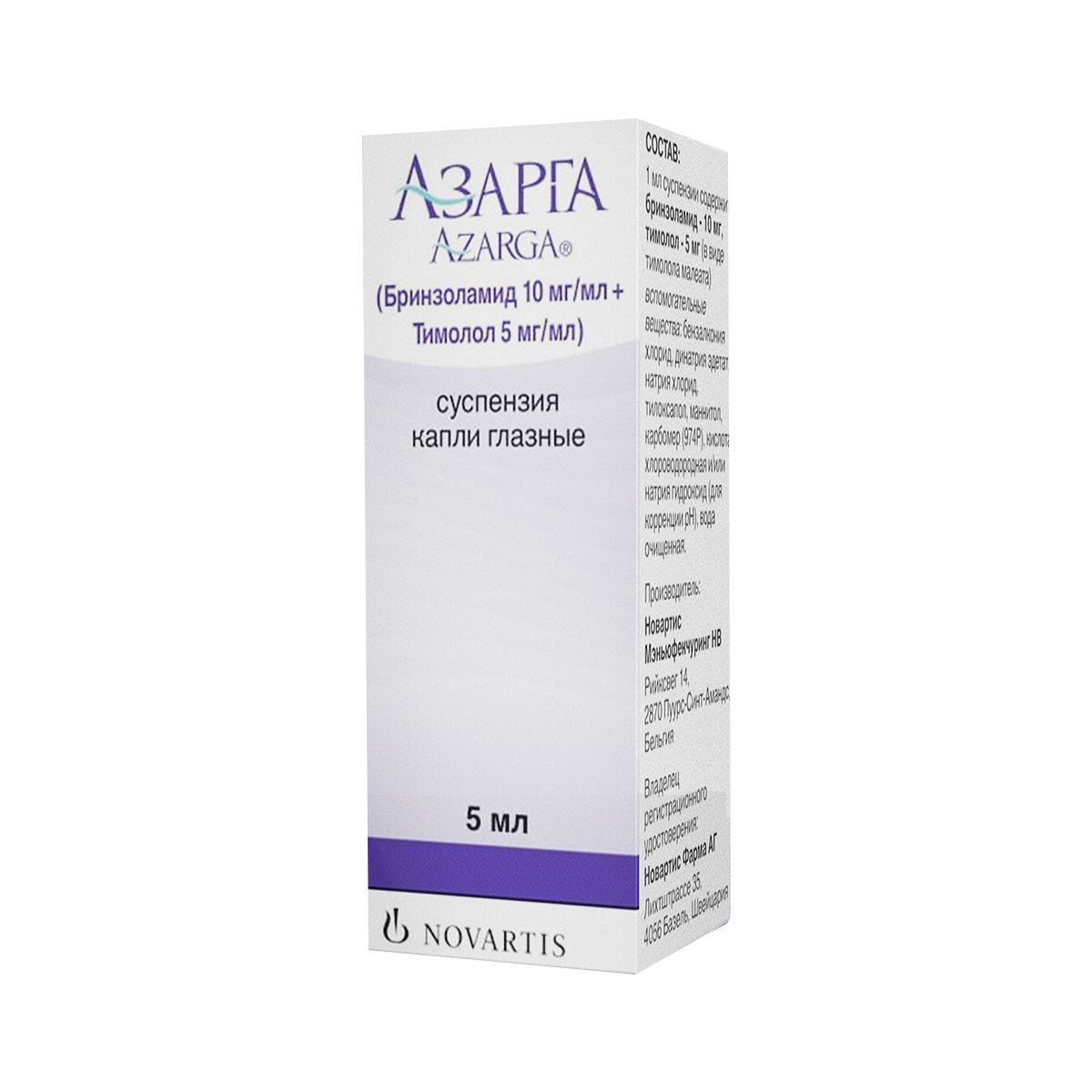
Azarga - Azarga Eye Drops 5ml
| Status | Select a city |
| Brand | Novartis / Novartis |
| Brand country |  Belgium |
| Quantity and shape | 1 vial |
| Generics | brinzolamide+timolol |
| Volume | 5მლ |




















- Description
- Reviews
Azarga
(AZARGA)
Composition:
Active substance: Brinzolamide, Timolol maleate;
1 ml of solution contains 10 mg of brinzolamide and 6.8 mg of timolol maleate (equivalent to 5.0 mg of timolol);
Excipients: Benzalkonium chloride, disodium edetate, sodium chloride, tyloxapol, mannitol, carbomer (974P), hydrochloric acid and/or sodium hydroxide (for pH adjustment), purified water.
Dosage form
Eye drops, suspension.
White to almost white homogeneous suspension.
Pharmacotherapeutic group
Antiglaucoma preparations and miotics. ATC code: S01ED51.
Clinical properties
Indications
Elevated intraocular pressure (IOP) in patients with open-angle glaucoma or ocular hypertension in patients when monotherapy fails to lower IOP and combination therapy is required.
Contraindications
- Hypersensitivity to the active substance or any of the components of the drug.
- Hypersensitivity to other beta-blockers.
- Hypersensitivity to sulfonamides.
- Reactive airway diseases, including bronchial asthma or a history of bronchial asthma, or severe chronic obstructive pulmonary disease.
- Sinus bradycardia, sick sinus syndrome, sinoatrial block, second- and third-degree atrioventricular block, overt heart failure, or cardiogenic shock.
- Severe allergic rhinitis.
- Severe renal impairment.
- Hyperchloremic acidosis.
Method of administration and doses
Dosage regimen
1 drop of Azarga eye drops in the conjunctival sac 2 times a day.
Children
The use of the drug is not recommended in children under 18 years of age, as there is no adequate data on safety and efficacy.
Elderly patients
No differences in the safety and efficacy of the drug have been observed between elderly and adult patients.
Use of the drug in patients with impaired liver and kidney functions
Studies have not been conducted in patients with impaired liver and kidney functions.
Dose adjustment is not required in patients with hepatic impairment or in patients with mild to moderate renal impairment.
Azarga has not been studied in patients with severe renal impairment (creatinine clearance <30 ml/min) or in patients with hyperchloremic acidosis (see section 4.3). Since brinzolamide and its main metabolite are primarily excreted by the kidneys, Azarga is contraindicated in patients with severe renal impairment (see section 4.3). Azarga eye drops should be used with caution in patients with severe hepatic impairment (see section 4.4).
Method of administration
Intended for topical use in ophthalmology.
Shake the bottle before use.
To prevent contamination of the bottle contents, care must be taken not to touch the eyelids, surrounding areas, or other surfaces with the dropper tip of the bottle.
After removing the cap, remove the protective ring (tamper-evident seal). Keep the bottle tightly closed after use.
Nasolacrimal occlusion or closing the eyelids reduces systemic absorption, which may decrease systemic side effects and enhance local action.
When used with other topical ophthalmic preparations, an interval of at least 5 minutes must be maintained.
If a dose is missed, treatment should be continued with the next dose as prescribed. The dose should not exceed 1 drop in the affected eye(s) 2 times a day.
Adverse reactions
The described adverse reactions were identified in clinical trials and are classified by the following convention: very common (≥1/10), common (≥1/100 - <1/10), uncommon (≥1/1000 - <1/1000), rare (≥1/10000 - <1/1000) and very rare (<1/10000). Within each frequency grouping, adverse effects are presented in order of decreasing seriousness.
|
System Organ Class |
Adverse reactions |
|
Blood and lymphatic system disorders |
Uncommon: White blood cell count decreased |
|
Psychiatric status disorders |
Rare: insomnia |
|
Nervous system disorders |
Common: dysgeusia |
|
Visual disorders |
Common: punctate keratitis, blurred vision, eye pain, eye irritation Uncommon: keratitis, dry eyes, corneal discoloration, eye itching, foreign body sensation in the eye, eye discharge, ocular hyperemia, conjunctival hyperemia Rare: corneal erosion, anterior chamber flare, lacrimation, photophobia, scleral hyperemia, eyelid erythema, crust formation on eyelid margins |
|
Disorders of cardiac function |
Frequent: decrease in heart rate |
|
Disorders of vascular function |
Less frequent: decrease in blood pressure |
|
Disorders of respiratory system, thoracic organs and mediastinum |
Less frequent: cough Rare: oropharyngeal pain, rhinorrhea |
|
Disorders of the kidneys and urinary system |
Less frequent: presence of blood in the urine |
|
General disorders and administration site conditions |
Less frequent: malaise |
|
Metabolism and nutrition disorders |
Unknown: hypoglycemia |
|
Investigations |
Less frequent: increased blood potassium levels, increased blood lactate dehydrogenase levels |
The described adverse reactions were reported during the post-marketing observation period. Based on available data, frequency cannot be estimated.
|
System Organ Class |
Adverse Reactions |
||
|
Infections and Infestations |
Nasopharyngitis, Pharyngitis, Sinusitis, Rhinitis |
||
|
Disorders of the blood and lymphatic system |
Decrease in erythrocyte count, increase in chloride levels |
||
|
Immune system disorders |
Anaphylaxis, anaphylactic shock, systemic allergic reactions, including angioedema, localized and generalized rash, hypersensitivity, urticaria, pruritus |
||
|
Metabolism and nutrition disorders |
Decreased appetite |
||
|
Mental status disorders |
Hallucination, depression, memory impairment, apathy, depressed mood, libido decrease, night terrors, neurosis |
||
|
Disorders of the nervous system |
Cerebral ischemia, brain blood circulation disorder, seizures, myasthenia signs and symptoms exacerbation, drowsiness, motor dysfunction, amnesia, memory impairment, paresthesia, tremor, hypoesthesia, ageusia, dizziness, head ache |
||
|
Visual disturbances |
optic nerve/disc ratio increase, choroidal detachment filtration surgery after, keratopathy, corneal epithelium defect, corneal epithelium damage, intraocular pressure increase, deposits on the eye, corneal staining, corneal edema, corneal sensitivity decrease, conjunctivitis, meibomianitis, diplopia, glare, light sensitivity, visual acuity decrease | , vision disorders, pterygium (surfer's eye), ocular discomfort, dry kerato conjunctivitis, eye hypoesthesia, scleral pigmentation, subconjunctival cyst, visual impairment, eye swelling, eye allergy, madarosis, eyelid disorder, eyelid edema, ptosis | |
|
Hearing and spatial orientation disorders |
Dizziness, ringing in the ears |
||
|
Heart function disorders |
Cardiac arrest, heart failure, congestive heart failure, atrioventricular block, cardio-respiratory distress, angina, bradycardia, heart rhythm disorders, arrhythmia, palpitations, tachycardia, increased heart rate, chest pain, edema |
||
|
Disorders of the respiratory system, thoracic organs and mediastinum |
Bronchospasm (mainly in patients with previously existing bronchospastic disease), dyspnea, asthma, bleeding from the nose, bronchial hyperactivity, throat irritation, stuffy nose, upper respiratory tract congestion, postnasal syndrome, sneezing, nasal dryness |
||
|
Vascular system disorders |
Hypotension, hypertension, arterial pressure increase, Raynaud's syndrome, cold extremities |
||
|
Disorders of the gastro-intestinal tract |
Vomiting, abdominal pain, diarrhea, dry mouth, nausea, esophagitis, dyspepsia, discomfort in the abdominal area, discomfort in the stomach area, frequent bowel movements, gastro-intestinal tract disorder, oral hypoesthesia, oral paresthesia, flatulence |
||
|
Hepatobiliary disorders |
Liver function impairment |
||
|
Skin and subcutaneous tissue disorders |
Stevens-Johnson syndrome, toxic epidermal necrolysis, urticaria, maculopapular rash, alopecia, erythema, rash, pruritus, skin tightness, dermatitis, psoriasiform rash or exacerbation of psoriasis |
||
|
Musculoskeletal and connective tissue disorders |
Myalgia, muscle spasms, arthralgia, back pain, pain in extremities |
||
|
Disorders of kidney and urinary system functioning |
Renal pain, pollakiuria |
||
|
Reproductive function disorders |
Erectile dysfunction, sexual dysfunction, decreased libido |
||
|
General disorders and administration site conditions |
Pain in the chest area, pain, fatigue, asthenia, discomfort in the chest area, nervousness, irritability, peripheral edema |
Overdose
In case of accidental ingestion of the drug, symptoms of overdose caused by beta-blockers may include bradycardia, hypotension, heart failure, and bronchospasm.
In case of overdose, electrolyte imbalance, development of an acidotic state, as well as nervous system disorders may occur. Electrolyte (specifically, potassium) levels and pH limits in the blood serum should be monitored.
Use of the drug during pregnancy or lactation
Pregnancy
There are no adequate data regarding the use of ophthalmic brinzolamide and timolol during pregnancy. Animal studies with brinzolamide have shown reproductive toxicity following systemic administration. Azarga should not be used during pregnancy unless strictly necessary. For information on reducing systemic absorption, see section 4.2.
Epidemiological studies have not revealed malformations, but have shown a risk for intra uterine growth retardation when beta-blockers are administered orally. In addition, signs and symptoms of beta-blockade (e.g. bradycardia, hypotension, respiratory distress and hypoglycaemia) have been observed in neonates when beta-blockers have been administered until delivery. However, if Azarga eye drops are administered until delivery, the neonate should be carefully monitored during the first days of life.
Lactation
It is unknown whether ophthalmic brinzolamide is excreted in human milk. Animal studies have shown that following oral administration, brinzolamide is excreted in breast milk. However, it is unlikely that therapeutic doses of timolol in eye drops would be present in breast milk in sufficient quantities to produce clinical symptoms of beta-blockade in the infant. For information on reducing systemic absorption, see section 4.2. However, a risk to the suckling child cannot be excluded. A decision must be made whether to discontinue breast-feeding or to discontinue/abstain from Azarga therapy taking into account the benefit of breast-feeding for the child and the benefit of therapy for the woman.
Fertility
No studies have been conducted to evaluate the effect of topical ophthalmic administration of the drug on fertility. Non-clinical data show no effect of brinzolamide and timolol on male or female fertility following oral administration. When used topically, the drug is not expected to affect male or female fertility.
Special warnings and precautions for use
Systemic effects
Like other ophthalmic preparations, brinzolamide and timolol are absorbed systemically. Due to the beta-adrenergic blocking component, timolol, the same types of cardiovascular, pulmonary and other adverse reactions seen with systemic beta-adrenergic blockers may occur. The incidence of systemic adverse reactions after topical ophthalmic administration is lower than for systemic administration. For information on reducing systemic absorption, see section 4.2.
General hypersensitivity reactions common to all sulfonamide derivatives, including Stevens-Johnson syndrome and toxic epidermal necrolysis, may occur with the use of Azarga eye drops, as it is absorbed systemically. At the time of prescription, the patient should be informed of the signs and symptoms and monitored for skin reactions. If signs of serious reactions or hypersensitivity occur, the use of the drug should be discontinued.
Cardiac disorders
In patients with cardiovascular diseases (e.g., ischemic heart disease, Prinzmetal's angina, and heart failure) and hypotension, treatment with beta-blockers should be critically evaluated, and treatment with other active substances should be considered. Patients with cardiovascular diseases should be monitored for signs of complications of these diseases and adverse effects. Due to their negative effect on conduction time, beta-blockers should be prescribed with caution in patients with first-degree heart block.
Vascular function disorders
The drug should be used with caution in patients with severe peripheral circulatory disorders/disturbances (e.g., severe forms of Raynaud's disease or Raynaud's syndrome).
Hyperthyroidism
Beta-blockers may also mask the signs of hyperthyroidism.
Muscle weakness
There is information that drugs that block the beta-adrenergic system cause muscle weakness with certain symptoms of myasthenia (e.g., diplopia, ptosis, and general weakness).
Respiratory system disorders
There is information about the development of respiratory reactions, including death due to bronchospasm, in patients with asthma after the use of some ophthalmic beta-blockers. Azarga should be used with caution in patients with mild/moderate chronic obstructive pulmonary disease (COPD) and only if the potential benefit outweighs the potential risk.
Hypoglycemia/Diabetes
Beta-blockers should be administered with caution in patients subject to spontaneous hypoglycemia or to patients with labile diabetes, as beta-blockers may mask the signs and symptoms of acute hypoglycemia.
Acid-base disturbances
Azarga contains brinzolamide, a sulfonamide. The same types of adverse reactions that are attributable to sulfonamides may occur with topical administration. There is information about acid-base disturbances with the use of oral carbonic anhydrase inhibitors. The drug should be used with caution in patients with a risk of renal impairment because of the possible risk of metabolic acidosis. The use of the drug should be discontinued if signs of serious reactions or hypersensitivity occur.
Mental alertness warning
Oral carbonic anhydrase inhibitors may impair the ability to perform tasks requiring mental alertness and/or physical coordination. Azarga is absorbed systemically, therefore this may also occur with topical administration.
Anaphylactic reactions
Patients with a history of atopy or severe anaphylactic reactions to various allergens may be more sensitive to repeated challenges with such allergens while taking beta-blockers and may not respond to the usual doses of adrenaline used to treat anaphylactic reactions.
Choroidal detachment
There have been reports of choroidal detachment following filtration surgery with the use of aqueous suppressant therapy (e.g., timolol, acetazolamide).
Surgical anesthesia
Ophthalmic beta-blockers may block systemic effects of beta-agonists (e.g., adrenaline). The anesthesiologist should be informed that the patient is receiving timolol.
Other beta-blockers
The effect on intraocular pressure or the known effects of systemic beta-blockade may be potentiated when timolol is given to patients already receiving a systemic beta-blocking agent. The response of these patients should be closely observed.
The use of two topical beta-adrenergic blocking agents or two topical carbonic anhydrase inhibitors is not recommended.
Ocular effects
Experience with the use of Azarga in patients with pseudoexfoliative or pigmentary glaucoma is limited. Caution is required when treating such patients, and careful monitoring of intraocular pressure is recommended. The use of Azarga in patients with closed-angle glaucoma has not been studied, and its use in such patients is not recommended. Ophthalmic beta-blockers may cause dry eyes. Caution is required when treating patients with corneal disease. The possible role of brinzolamide on corneal endothelial function has not been studied in patients with corneal disorders (especially in patients with a low endothelial cell count). Patients wearing contact lenses have not been studied, and careful monitoring of such patients is recommended when using brinzolamide, as carbonic anhydrase inhibitors may affect corneal hydration. This may lead to corneal decompensation and edema, and wearing contact lenses may increase the risk of corneal damage. Careful observation of patients with compromised corneas (e.g., patients with diabetes mellitus or corneal dystrophies) is recommended. Azarga can be used while wearing contact lenses under strict monitoring (see section "Benzalkonium chloride" below).
Benzalkonium chloride
The preparation contains benzalkonium chloride, which may cause eye irritation and is known to discolour soft contact lenses. Avoid contact with soft contact lenses. Patients must be instructed to remove contact lenses prior to application and wait at least 15 minutes before reinsertion. Benzalkonium chloride has also been reported to cause punctate keratopathy and/or toxic ulcerative keratopathy. Close monitoring is required with frequent or prolonged use.
Hepatic impairment
The preparation should be used with caution in patients with severe hepatic impairment.
Effects on ability to drive and use machines
Temporary blurred vision or other visual disturbances may affect the ability to drive or use machines. If blurred vision occurs at instillation, the patient must wait until the vision clears before driving or using machinery.
Carbonic anhydrase inhibitors may impair the ability to perform tasks requiring mental alertness and/or physical coordination.
Interaction with other medicinal products and other forms of interaction
Eye drops, the preparation Azarga contains the carbonic anhydrase inhibitor brinzolamide, which even when applied topically can be subject to systemic absorption. There is information about acid-base balance disorders following oral administration of carbonic anhydrase inhibitors. When using the preparation, the probability of possible interactions should be taken into account.
The metabolism of brinzolamide is mediated by cytochrome P-450 isoenzymes CYP3A4 (mainly), CYP2A6, CYP2B6, CYP2C8 and CYP2C9. It is expected that CYP3A4 inhibitors (e.g. ketoconazole, itraconazole, clotrimazole, ritonavir and troleandomycin) will inhibit the metabolism of brinzolamide via CYP3A4. It is recommended to prescribe the preparation with caution together with CYP3A4 inhibitors. However, accumulation of brinzolamide is unlikely, as excretion mainly occurs with urine. Brinzolamide is not an inhibitor of cytochrome P-450 isoenzymes. When using an oral carbonic anhydrase inhibitor and brinzolamide eye drops, there is a risk of developing additive effects, which are known as systemic effects of carbonic anhydrase inhibition. The simultaneous use of brinzolamide-containing eye drops and oral carbonic anhydrase inhibitors is not recommended. In case of sudden withdrawal of clonidine while taking beta-blockers, the hypertensive reaction may be enhanced.
There is information about potential cases of systemic beta-blockade (e.g. decreased heart rate, depression) during combined treatment with CYP2D6 inhibitors (e.g. quinidine, fluoxetine, paroxetine) and timolol.
There is a possibility of increased hypotensive effect and/or development of pronounced bradycardia when ophthalmic beta-blockers are co-administered with calcium channel blockers, beta-adrenergic blockers, antiarrhythmic drugs (including amiodarone), digitalis glycosides, or parasympathomimetics. Beta-blockers may enhance the hypoglycemic effect of antidiabetic agents. Beta-blockers may mask the signs and symptoms of hypoglycemia. It is known that the simultaneous use of ophthalmic beta-blockers and adrenaline (epinephrine) has caused mydriasis.
Pharmacological properties
Pharmacodynamics
Mechanism of action
Azarga eye drops contain two active substances: brinzolamide and timolol maleate. These two components reduce elevated intraocular pressure (IOP) primarily by decreasing aqueous humor secretion, as well as through other mechanisms. The combined action of the two active substances results in a more effective reduction of IOP than when used individually.
Brinzolamide is a potent inhibitor of carbonic anhydrase II (CA-II), the predominant isoenzyme in the eye. Inhibition of carbonic anhydrase in the ciliary body of the eye decreases aqueous humor secretion by slowing the formation of bicarbonate ions, with a subsequent reduction in sodium and fluid transport.
Timolol is a non-selective beta-adrenoreceptor blocker that has no sympathomimetic activity, does not have a direct depressant effect on the myocardium, and has no membrane-stabilizing activity. Human tonography and fluorophotometric studies indicate that its action is mainly related to a decrease in fluid formation and a slight increase in outflow.
The active components of Azarga eye drops - brinzolamide and timolol maleate are approved therapeutic agents for lowering elevated intraocular pressure in patients with open-angle glaucoma or ocular hypertension (with different mechanisms of action). Azarga lowers IOP more than Azopt (brinzolamide 1% ophthalmic suspension) or timolol maleate 0.5% ophthalmic solution when used alone.
Clinical efficacy
In a twelve-month controlled clinical study for the treatment of patients with open-angle glaucoma or ocular hypertension, combination therapy was used according to the investigator's opinion, and the baseline IOP in patients was 25 to 27 mmHg. With Azarga eye drops, taken twice daily, the mean IOP-lowering effect was 7-9 mmHg. The effect of Azarga was compared to the combination of 20 mg/ml dorzolamide + 5 mg/ml timolol. A mean reduction in IOP was observed at all time points.
In a six-month controlled clinical study in patients with open-angle glaucoma or ocular hypertension, the mean IOP was 25 to 27 mmHg. When using Azarga twice daily, the mean IOP-lowering effect was 7-9 mmHg, which is 3 mmHg greater than with 10 mg/ml brinzolamide twice daily and 2 mmHg greater than with 5 mg/ml timolol twice daily. The significant reduction in mean IOP was statistically significant compared to brinzolamide and timolol at all time points during the study.
In three controlled clinical studies, ocular discomfort upon instillation of Azarga eye drops was significantly lower than with the combination of dorzolamide 20 mg/ml + timolol 5 mg/ml.
Children
The use of Azarga is not recommended in children under 18 years of age, as adequate data on safety and efficacy are not available.
Pharmacokinetics
Absorption
When Azarga eye drops are applied topically, brinzolamide and timolol are absorbed through the cornea and enter the systemic blood circulation. In a pharmacokinetic study, healthy subjects received oral brinzolamide (1 mg) twice daily for 2 weeks prior to the use of Azarga eye drops to reduce the time to reach steady state. When Azarga suspension was applied twice daily to both eyes for 13 weeks, the concentration of brinzolamide in erythrocytes averaged 18.8 ± 3.29 µM, 18.1 ± 2.68 µM, and 18.4 ± 3.01 µM at weeks 4, 10, and 13, indicating that brinzolamide concentration is maintained by erythrocytes (erythrocyte CA-II saturation approximately 20 µM). The mean Cmax of timolol was 0.824 ng/ml, and Tmax was 0.79 hours after drug administration.
Distribution
Brinzolamide is moderately bound to plasma proteins (approximately 60%). Brinzolamide is deposited in erythrocytes due to its high affinity for carbonic anhydrase-II and lower affinity for carbonic anhydrase-I. Its active metabolite N-desethyl also accumulates in erythrocytes, where it primarily binds to CA-I. Due to the affinity of brinzolamide and its metabolite for erythrocyte and tissue carbonic anhydrase, its plasma concentration is low.
Timolol is detected in human aqueous humor and plasma for up to 12 hours after administration.
Biotransformation
Brinzolamide metabolism proceeds via N-dealkylation, O-dealkylation, and oxidation of its N-propyl side chain. N-desethyl brinzolamide is a major metabolite of brinzolamide, which also binds to CA-I in the presence of brinzolamide and accumulates in erythrocytes. In vitro studies with cytochrome P450 show that the metabolism of brinzolamide mainly involves CYP3A4, as well as at least four other isozymes (CYP2A6, CYP2B6, CYP2C8, and CYP2C9).
Timolol is metabolized by two pathways. One route yields an ethanolamine side chain on the thiadiazole ring and the other yields an ethanolic side chain on the morpholine nitrogen and a second similar side chain with a carbonyl group adjacent to the nitrogen. Timolol metabolism is mediated primarily by CYP2D6.
Elimination
14C brinzolamide is eliminated mainly in the urine and feces (32% and 29%). Approximately 20% of the dose is excreted in the urine as the major metabolite. Brinzolamide and N-desethyl brinzolamide are the predominant components in the urine along with trace levels (<1%) of other metabolites (N-desmethoxypropyl and O-desmethyl).
Timolol and its metabolites are primarily excreted by the kidneys. Approximately 20% of a timolol dose is excreted in the urine unchanged, and the remainder is excreted as metabolites. The plasma half-life (t1/2) of timolol is 4.8 hours after administration.
Shelf life
2 years.
After opening the bottle, the product should be used within 4 weeks.
Storage conditions
Store at a temperature not exceeding 30°C.
Keep out of reach of children.
Packaging
One 5 ml vial in a box.
Dispensing rule:
Pharmaceutical product group II, dispensed with form №3 prescription.
Translated by AI


