

 Select a city
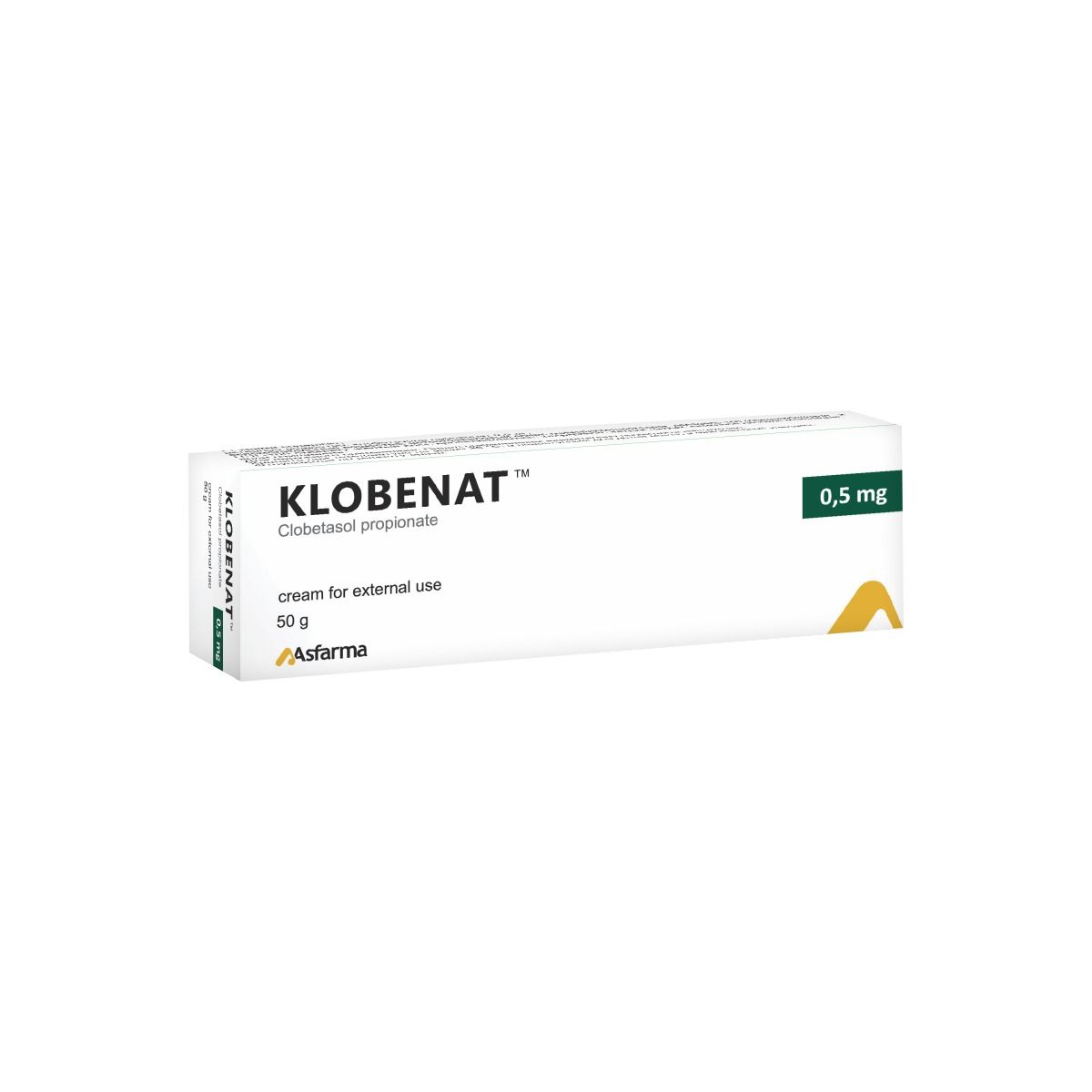
Clobenat - Cobenat Cream 50g
| Status | Select a city |
| Brand country |  Turkey |
| Quantity and shape | 1 tube |
| Generics | clobetasol |







- Description
- Reviews
Klobenat™ 0.05% cream for external use
Klobenat™
International Nonproprietary Name: Clobetasol propionate
Composition
1 g of cream contains:
Active substance : clobetasol propionate 0.5 mg
Excipients: cetostearyl alcohol, glyceryl monostearate 40-55, Arlacel 165 (glyceryl stearate and PEG-100 stearate), yellow wax, propylene glycol, chlorocresol, sodium citrate, citric acid monohydrate, purified water.
Description
White, homogeneous, opaque cream
Pharmacotherapeutic group
Very high potency corticosteroids (Group IV), clobetasol.
ATC code: D07AD01
Pharmacological properties
Pharmacodynamics
Clobetasol - a topical glucocorticosteroid exerts anti-inflammatory action through multiple mechanisms that cause inhibition of the late phase of allergic reactions, including a decrease in mast cell density, reduction of chemotaxis and eosinophil activation, decreased cytokine production by lymphocytes, monocytes, mast cells, and eosinophils, as well as disruption of arachidonic acid metabolism.
Exhibits local anti-inflammatory, antipruritic, and vasoconstrictive effects.
Pharmacokinetics
Absorption
Topical glucocorticosteroids can be absorbed from intact healthy skin. The degree of percutaneous absorption of topical corticosteroids depends on a number of factors, including the vehicle and the integrity of the epidermal barrier. Occlusion (applying a dressing over the cream application site), inflammation and/or other pathological processes in the skin can also increase percutaneous absorption.
Distribution
The mean peak plasma clobetasol propionate concentration (Cmax) is reached 13 hours after the first application and 8 hours after the second application of 30 g of clobetasol 0.05% topical cream to healthy skin, and is 0.63 ng/ml. 10 hours after application of a second dose of clobetasol propionate cream (30 g), the Cmax of the cream is slightly higher than the Cmax of the ointment. In separate studies, 3 hours after a single application of 25 g of 0.05% clobetasol propionate topical cream in patients with psoriasis and eczema, the Cmax was 2.3 ng/ml and 4.6 ng/ml, respectively.
Biotransformation
Following percutaneous absorption, topical corticosteroids are metabolized through the same pharmacokinetic pathways as systemic corticosteroids. They are primarily metabolized in the liver.
Elimination
Topical glucocorticosteroids are excreted by the kidneys. Some metabolites are excreted in the bile.
Indications for use
Clobetasol belongs to highly active topical glucocorticosteroids used in the treatment of diseases, such as psoriasis (excluding widespread plaque psoriasis), treatment-resistant dermatoses, lichen planus, discoid lupus erythematosus, and other skin diseases resistant to therapy with less active glucocorticosteroids.
Contraindications
Hypersensitivity to clobetasol or any other component of the drug. Rosacea (rosacea), acne vulgaris (acne vulgaris), perioral dermatitis, perianal and genital pruritus, primary viral skin lesions (e.g., herpes simplex, chickenpox), untreated skin infections, pruritus without accompanying inflammation, primary fungal and bacterial skin lesions.
Dermatoses in children under 1 year of age, including dermatitis and diaper rash.
Special instructions
Clobetasol should be used with caution in patients with a history of hypersensitivity to corticosteroids or any of the excipients in the preparation. Local hypersensitivity reactions may resemble symptoms of the underlying disease. Some individuals may develop hypercorticism (Cushing's syndrome) and reversible suppression of the hypothalamic-pituitary-adrenal axis due to increased systemic absorption of topical corticosteroids. If any of the above manifestations occur, the use of the drug should be discontinued by gradually reducing the frequency of its application or substituted with a less active glucocorticosteroid. Abrupt discontinuation of use may lead to the development of glucocorticosteroid insufficiency.
Risk factors for increased systemic effects include:
- Activity and dosage form of the topical corticosteroid
- Duration of use
- Application of the drug to large areas of the skin
- Application to covered areas of the skin (i.e., intertriginous areas or under an occlusive dressing)
- Increased hydration of the stratum corneum of the skin
- Application to thin skin areas, such as the face
- Application to damaged skin or other conditions that may be accompanied by a breach of skin barrier integrity
- In children and infants a higher percentage of absorption of topical corticosteroids may be observed than in adults, which is why patients in this group are more at risk of developing systemic side effects; this is due to the fact that children have an immature skin barrier and a greater body surface area to body mass ratio compared to adults.
When using topical corticosteroids in children the risk of local and systemic side effects increases, which is why it should not be used in children under 12 years of age for more than 5 days. At the same time, the cream should not be applied to a large area of skin for a long period of time. With the topical use of corticosteroids, children are more at risk of developing atrophic skin diseases. If it is necessary to prescribe Clobenate cream in children, it is recommended to visit a doctor at least once a week. The duration of treatment with topical corticosteroids in children should not exceed 5 days, and an occlusive dressing should not be applied during this time.
Visual impairment
If it is necessary to apply the cream to the eyelids, caution should be exercised. If the cream gets into the eyes, it should be washed out with a large amount of water. The use of topical and systemic corticosteroids may cause visual impairment. In case of any visual disturbances (such as blurred vision), the patient should consult an ophthalmologist for an appropriate examination. A possible cause of visual impairment may be eye diseases developed due to repeated use of corticosteroids: cataracts, glaucoma, or central serous chorioretinopathy.
Application to facial skin
Applying the cream to facial skin is not recommended, as this area of the skin is more prone to developing atrophic changes. If the application of the cream to the facial skin is necessary, then the course of treatment should not exceed 5 days. Warm and moist conditions created in skin folds or when applying an occlusive dressing promote the development of bacterial infection. Therefore, before applying an occlusive dressing, it is necessary to thoroughly clean the skin.
Use in psoriasis
Topical corticosteroids should be prescribed with caution in psoriasis. Because in some cases it is possible to renew the symptoms of the disease, develop drug resistance, develop a generalized pustular form of psoriasis, and local and systemic toxicity due to the disruption of the skin's barrier function . Therefore, monitoring the patient's condition is especially important when treating psoriasis.
Chronic leg ulcers
Topical corticosteroids are sometimes used to treat dermatitis that develops around trophic ulcers on the legs, which is highly likely to be associated with an increased susceptibility to local reactions and an increased risk of developing local reactions.
Concomitant infection
In case of infection development, appropriate antibiotic therapy should be prescribed along with cream treatment. If any manifestation of generalized infection occurs, topical corticosteroid treatment should be discontinued and systemic antimicrobial therapy should be administered.
Propylene glycol and cetostearyl alcohol contained in Clobenate cream may cause local allergic skin reactions such as irritation and contact dermatitis. Chlorocresol contained in Clobenate cream may cause allergic reactions.
Interaction with other medicinal products
It has been shown that concomitant use of CYP3A4 inhibitors (e.g., ritonavir and itraconazole) inhibits the metabolism of corticosteroids, which in turn leads to an increase in their systemic exposure. The clinical significance of this interaction depends on the dose and route of administration of the corticosteroids, as well as the potency of the CYP3A4 inhibitor.
Use during pregnancy and lactation
Data on the use of clobetasol in pregnant women are limited. During pregnancy, the drug is used only if the potential benefit to the mother outweighs the potential risk to the fetus. If it is necessary to prescribe the cream during pregnancy, the drug should be used in minimum doses, for a fairly short period. The safety of topical corticosteroids during lactation has not been established. It is not known whether topical corticosteroids have sufficient systemic absorption to be detectable in breast milk. During lactation, the drug is used only if the potential benefit to the mother outweighs the potential risk to the child. It is not recommended to apply the cream to the mammary glands to avoid accidental ingestion of clobetasol by the newborn during breastfeeding.
Effects on ability to drive and use potentially dangerous machines
Clinical studies on the effect of clobetasol on the ability to drive vehicles and use other machines have not been conducted. Based on the adverse reactions described with the external use of clobetasol, adverse effects of Clobenate during such activities are not expected.
Method of administration and doses
It is particularly advisable to apply the cream to a wet or moist surface. A small amount of cream is applied to the affected surface 1-2 times a day until the effect is achieved. After achieving control over the disease, treatment is discontinued.
Treatment should not be continued for more than 4 weeks without evaluating the patient's clinical condition. To prevent complications of the disease, repeated short courses of treatment with Clobenate may be conducted. If long-term treatment with glucocorticosteroids (GCS) is necessary, less active preparations should be used. After each application of Clobenate, time is needed for the cream to be absorbed before using an emollient.
Method of administration
The cream is applied as a thin layer in a small amount, which is sufficient to completely cover the affected skin surface. In resistant cases, especially during hyperkeratosis, the effect of Clobenate cream can be enhanced by additionally applying a polyethylene film over the application site. Applying an occlusive dressing at night usually yields a positive result. Subsequently, the achieved effect may be maintained even without the use of an occlusive dressing. If Clobenate is not used to treat affected areas of the hands, hands should be washed. If the patient's condition worsens or does not improve within 2-4 weeks, the diagnosis and treatment should be reviewed. Treatment should not continue for more than 4 weeks. If longer treatment is needed, less active preparations should be used. The maximum weekly dose should not exceed 50 g.
After achieving control over the disease, treatment with Clobenate should be gradually discontinued, and treatment with emollients should be continued as maintenance therapy.
Sudden discontinuation of treatment with Clobenate may cause a relapse of pre-existing dermatoses.
Recalcitrant dermatoses
Patients with frequent relapses of the disease
In acute disease, after achieving an effect from continuous treatment with glucocorticosteroids, the possibility of its intermittent use may be considered (once a day, twice a week, without an occlusive dressing). It has been shown that such treatment effectively reduces the frequency of relapses. The preparation should be applied to all previously affected areas of the skin or sites of potential complications. Such a treatment regimen should be combined with the daily routine use of emollients. Regular assessment of the patient's condition, as well as the benefits and risks of continuing treatment, is necessary.
Additional data regarding special patient groups
Renal/hepatic impairment
In case of systemic absorption of Clobenate cream (when applied to large skin surface areas for a prolonged period), metabolism and excretion of the drug may be delayed, which may cause a risk of developing systemic toxicity. Therefore, the cream should be used in minimum doses and for the shortest possible period necessary to achieve a clinical effect.
Pediatric patients
Use in children under 1 year of age is contraindicated. In children, the probability of developing local and systemic side effects during treatment with topical corticosteroids is higher, and therefore they should undergo a short course of treatment with relatively less active therapeutic agents than adults. Occlusive dressings should not be used in children, and the duration of treatment should be limited to 5 days.
Use on the facial area
If it is necessary to use the cream on the facial areas, the duration of treatment should not exceed 5 days.
Geriatric patients
Clinical studies have not revealed drug efficacy differences between elderly and younger patients. A higher frequency of decreased liver or kidney function in elderly patients may prolong elimination, in case of systemic absorption. Therefore the cream should be used in minimum doses and for the shortest possible period necessary to achieve a clinical effect.
Side effects
Frequency of side effects: very common(≥1/10); common( ≥1/100 to <1/10); uncommon( ≥1/1000 to <1/100); rare( ≥1/10000 to <1/1000); very rare (<1/10000); frequency not known (cannot be estimated from the available data).
Side effects reported during post-marketing studies
Infections and infestations
Very rare: opportunistic infection (infection caused by conditionally pathogenic organisms.
Immune system disorders
Very rare: local hypersensitivity, generalized rash
Endocrine system disorders
Very rarely: suppression of the hypothalamic-pituitary-adrenal axis;
Cushingoid features (e.g. moon face, central obesity), delayed weight gain/growth in children, osteoporosis, glaucoma, hyperglycemia/glucosuria, cataract, hypertension, weight gain/obesity, decreased endogenous cortisol levels, alopecia, trichorrhexis (hair fragility).
Skin and subcutaneous tissue disorders
Common: pruritus, local burning sensation/skin pain;
Uncommon: skin atrophy*, striae*, telangiectasia*;
Very rarely: skin thinning*, skin wrinkling, dry skin*, pigmentation changes*, hypertrichosis, exacerbation of underlying symptoms, allergic contact dermatitis/dermatitis, pustular psoriasis, erythema, rash, urticaria.
*Skin manifestations are secondary to local and/or systemic effects of hypothalamic-pituitary-adrenal axis suppression.
Eye disorders
Frequency unknown: blurred vision
General disorders and administration site conditions
Very rarely: irritation/pain at the application site.
Reports of suspected adverse reactions
After registration of the drug, reports of suspected adverse reactions are quite important. This allows for continuous monitoring of the benefit/risk ratio of the medicinal product.
In case of undesirable effects, consult a doctor.
Overdose
When applied topically, the cream may be absorbed in amounts sufficient to produce systemic effects. Acute overdose is unlikely, however, in case of chronic overdose and misuse, symptoms of hypercorticism may occur. In case of overdose, due to the risk of developing adrenal insufficiency, it is recommended to gradually withdraw Clobenate™ by reducing the frequency of application and substituting it with less active corticosteroids.
Release form
Clobenate 0.05% cream for external use. Cream 50g, placed in an aluminum tube. 1 tube packed in a cardboard box complete with instructions for use.
Storage conditions
The drug is stored at a temperature not exceeding 25˚C, out of the reach of children, in the original packaging.
Shelf life
5 years
Do not use after the expiry date.
Dispensing rule from pharmacy
Pharmaceutical product group III, dispensed without a prescription
Translated by AI


