

 Select a city
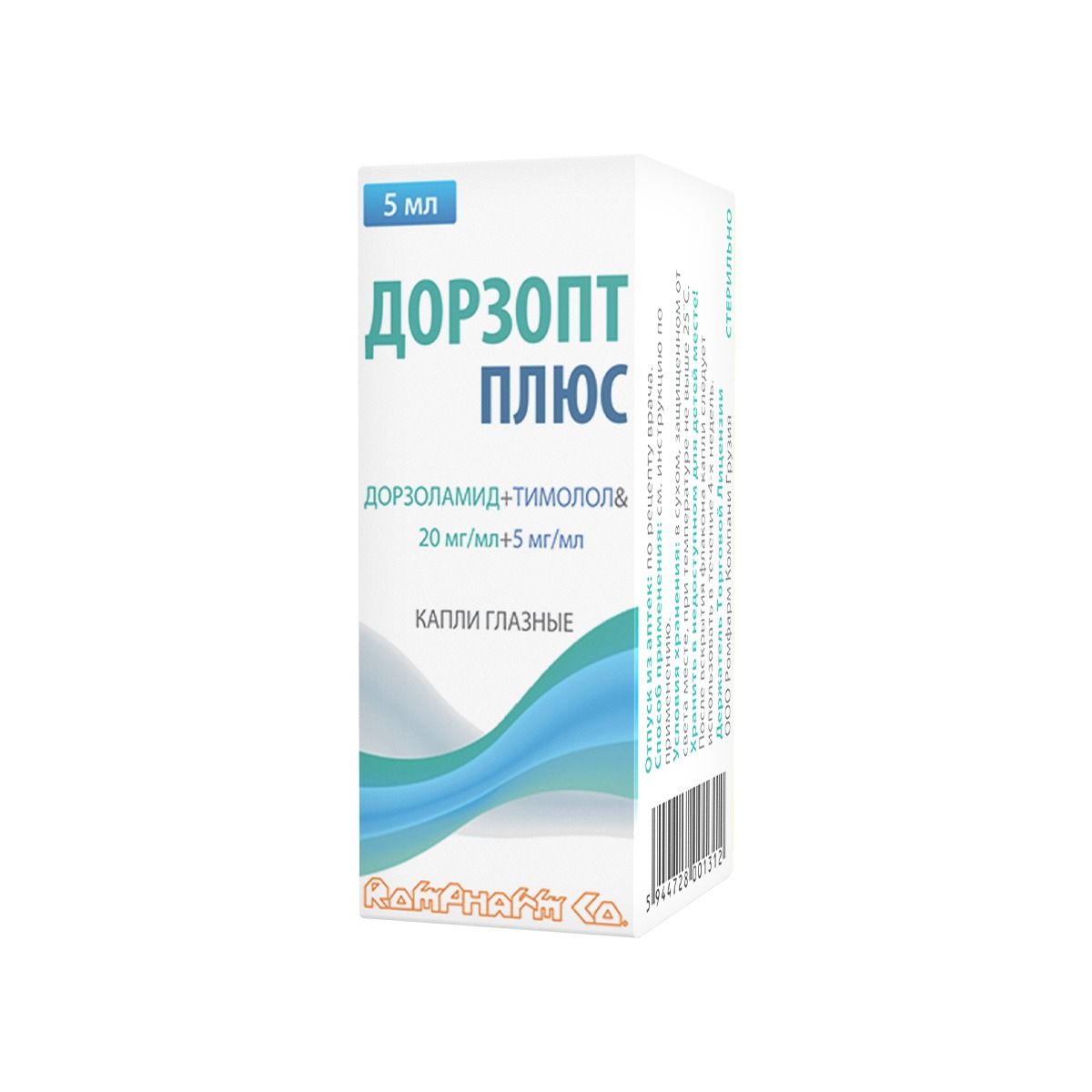
Dorzopt Plus - Dorzopt Plus Eye Drops 5ml
| Status | Select a city |
| Brand | Rompharm / Rompharm |
| Brand country |  Romania |
| Quantity and shape | 1 vial |
| Generics | dorzolamide+timolol |
| Volume | 5მლ |
















- Description
- Reviews
Dorzopt Plus
Name of the medicinal product
Trade name: Dorzopt Plus
International non-proprietary or generic name:
Dorzolamide + Timolol
Pharmaceutical form: Eye drops, solution
Composition:
1 ml of solution contains
Active substances: Dorzolamide hydrochloride (22.26 mg) equivalent to 20 mg dorzolamide, timolol maleate (6.84 mg) equivalent to 5 mg timolol;
Excipients: hydroxyethyl cellulose – 1.0 mg, citric acid monohydrate – 4.0 mg, sodium hydroxide 1 M solution – 0.066 ml, mannitol – 20.0 mg, benzalkonium chloride – 0.075 mg, sodium hydroxide 1 M solution/hydrochloric acid 1 M solution up to pH 5.6+0.1, purified water – up to 1 ml.
Description: Clear colorless or almost colorless slightly viscous solution.
Pharmacotherapeutic group: Antiglaucoma preparations and miotics. Beta-blocking agents. Timolol, combinations.
ATC code: [S01ED51].
Pharmacological properties
Pharmacodynamics
Mechanism of action
The medicinal product Dorzopt Plus contains two active substances: dorzolamide hydrochloride and timolol maleate. Each of these two components reduces elevated intraocular pressure (IOP) by reducing aqueous humor secretion, but through different mechanisms of action.
Dorzolamide hydrochloride of human carbonic anhydrase-II (CA-II) is a potent selective inhibitor. In the eye's ciliary processes, carbonic anhydrase inhibition causes decreased aqueous secretion, presumably, by bicarbonate ion production reduction, which, in turn, leads to slower sodium and fluid transport. Timolol maleate is a non-selective beta-adrenoblocker. The exact mechanism of action of timolol maleate in lowering intraocular pressure is not currently exactly established, although fluorescein and tonographic studies indicate that this action may be predominantly related to decreased aqueous formation.
However, a slight increase in fluid outflow is possible. The combined action of the two active components of the drug leads to an additional reduction in intraocular pressure compared to either component administered alone.
After topical administration, the drug Dorzopt Plus reduces elevated intraocular pressure, regardless of whether, it is associated or not with glaucoma. Elevated intraocular pressure is a major risk factor in the pathogenesis of optic nerve damage and visual field loss in glaucoma. The dorzolamide+timolol preparation reduces intraocular pressure without common, including miotic side effects, such as night blindness, accommodative spasm and constriction of the pupil.
Pharmacodynamic effects
Clinical effects
Clinical studies of up to 15 months duration were conducted to compare the effect of the dorzolamide+timolol preparation on lowering intraocular pressure twice daily (morning and bedtime) with the simultaneous and separate use of 0.5% timolol and 2.0% dorzolamide in patients with glaucoma or ocular hypertension for whom combination therapy was appropriate. The study included both previously untreated patients and patients in whom timolol monotherapy was not effective. Most patients were treated with topical beta-blockers prior to enrollment in the study. According to the analysis of the combined studies, the effect of dorzolamide+timolol on intraocular pressure, when used twice a day, was more pronounced than the hypotensive effect of monotherapy with 2% dorzolamide three times a day or 0.5% timolol twice a day. The reduction in intraocular pressure, when using dorzolamide+timolol twice a day, was equivalent to combination therapy with dorzolamide twice a day and timolol twice a day. When using the drug dorzolamide+timolol twice a day, the same effect was observed, which was evaluated at different times during the day, and this effect was maintained during long-term use.
Use in children
Efficacy in children has not been established. Safety in patients under 2 years of age has not been established. Currently available safety data in children aged 2 to 6 years are described below.
A three-month controlled clinical study, the main objective of which was to document the safety of dorzolamide hydrochloride 2% ophthalmic solution in children under 6 years of age. In this study, 30 patients aged 2 to 6 years, in whom intraocular pressure reduction failed when using dorzolamide or timolol as monotherapy, received dorzolamide+timolol in an open-label study phase. Efficacy in these patients has not been established. In this small group of patients, dorzolamide+timolol twice daily was generally well tolerated. 19 patients completed the treatment, 11 patients discontinued the treatment due to surgery, change of therapy, or other reasons.
Pharmacokinetics
Dorzolamide hydrochloride
Unlike oral carbonic anhydrase inhibitors, topical application of dorzolamide allows for direct action on the eye at significantly lower doses and with less systemic exposure. In clinical studies this resulted in a reduction of intraocular pressure without the acid-base balance disturbances and electrolyte composition changes, which are characteristic of oral carbonic anhydrase inhibitors.
When applied topically, dorzolamide reaches the systemic circulation. systemic carbonic anhydrase inhibition potential to assess, after its topical administration , they measured dorzolamide and its metabolite concentrations in red blood cells (RBC) and plasma, as well as carbonic anhydrase inhibition in RBCs. During chronic administration dorzolamide accumulates in RBCs carbonic anhydrase-II (CA-II) selective binding as a result of, while in blood plasma there is free dorzolamide extremely low concentration. Dorzolamide is metabolized to form N-desethyl, which, compared to the parent active substance, inhibits CA-II less, although it can less active CA-I isoenzyme inhibit. Metabolites also accumulate in RBCs, where they primarily bind to CA-I. Dorzolamide binds moderately to blood plasma proteins (approximately 33%).
Unchanged dorzolamide and its metabolites are excreted from the body in the urine. After discontinuation of the drug, non-linear washout of dorzolamide occurs, which initially leads to a rapid decrease in dorzolamide concentration, followed by a slow elimination phase with a half-life of approximately four months. When dorzolamide was administered orally to simulate the maximum systemic exposure of long-term topical ophthalmic administration, a steady state was reached within 13 weeks. At steady state, the free active substance and its metabolite were almost undetectable in blood plasma; CA inhibition in erythrocytes was less pronounced than expected, below the level capable of exerting a pharmacological effect on renal or respiratory function). Similar pharmacokinetic results were observed for dorzolamide hydrochloride after long-term, topical use. However, some elderly patients with renal impairment (creatinine clearance 30-60 ml/min) showed higher concentrations of the metabolite in erythrocytes, but, carbonic anhydrase inhibition showed no significant difference and no significant systemic side effects were observed.
Timolol maleate
When applied topically, timolol reaches the systemic circulation. The plasma concentration of timolol was studied in 6 patients following topical administration of timolol as 0.5% eye drops twice daily. After dosing in the morning, the mean peak plasma concentration was 0.46 ng/ml, and in the afternoon - 0.35 ng/ml.
Indications for use
Dorzopt Plus is indicated for the treatment of elevated intraocular pressure in patients with open-angle glaucoma or pseudoexfoliative glaucoma when topical monotherapy with beta-blockers is not sufficiently effective.
Contraindications
- Reactive airway disease, including, bronchial asthma or a history of bronchial asthma, or severe chronic obstructive pulmonary disease;
- Sinus bradycardia, sick sinus node weakness syndrome, sinoatrial block, II or III degree atrioventricular block, when pacing is ineffective, severe heart failure, cardiogenic shock
- Severe renal impairment (creatinine clearance <30 ml/min) or metabolic acidosis;
- Hypersensitivity to one or both active substances or to any of the excipients listed, in the section "Composition";
- Corneal dystrophic processes;
- Pregnancy, breastfeeding period.
The above is based on the data of individual active components and is not unique to their combination.
Pregnancy and breastfeeding period
Pregnancy
The drug Dorzopt Plus is not used during pregnancy.
Dorzolamide
There are no sufficient clinical data regarding the use of the drug during pregnancy. In rabbits dorzolamide showed teratogenic effects at doses that were toxic to pregnant females.
Timolol
There are no sufficient data regarding the use of timolol in pregnant women. Timolol should not be used during pregnancy unless clearly necessary. Measures to reduce systemic absorption are indicated in the section "Method of administration and dosage".
During epidemiological studies no malformative effects on the fetus were revealed, but in the case of oral administration of beta-adrenoblockers a risk of intrauterine growth retardation was revealed. In addition, objective and subjective symptoms of beta-receptor blockade (for example, bradycardia, hypotension, respiratory distress and hypoglycemia) were observed in neonates when beta-adrenoblockers were administered prior to delivery. If this medicinal product was taken before delivery, the newborn should be monitored during the first days of life.
Breastfeeding
It is unknown whether or not dorzolamide is excreted in human milk. In rats, in which dorzolamide was used during the lactation period, a decrease in body weight was observed in offspring. Beta-blockers are excreted in human milk. When using therapeutic doses of timolol-containing eye drops, it is unlikely that it will be present in human milk in sufficient quantities to cause clinical symptoms of beta-receptor blockade in the infant. Measures used to reduce systemic absorption are indicated in the section "Method of administration and dosage". If the use of Dorzopt Plus is necessary, breast feeding is not recommended.
Method of administration and doses
1 drop of Dorzopt Plus of the affected eye(s) conjunctival sac twice a day.
If the patient is using other topical ophthalmic preparations simultaneously with Dorzopt Plus, they should be administered at least 10 minutes apart.
Wash your hands before using the preparation and avoid contact of the dropper tip with the eye and surrounding tissues, as this may cause eye injury.
If used incorrectly, ophthalmic solutions can become contaminated with common bacteria, which can cause eye infections. The use of contaminated eye drops can cause serious damage to the eye and subsequent loss of vision.
To reduce systemic absorption with subsequent reduction of systemic side effects and increase local efficacy, after instillation of the drug it is recommended to press a finger on the nasolacrimal duct or close the eyelids for 2 minutes .
Use of the drug Dorzopt Plus:
Figure 1 Figure 2 Figure 3


1. Wash your hands.
2. Sit or stand comfortably.
3. Unscrew the bottle cap and place it on a clean surface. Do not throw away the cap.
4. Gently pull down the lower eyelid of the affected eye with your finger to create a small "pocket" as shown in picture 1,
5. Bring the dropper tip of the bottle close to the eye, try to avoid touching the dropper tip to the eye or the surrounding area.
6. Gently squeeze the bottle and instill one drop into the eye, as shown in Figure 2.
7. Release the lower eyelid and carefully close your eye.
8. Gently press your finger to the inner corner of the eye near the nose for 2 minutes (nasolacrimal duct occlusion), as shown in Figure 3. This will reduce the absorption of the drug into the systemic circulation and, thus, reduce the likelihood of systemic adverse reactions.
9. If your doctor advised you, repeat the procedure in the other eye as well.
10. Immediately after use, close the bottle with the cap.
If the drop misses your eye, try again.
Use in children
Available data do not allow drawing a conclusion regarding the possibility of using the drug in the pediatric population under 18 years of age. Currently available safety data in children are described in the pharmacodynamics section "Use in children".
Side effects
In clinical trials of dorzolamide+timolol, the reported adverse reactions were consistent with previously identified reactions to dorzolamide hydrochloride and/or timolol maleate.
In clinical trials, 1035 patients received dorzolamide+timolol. Approximately 2.4% of patients discontinued treatment with dorzolamide+timolol due to local ocular adverse reactions; approximately 1.2% of patients discontinued treatment due to local adverse reactions caused by allergy or hypersensitivity (e.g., eyelid inflammation and conjunctivitis).
Like other topically applied ophthalmic agents, timolol is absorbed into the systemic circulation. This may cause similar undesirable effects characteristic of systemically administered beta-blockers. The incidence of systemic adverse reactions after topical application of an ophthalmic preparation is lower than with systemic administration.
The following adverse reactions have been reported with Dorzolamide+Timolol or one of its components in clinical trials or during post-marketing use.
The frequency of adverse effects is defined according to the following criteria: very common (≥1/10), common (≥1/100 to <1/10), uncommon (≥1/1000 to <1/100), rare (≥1/10,000 to <1/1,000), very rare (<1/10,000) and not known (cannot be estimated from the available data).
Dorzolamide hydrochloride (eye drops)
Nervous system disorders:
Common: headache
Rare: dizziness, paresthesia
Eye disorders:
Common: eyelid inflammation, eyelid irritation
Uncommon: iridocyclitis
Rare: punctate keratitis, eye irritation including redness, pain, eyelid crusting, transient myopia (which resolves upon discontinuation of therapy), corneal edema, decreased intraocular pressure, choroidal detachment (following filtration surgery).
Not known: foreign body sensation in eye
Cardiac disorders:
Not known: palpitations
Respiratory system:
Rarely: epistaxis
Unknown: dyspnea
Gastrointestinal tract:
Common: nausea
Rarely: pharyngeal irritation, dry mouth
Skin and subcutaneous tissue:
Rarely: rash
General disorders and administration site conditions:
Common: asthenia/general weakness
Timolol maleate (eye drops)
Immune system:
Rarely: systemic allergic reactions, including angioedema, urticaria, localized and generalized rash, anaphylaxis
Unknown: pruritus
Metabolism and nutrition disorders:
Unknown: Hypoglycemia
Psychiatric disorders:
Uncommon: Depression
Rare: Insomnia, nightmares, memory loss
Unknown: Hallucinations
Nervous system disorders:
Common: Headache
Uncommon: Asthenia/general weakness, exacerbation of signs and symptoms of myasthenia gravis, decreased libido, acute cerebrovascular accident, cerebral ischemia
Eye disorders:
Common: Signs and symptoms of eye irritation, including blepharitis, keratitis, decreased corneal sensitivity, and dry eyes
Uncommon: visual impairment including refractive changes (in some cases due to discontinuation of miotic agents therapy)
Rare: ptosis, diplopia, choroidal detachment following filtration surgery
Unknown: blurred vision, corneal erosion, eye itching, tearing
Ear and labyrinth disorders:
Rare: tinnitus
Cardiac disorders:
Uncommon: bradycardia
Common: chest pain, palpitations, edema, arrhythmia, congestive heart failure, cardiac arrest, heart block
Unknown: atrioventricular block, heart failure
Vascular disorders:
Rare: hypotension*, intermittent claudication, Raynaud's phenomenon, cold hands and feet
Respiratory system:
Uncommon: dyspnea
Rare: bronchospasm (mainly in patients with a history of bronchospastic disease), respiratory failure, cough
Gastrointestinal tract:
Uncommon: nausea, dyspepsia
Rare: diarrhea, dry mouth
Unknown: dysgeusia, abdominal pain, vomiting
Skin and subcutaneous tissue:
Rare: alopecia, psoriasis-like rash or exacerbation of psoriasis
Unknown: pruritus
Musculoskeletal and connective tissue:
Rare: systemic lupus erythematosus
Unknown: myalgia
Reproductive system and breast disorders:
Rarely: Peyronie's disease, decreased libido
Unknown: sexual dysfunction
General disorders and administration site conditions:
Uncommon: asthenia/general weakness
Dorzolamide+Timolol (eye drops)
Immune system disorders:
Rarely: systemic allergic reactions, including Quincke's edema, urticaria, rash, anaphylaxis
Eye disorders:
Very often: burning, stinging sensation in the eyes
Often: conjunctival injection, blurred vision, corneal erosion, eye itching, tearing
Respiratory system disorders:
Often: sinusitis
Rarely: shortness of breath, respiratory failure, rhinitis, rarely bronchospasm
Gastrointestinal tract:
Very often: dysgeusia
Skin and subcutaneous tissue:
Rarely: contact dermatitis, Stevens-Johnson syndrome, toxic epidermal necrolysis
Kidneys and urinary system:
Infrequently: urolithiasis
Overdose
There is no available data on overdose in humans upon accidental or intentional ingestion of Dorzolamide+Timolol eye drops.
Symptoms
There are reports of accidental overdose with timolol maleate ophthalmic solution resulting in systemic effects similar to those seen with systemic beta-adrenergic blocking agents such as dizziness, headache, shortness of breath, bradycardia, bronchospasm, and cardiac arrest. The most common signs and symptoms to be expected with overdosage of dorzolamide are electrolyte imbalance, development of an acidotic state, and possibly central nervous system effects. Only limited information is available regarding human overdosage by accidental or deliberate ingestion of dorzolamide hydrochloride. There have been reports of somnolence following oral ingestion. With topical application, nausea, dizziness, headache, fatigue, abnormal dreams, and dysphagia have been reported.
Treatment
Treatment should be symptomatic and supportive. Serum electrolyte levels (particularly potassium) and blood pH levels should be monitored. Studies have shown that timolol does not dialyze readily.
Interaction with other medicinal products
Specific drug interaction studies have not been performed with Dorzopt Plus.
In clinical studies, the dorzolamide+timolol preparation was used concomitantly with the following systemic medications without evidence of adverse interactions: ACE inhibitors, calcium channel blockers, diuretics, non-steroidal anti-inflammatory drugs (including acetylsalicylic acid), and hormones (e.g., estrogen, insulin, thyroxine).
There is a potential for additive effects resulting in hypotension and/or marked bradycardia when ophthalmic beta-blocker solutions are administered concomitantly with oral calcium channel blockers, beta-adrenergic blocking agents, antiarrhythmics (including amiodarone), digitalis glycosides, parasympathomimetics, guanethidine, narcotics, and monoamine oxidase (MAO) inhibitors.
Potentiated systemic beta-blockade (e.g., decreased heart rate, depression) has been reported during combined treatment with CYP2D6 inhibitors (e.g., quinidine, fluoxetine, paroxetine) and timolol.
Although dorzolamide+timolol has little or no effect on pupil size, mydriasis resulting from concomitant use of ophthalmic beta-blockers and epinephrine (adrenaline) has been reported occasionally.
Beta-blockers may increase the hypoglycemic effect of antidiabetic agents.
Oral beta-adrenergic blocking agents may exacerbate the rebound hypertension which can follow the withdrawal of clonidine.
Special Warnings
Cardiovascular and Respiratory Reactions
Like other topical ophthalmic preparations, dorzolamide and timolol are well absorbed into the systemic circulation. Timolol, as a beta-adrenergic blocker, can cause the same cardiovascular, pulmonary, and other adverse reactions as those seen with systemic beta-adrenergic blockers. The incidence of systemic adverse reactions with the ophthalmic use of beta-adrenergic blockers is lower than with their systemic administration.
Measures to reduce systemic absorption are indicated in the "Method of administration and doses" section.
Cardiac disorders
In patients with cardiovascular diseases, such as coronary heart disease, Prinzmetal's angina, heart failure, and hypotension, the possibility of prescribing beta-adrenergic blockers together with other drugs should be critically considered and evaluated. Patients with a history of cardiovascular diseases should be under strict medical observation to detect signs of disease worsening and adverse reactions in a timely manner.
Due to the negative effect on the conduction time of excitation in the fibers of the cardiac conduction system, beta-adrenergic blockers should be used with caution in patients with first-degree heart block.
Vascular system diseases
In patients with severe peripheral circulatory disturbances (such as severe forms of Raynaud's disease or Raynaud's syndrome), the drug should be prescribed with caution.
Respiratory system disorders
Respiratory disorders due to bronchospasm, including fatal outcomes, have been reported in patients with bronchial asthma following the administration of some ophthalmic beta-blockers.
Dorzopt Plus should be used with caution in patients with mild or moderate chronic obstructive pulmonary disease (COPD) and only when the potential benefit outweighs the potential risk.
Hepatic impairment
The safety and efficacy of the drug dorzolamide+timolol in patients with hepatic impairment have not been studied, therefore it should be used with caution in such patients.
Immunological and hypersensitivity reactions
Like other topically applied ophthalmic agents, dorzolamide may be absorbed systemically. Dorzolamide contains a sulfonamide group, which also occurs in sulfonamides. Therefore, the same types of adverse reactions that are attributable to systemic administration of sulfonamides may occur with topical administration, including severe reactions such as Stevens-Johnson syndrome and toxic epidermal necrolysis. If signs of serious adverse reactions or hypersensitivity occur, discontinue the use of this preparation immediately. When using eye drops containing a combination of dorzolamide and timolol, undesirable local adverse reactions in the eyes were observed, which were similar to the reactions observed when using dorzolamide hydrochloride eye drops. If such reactions occur, discontinuation of Dorzopt Plus should be considered.
In patients with a history of atopy or various severe allergen anaphylactic reactions, beta-adrenoblocker treatment may enhance the allergen repeated contact response and decrease adrenaline standard dose therapy response, which is used anaphylactic reactions to stop.
Concomitant therapy
The effect on intraocular pressure or the known effects of systemic beta-blockers may be potentiated when timolol eye drops are given to patients already receiving a systemic beta-blocking agent. The response of these patients should be closely observed. The use of two topical beta-adrenergic blocking agents is not recommended (see section "Interaction with other medicinal products"). The concomitant use of dorzolamide and oral carbonic anhydrase inhibitors is not recommended.
Withdrawal of therapy
As with systemic beta-blockers, if discontinuation of ophthalmic timolol is needed in patients with coronary heart disease, therapy should be withdrawn gradually.
Additional effects of beta-blockade
Hypoglycemia/diabetes
Beta-blockers should be administered with caution in patients subject to spontaneous hypoglycemia or to patients with labile diabetes, as beta-blockers may mask the signs and symptoms of acute hypoglycemia.
Beta-blockers may mask the signs of hyperthyroidism. Abrupt withdrawal of beta-blocker therapy may precipitate a worsening of symptoms.
Corneal diseases
Eye drops containing beta-blockers can cause dry eyes. Patients with corneal diseases should be treated with caution.
Anesthesia during surgical interventions
Ophthalmic beta-blockers can block the systemic effects of beta-agonists, such as adrenaline. The anesthesiologist should be informed if the patient is taking timolol.
Therapy with beta-blockers can worsen the symptoms of myasthenia gravis.
Additional effects of carbonic anhydrase inhibition
Therapy with oral carbonic anhydrase inhibitors leads to urolithiasis as a result of acid-base disturbances, especially in patients with a history of kidney stones. Although no acid-base balance disturbances have been reported with the use of dorzolamide+timolol, cases of urolithiasis have been rarely reported. Since Dorzopt Plus contains a topical carbonic anhydrase inhibitor that is absorbed systemically, patients with a history of kidney stones may have a higher risk of urolithiasis when using this medicinal product.
Other warnings
The treatment of patients with acute angle-closure glaucoma with ophthalmic hypotensive drugs requires additional medical supervision. The use of dorzolamide+timolol in patients with acute angle-closure glaucoma has not been studied.
In patients with chronic corneal defects and/or a history of intraocular surgery, the development of corneal edema and irreversible changes has been reported with the use of dorzolamide. The risk of developing corneal edema is also increased. Dorzopt Plus should be used with caution in such patients.
Choroidal detachment has been reported after filtration surgery with the use of aqueous solutions of ophthalmic preparations that reduce aqueous humor secretion (e.g., timolol, acetazolamide).
As with the use of other antiglaucoma medications, reduced responsiveness to ophthalmic preparations containing timolol maleate has been observed in some patients after prolonged therapy. However, in clinical studies involving 164 patients for at least three years, there was no significant difference in mean intraocular pressure values after initial stabilization.
Use of contact lenses
The preparation Dorzopt Plus contains the preservative benzalkonium chloride, which can cause eye irritation. Contact lenses must be removed prior to application of the preparation and wait at least 15 minutes before reinserting the contact lenses.
Use in children
See section «Pharmacodynamics».
Effects on ability to drive and use machines
No studies on the effects on the ability to drive and use machines have been performed. However, adverse reactions such as blurred vision may occur, which could affect the ability to drive and/or operate machinery.
Presentation
5 ml solution in a white polymer dropper bottle, closed with a polymer cap with a protective ring. 1 dropper bottle with instructions for medical use is placed in a cardboard box.
Storage conditions
Store in the original packaging at a temperature not exceeding 25°C.
Keep out of the reach of children!
Shelf life
3 years. After first opening the bottle, the drops can be used for 4 weeks.
Do not use after the expiry date stated on the packaging!
Conditions of dispensing from pharmacies
Pharmaceutical product group II, dispensed with a form №3 prescription.
Also, see: Dorzasopt Eye Drops 5ml
Translated by AI


