

 Select a city
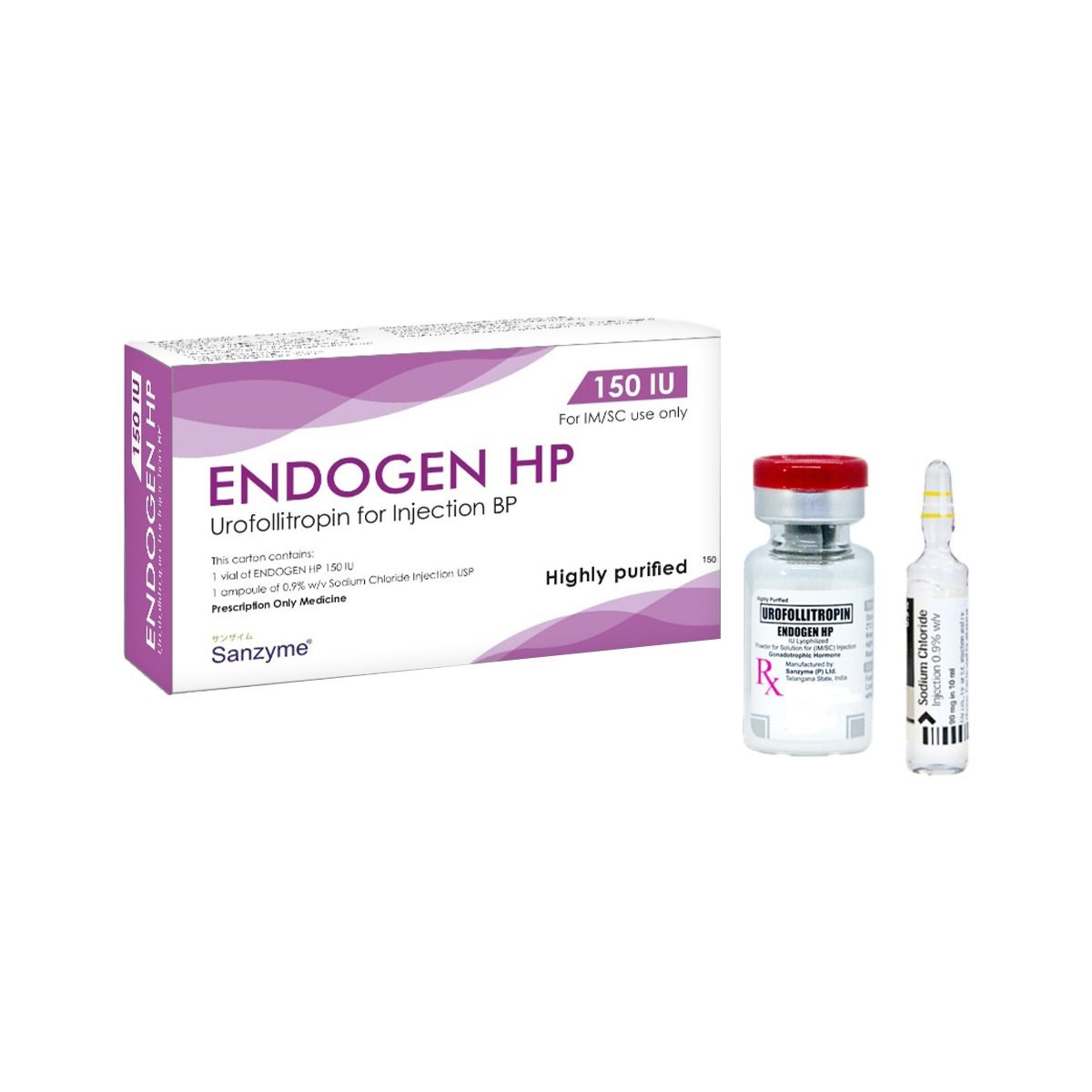
Endogen Hp - Endogen Hp 150 IU powder and solvent
| Status | Select a city |
| Brand country |  India |
| Quantity and shape | 1 vial |
| Generics | urofollitropin |









- Description
- Reviews
Endogen HP
Urofollitropin for Injection BP, 150 IU/vial
Highly purified, for intramuscular or subcutaneous use only
Description
Endogen HP 75 IU
Urofollitropin for Injection BP 75 IU
One vial of sterile lyophilized product contains:
Urofollitropin (FSH) BP 75 IU
Mannitol USP q.s.
Potassium Dihydrogen Phosphate BP q.s.
Dipotassium Hydrogen Phosphate BP q.s.
Dilute in the provided 1 ml Sodium Chloride USP Injection (0.9% w/v)
Endogen HP 150 IU
Urofollitropin for Injection BP 150 IU
One vial of sterile lyophilized product contains:
Urofollitropin (FSH) BP 150 IU
Mannitol USP q.s.
Potassium Dihydrogen Phosphate BP q.s.
Dipotassium Hydrogen Phosphate BP q.s.
Dilute in the provided 1 ml Sodium Chloride USP Injection (0.9% w/v)
Pharmacological properties
Pharmacodynamic properties: Endogen HP contains highly purified follicle-stimulating hormone (FSH) derived from urine, obtained from the urine of postmenopausal women. FSH stimulates the growth and development of ovarian follicles, as well as the production of gonadal steroids in women who do not have primary ovarian failure.
In Endogen HP the isoform composition of highly purified FSH contains relatively more basic isoforms than other urofollitropin preparations and is similar to the isoform profile of recombinant FSH preparations. According to clinical trial data, the pharmacodynamic responses associated with Endogen HP treatment do not differ from recombinant FSH when the preparations are administered by the same route.
Following subcutaneous administration, the following were observed: similar follicular response, peak estradiol levels, number of oocytes retrieved, and number of mature oocytes,
without differences in total FSH dose and treatment duration.
Endogen HP treatment is usually followed by the administration of hCG to stimulate final follicular maturation and ovulation.
Indications:
Endogen HP is indicated for the treatment of female infertility in the following clinical situations: Anovulation (including polycystic ovary disease (PCOD)) in women who have been unresponsive to treatment with clomiphene citrate.
Controlled ovarian hyperstimulation to induce the development of multiple follicles in medically assisted reproduction programs (e.g., in vitro fertilization/embryo transfer (IVF/ET), gamete intrafallopian transfer (GIFT) and intracytoplasmic sperm injection (ICSI)).
Dosage and Administration:
Treatment with Endogen HP should be initiated under the supervision of a physician experienced in the treatment of fertility problems.
Method of Administration:
Endogen HP is intended for subcutaneous (SC) / intramuscular (IM) injection after reconstitution with the provided solvent. The powder should be reconstituted immediately prior to use. In order to avoid the injection of large volumes, up to 6 vials of the powder may be dissolved in the provided solvent. The solution should not be used if it contains particles or if it is not clear.
Description of the reconstituted solution: Clear solution
Dosage:
The ovarian response to exogenous gonadotropins is characterized by high inter- and intra-individual variability, which makes it impossible to establish a uniform dosage scheme. Therefore, the dose should be adjusted individually according to the ovarian response. This requires monitoring of the response by ultrasound alone or, preferably, in combination with the determination of estradiol levels.
Endogen HP can be administered alone or in combination with a gonadotropin-releasing hormone (GnRH) agonist or antagonist for controlled ovarian hyperstimulation. There is no clinical experience with the use of Endogen HP in combination with GnRH antagonists for this indication.
Dosage and treatment duration recommendations may vary depending on the specific treatment protocol used.
Clinical trial experience with Endogen HP is based on a single treatment cycle for both indications.
Women with anovulation (including polycystic ovary syndrome — PCOD): The goal of Endogen HP therapy is to develop a single Graafian follicle from which the oocyte will be released following the administration of human chorionic gonadotropin (hCG).
Endogen HP therapy should be started within the first 7 days of the menstrual cycle. The recommended starting dose of Endogen HP is 75 IU per day, which should be maintained for at least 7 days. Based on clinical monitoring (including ovarian ultrasound alone or determination of estradiol levels), subsequent doses should be adjusted according to the patient's individual response. Dose adjustments should not be made more frequently than every 7 days. It is recommended to increase the dose by 37.5 IU per adjustment, but not to exceed 75 IU. The maximum daily dose should not exceed 225 IU. If the patient does not show an adequate response within 4 weeks of starting treatment, this treatment cycle should be discontinued.
If an optimal response is obtained, a single injection of 5000 to 10000 IU of hCG should be administered approximately one day after the last injection of Endogen HP. The patient is advised to have sexual intercourse on the day of hCG administration and the following day. Alternatively, intrauterine insemination may be performed. Patients should be under strict medical supervision for at least 2 weeks after hCG administration. If the response to Endogen HP is excessive, treatment and hCG administration should be discontinued. In such a case, the patient should use a barrier method of contraception or abstain from sexual intercourse until the next menstrual bleeding begins.
Women undergoing controlled ovarian hyperstimulation for the development of multiple follicles using assisted reproductive technologies (ART): According to clinical trials of Endogen HP, which used down-regulation with GnRH agonists, therapy with Endogen HP should be initiated approximately 2 weeks after the start of agonist treatment. The recommended starting dose of Endogen HP is 150–225 IU per day for at least the first 5 days of treatment. Based on clinical monitoring (including ovarian ultrasound alone or determination of estradiol levels), the subsequent dose should be adjusted according to the patient's individual response and should not exceed 150 IU per adjustment. The maximum daily dose should not exceed 450 IU. In most cases, dosing for more than 12 days is not recommended.
In protocols that do not involve down-regulation, therapy with Endogen HP should be initiated on day 2 or 3 of the menstrual cycle. It is recommended to use the dosage range and administration regimen indicated above on the same principle as adopted in protocols with down-regulation by GnRH agonists.
If an optimal response is obtained, a single injection of up to 10,000 IU of hCG should be administered to prepare for oocyte retrieval and to stimulate final follicular maturation. Patients should be kept under strict medical supervision for at least 2 weeks following hCG administration.
If an excessive reaction to Endogen HP occurs, treatment should be discontinued and hCG administration should be cancelled. In such a case, the patient should use a barrier method of contraception or abstain from sexual intercourse until the onset of the next menstrual bleeding.
Contraindications
Endogen HP is contraindicated in women who have:
• Tumors of the pituitary gland or hypothalamus;
• Carcinoma of the ovary, uterus, or breast;
• Pregnancy or lactation period;
• Gynecological bleeding of unknown etiology;
• Hypersensitivity to FSH or any of the excipients.
In the following cases, the outcome of treatment is unlikely to be favorable, therefore Endogen HP should not be used:
• Primary ovarian failure;
• Malformations of the sexual organs incompatible with pregnancy;
• Uterine fibroid tumors that are incompatible with pregnancy.
Special warnings and precautions
Endogen HP is a potent gonadotropic preparation capable of causing mild to severe adverse reactions. It should only be used under the supervision of physicians who are thoroughly familiar with infertility problems and their management principles. Gonadotropin therapy requires appropriate experience of physicians and supporting medical personnel, as well as the availability of adequate monitoring facilities. Safe and effective use of Endogen HP in women requires regular monitoring of ovarian response with ultrasound examination, alone or preferably in combination with the determination of serum estradiol levels.
The response to FSH may vary among patients; in some cases, a poor or uneven response is observed. Therefore, depending on the goal of treatment, it should always be used at the lowest effective dose.
The effect of repeated use of Endogen HP has not been studied in clinical trials.
The first injection of the drug should be administered under direct medical supervision.
Before starting treatment, a comprehensive evaluation of the couple's infertility causes and the exclusion of possible contraindications for pregnancy are necessary. It is particularly important to evaluate patients for hypothyroidism, adrenocortical insufficiency, hyperprolactinemia, and the presence of pituitary or hypothalamic tumors, and to prescribe appropriate treatment if necessary.
Patients undergoing follicular growth stimulation — whether as part of anovulatory infertility treatment or assisted reproductive technologies (ART) — may develop ovarian enlargement or hyperstimulation. Adhering to the recommended dosage and administration regimen of Endogen HP, as well as careful and regular monitoring of therapy, significantly reduces the risk of such events. Proper interpretation of follicular growth and maturation indicators requires appropriate medical experience and qualifications.
When injecting medicinal products based on human urine, the possibility of transmitting infectious agents cannot be completely excluded. However, this risk is limited by the extraction/purification process, which includes steps for virus inactivation and/or removal.
Ovarian Hyperstimulation Syndrome (OHSS) OHSS is a medical event distinct from simple ovarian enlargement. This syndrome can manifest with varying severity and is characterized by marked ovarian enlargement, high serum levels of sex steroids, and increased vascular permeability, leading to fluid accumulation in the peritoneal, pleural, and rarely, pericardial cavities.
In severe OHSS, the following symptoms may be observed: abdominal pain, distension, marked ovarian enlargement, weight gain, dyspnea, oliguria, as well as gastrointestinal symptoms — nausea, vomiting, and diarrhea. Clinical evaluation may reveal hypovolemia, hemoconcentration, electrolyte imbalances, ascites, hemoperitoneum, pleural effusions, hydrothorax, acute pulmonary distress syndrome, and thromboembolic events.
Excessive ovarian response during gonadotropin treatment rarely causes OHSS unless hCG is used to induce ovulation. Therefore, if signs of ovarian hyperstimulation occur, it is advisable to withhold hCG administration and advise the patient to refrain from sexual intercourse or use barrier contraceptive methods for at least 4 days.
OHSS may develop rapidly — within 24 hours to several days — and become a serious medical condition. Accordingly, patients should be kept under observation for at least two weeks following hCG administration.
Adherence to the recommended dosage and treatment regimen, as well as careful monitoring of therapy, significantly reduces the risk of developing both OHSS and multiple pregnancies. In ART programs, aspiration of all follicles prior to ovulation may reduce the incidence of hyperstimulation.
OHSS can be more severe and prolonged in the event of pregnancy. It typically develops after the cessation of hormonal treatment and reaches its peak approximately 7–10 days following treatment. In most cases, the syndrome resolves spontaneously with the onset of menstruation.
If severe OHSS develops, gonadotropin treatment should be stopped immediately (if it is still ongoing), the patient should be hospitalized, and appropriate specific therapy should be administered.
This syndrome is particularly common in patients with polycystic ovary syndrome.
Multiple pregnancy: Multiple pregnancy, especially in the case of high order, is associated with an increased risk of adverse perinatal outcomes for the mother and fetus. The incidence of multiple pregnancy after ovulation induction with gonadotropins is higher than the incidence associated with natural conception.
Most multiple conceptions are twins.
To reduce the risk of multiple pregnancy, careful monitoring of ovarian response is recommended.
In patients undergoing antiretroviral therapy, the risk of multiple pregnancy is mainly determined by the number of embryos replaced, their quality, and the patient's age.
Before starting treatment, the patient should be informed about the potential risk of multiple pregnancy.
Pregnancy loss: The incidence of missed pregnancy or spontaneous abortion is higher in patients undergoing follicular growth stimulation for ovulation induction or antiretroviral therapy purposes than in the general population.
Ectopic pregnancy: Women with a history of ectopic diseases are at risk of ectopic pregnancy regardless of whether the pregnancy is achieved by spontaneous conception or fertility treatment. The prevalence of ectopic pregnancy after IVF is 2-5%, while in the general population it is about 1-1.5%.
Reproductive system tumors: There are reports of the development of ovarian and other reproductive system neoplasms — both benign and malignant — in women who have undergone various medical regimens for the treatment of infertility.
It is currently unknown whether gonadotropin treatment increases the baseline risk of developing neoplasms in infertile women.
Congenital malformations: The incidence of congenital malformations after assisted reproductive technology (ART) may be slightly higher than after spontaneous conception.
It is assumed that this difference is mainly due to parental characteristics (e.g., maternal age, sperm quality) and the increased incidence of multiple pregnancies.
Thromboembolic events: In women with known risk factors for thromboembolic events — such as personal or family history, severe obesity (body mass index >30 kg/m²) or thrombophilia — there may be an increased risk of venous or arterial thromboembolic events during or after gonadotropin treatment.
In these patients, the benefits of gonadotropin treatment should be weighed against the potential risks.
However, it should be noted that pregnancy itself is also associated with an increased risk of thromboembolic events.
Interaction with other medicinal products and other forms of interaction
No specific interaction studies with Endogen HP have been performed in humans.
Although clinical experience is limited, it is expected that the simultaneous use of Endogen HP and clomiphene citrate may enhance the follicular response.
Pregnancy and lactation Endogen HP is contraindicated in pregnant and lactating women. To date, no teratogenic risk has been reported with the clinical use of gonadotropins for controlled ovarian hyperstimulation.
Available data on the effects on pregnancy are insufficient.
Animal studies have not revealed teratogenic effects.
Adverse reactions In clinical trials, the most frequently reported adverse reactions during treatment with Endogen HP were headache and abdominal pain, which occurred in approximately 10% of patients. The next most frequent were nausea, vaginal bleeding, ovarian hyperstimulation syndrome (OHSS), and abdominal distension — each in approximately 5–9% of patients.
The table below presents adverse reactions reported in ≥1% of patients treated with Endogen HP in clinical trials, by system organ class and frequency category.
|
System Organ Class |
Very common (>1/10) |
Common (>1/100, <1/10) |
|
Infections and infestations |
- |
Urinary tract infection, nasopharyngitis |
|
Nervous system disorders |
Headache |
- |
|
Vascular disorders |
- |
Hot flushes |
|
Gastrointestinal disorders |
Abdominal pain |
Nausea, vomiting, abdominal distension, abdominal discomfort, diarrhea, constipation |
|
Skin and subcutaneous tissue disorders |
- |
Rash |
|
Musculoskeletal and connective tissue disorders |
- |
Muscle spasms |
|
Reproductive system and breast disorders |
- |
Vaginal discharge, OHSS, pelvic pain, breast tenderness, vaginal bleeding |
|
General disorders and administration site conditions |
- |
Pain, pain and reactions at the injection site (redness, bruising, swelling and/or itching) |
Venous thromboembolic events and ovarian torsion may occur as complications of OHSS. Allergic, local or generalized skin reactions, as well as delayed-type hypersensitivity, have been reported with the use of gonadotropin preparations. Repeated exposure to Endogen HP has not been investigated in clinical trials.
Overdose
The effects of an overdose are unknown; however, the development of ovarian hyperstimulation syndrome (OHSS) is possible.
Incompatibility: This medicinal product must not be mixed with other medicinal products.
Storage conditions
Store in a refrigerator (2°C to 8°C).
Store in the original package in order to protect from light.
Reconstitute the product with the solvent immediately prior to use.
Do not store the reconstituted solution.
Dosage form and packaging
Each dose of Endogen HP contains: 1 vial of sterile, lyophilized, purified urofollitropin for injection BP (highly purified); 1 ampoule of sodium chloride for injection USP (0.9% w/v).
Translated by AI


