

 Select a city
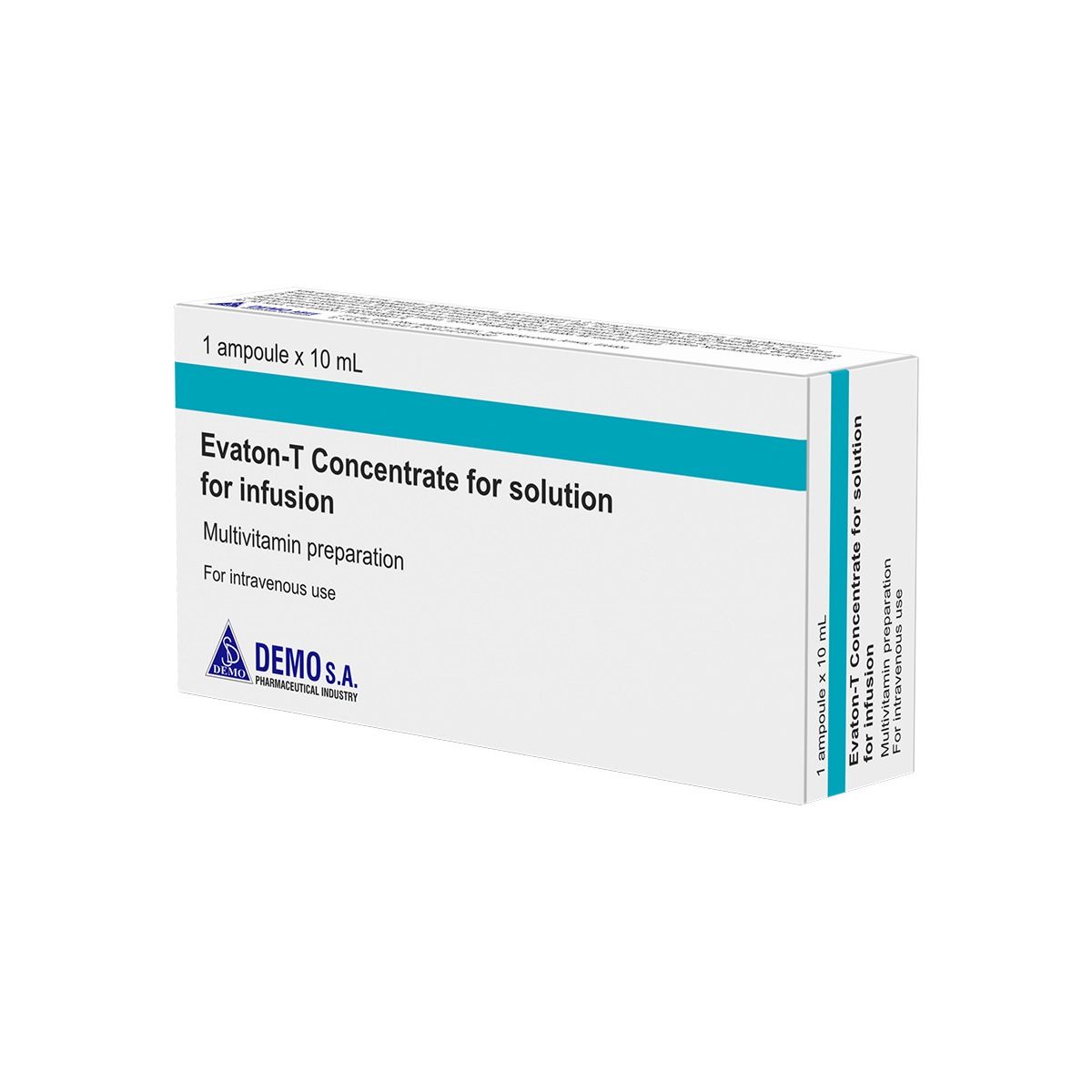
Evaton-T - Evaton-T 10ml 1 ampoule
| Status | Select a city |
| Brand country |  Greece |
| Quantity and shape | 1 ampoule |
| Generics | combined drug |






- Description
- Reviews
Evaton-T
Concentrate for solution for infusion
1. Description of the medicinal product
1.1 Name of the medicinal product: Evaton-T
1.2 Composition:
Active substances: Pyridoxine hydrochloride, Thiamine hydrochloride, Cyanocobalamin, Retinol, Riboflavin, Nicotinamide, Dexpanthenol , Vitamin D2, DL-alpha-tocopheryl acetate.
Excipients: Benzyl alcohol (125 mg/10 ml), Gentisic acid ethanolamide, Polysorbate 80, Water for injection.
1.3 Pharmaceutical form: Solution for injection
1.4 Composition of active substances:
Each 10ml ampoule contains: Pyridoxine hydrochloride 25 mg, Thiamine hydrochloride 75 mg, Cyanocobalamin 0.75 mg, Retinol 15000 IU, Riboflavin 10 mg, Nicotinamide 125 mg, Dexpanthenol 30 mg, Vitamin D2 1000 IU, DL-alpha-tocopheryl acetate 10 mg
1.5 Description - Packaging:
Evaton-T is a clear, orange-red liquid and is supplied in 10 ml type I hydrolytic glass cartridges and packaged in 1 ampoule containing cartons.
1.6 Pharmacotherapeutic category: Vitamin combination for parenteral use.
2. What you need to know about the medicine prescribed by your doctor
2.1 General information:
Evaton-T is an excellent combination of fat-soluble and water-soluble vitamins in an aqueous solution for injection. The solubility of fat-soluble vitamins in Evaton-T promotes better absorption of these substances and rapid recovery of the patient. The addition of a high proportion of vitamin B12 makes Evaton-T an excellent hematopoietic and tonic agent. It also regulates the function of many enzymatic mechanisms involved in metabolism.
2.2 Therapeutic indications:
Evaton-T injection solution is indicated in the following cases: before and after surgery during any form of surgical procedures. Gastrointestinal disorders, ulcerative colitis, polyneuritis, neuralgia etc. During recovery from serious infectious diseases, to strengthen the body's defense forces. In the elderly, as a drug of choice. A strengthening agent for fatigue and exhaustion
time.
Especially indicated for various macrocytic anemias, pregnancy anemia and etc.
In case of vitamin deficiency or increased need for them, such as pregnancy, breastfeeding, malnutrition, alcoholism, hyperthyroidism and nutritional abstinence.
2.3 Contraindications:
- If ever noted allergic reaction or any unusual reaction to this preparation or its any substance, which is included in the same preparation.
-In case of hypervitaminosis when any vitamin containing preparation is used.
-Active substance dexpanthenol also is contraindicated in those cases, when patient has hemophilia and fibrosis mechanical obstruction due to.
2.4 Special warnings and precautions for use:
2.4.1 General:
Overdose should be avoided. It is recommended to immediately stop taking the drug upon the appearance of symptoms of hypervitaminosis and hypercalcemia (caused by vitamin D2) and appropriate treatment is necessary. Because the drug contains vitamin D2, patients receiving therapeutic doses often undergo determination of calcium levels in the blood.
In patients with chronic kidney failure who are on hemodialysis, Vitamin A has a toxic effect on hypercalcemia and elevated alkaline phosphatase. Patients with Leber's disease (hereditary optic nerve atrophy) who used cyanocobalamin, experience severe optic nerve atrophy.
Also, it may cause hypokalemia and fatal even, megaloblastic anemia normal erythropoiesis with cyanocobalamin transition, blood red cells increased demand due to.
2.4.2 Elderly:
Special safety measures and warnings are not provided when using the product in the elderly.
2.4.3. Children:
May cause serious side effects in children, if the dose is incorrect. Evaton-T is contraindicated in newborns, as well as during the first two years of their life, because it contains benzyl alcohol, as a preservative.
2.4.4. Pregnancy
No effects on the fetus have been observed at normal doses. However, since high A and D vitamin doses have shown fetal anomalies in animals, it is advisable to evaluate the benefits of use during pregnancy.
Especially during pregnancy, Vitamin D2 doses of 400 IU and higher carry the risk of fetal malformations, parathyroid hormone inhibition and the development of hypotensive tetany in the newborn.
2.4.5. Lactation:
During breastfeeding, due to the high concentration of vitamin D2 in breast milk, there is a risk of hypercalcemia in infants. In general, the safety of high doses of the drug during breastfeeding has not been established, therefore it is advisable to evaluate the benefits of use during breastfeeding. High doses of pyridoxine may interfere with lactation due to inhibition of prolactin.
2.4.6. Effects on ability to drive and use machines :
The product does not have any effect on driving and machine operating ability.
2.5 Interaction with other medicinal products and other forms of interaction:
Antiepileptic drugs phenytoin and barbiturates reduce the activity of vitamin D2 (risk of rickets in children and risk of osteomalacia in adults). When using thiazides the risk of hypercalcemia increases due to decreased calcium excretion. Cholestyramine and paraffin oil reduce the absorption of vitamin D2. Taking magnesium-containing antacids may cause hypermagnesemia.
Vitamin B6 activates DOPA-decarboxylase. Therefore, it should not be used together with levodopa, except with a DOPA-decarboxylase inhibitor.
Chloramphenicol and other bone marrow suppressors reduce the therapeutic property of B12 in erythrocyte maturation due to their interference. Cimetidine reduces the digestion and release of food-bound B12 by decreasing gastric acid and pepsin secretion.
Allergic reactions have been reported with the simultaneous use of dexpanthenol and antibiotics or preparations.
2.6 Dosage and method of administration:
Dosage should be individualized according to each patient's needs.
1-2 ampoules per day, each diluted in 500 ml or 1000 ml physiological saline or glucose solution.
The ampoule contents before use must be diluted with at least 500 ml of infusion fluid.
2.7 Over dose:
Symptoms of A and D2 overdose include seizures, diarrhea, dizziness, headache, vomiting, fatigue or weakness, joint or muscle pain, anorexia, headache, signs of increased intracranial pressure (headache, visual disturbances, constipation, seizures, bulging fontanelle in children), skin peeling.
A vitamin dose overdose in case of treatment is done by drug discontinuation and symptomatic treatment. D2 vitamin excessive dosing treatment is done by drug discontinuation, calcium low content diet, fluid intake, urine acidity increasing and symptomatic treatment.
2.8 Adverse effects:
Along with the desired effects, any drug can also cause certain side effects. Although not all of these side effects are common, you should inform your doctor about them, so that they can give you the necessary instructions.
Normal doses do not cause side effects. Very high doses when taken may cause A and D2 hypervitaminosis symptoms.
In addition to the side effects described in case of overdose, chronic overdose of vitamin A is manifested by the following symptoms: dryness of the skin and mucous membranes, striae, cheilitis, gingivitis, headache, diplopia, photophobia, optic nerve papilledema, nystagmus, restlessness, sleep disturbances, increased intracranial pressure, myalgia, arthralgia, bone pain, liver and
Spleen enlargement, liver cirrhosis. In children is observed: intracranial pressure increase, bone marrow
Hypertrophy, early epiphyseal closure, extremity tenderness and painful swelling.
Peripheral neurological reactions, especially paresthesia type, have been reported after prolonged intake of high daily doses of vitamin B6.
2.9 What you should know in case of a missed dose:
If you need continuous administration of the drug and miss a dose, this dose should be taken as soon as possible. However, if it is time for the next dose, do not take the missed dose, but continue treatment as usual.
Do not double the doses.
2.10 Expiration date:
Indicated on the label and outer carton.
Do not take this medicine after this date.
2.11 Special precautions for storage:
Keep out of the reach of children. Store below 25°C, protected from light.
2.12 Date of text revision: January 2007
3. General information on the rational use of medicines
- This medicine was prescribed for a specific medical problem. Do not pass it to others or use it to treat other illnesses without consulting a doctor .
- If during treatment there occurs any side effect, or if you notice any side effects, which are not listed in this leaflet, immediately inform your doctor or pharmacist.
- If you have any questions about the medicine or need additional information or advice about your medical problem, contact your doctor or pharmacist.
- For best results, always take this medicine exactly as your doctor prescribed.
- Before taking this medicine, carefully read this package-leaflet completely. It contains important information for your health and safety.
- Do not store medicines in bathroom cabinets, because heat and humidity can affect their quality. Always keep medicines in original packaging and in a dry place.
- Do not keep medicines, which you no longer use or which are expired.
- For greater safety, keep all medicines out of the reach of children.
4. General classification of supply
This medicinal product is dispensed by a doctor's prescription.
Translated by AI


