

 Select a city
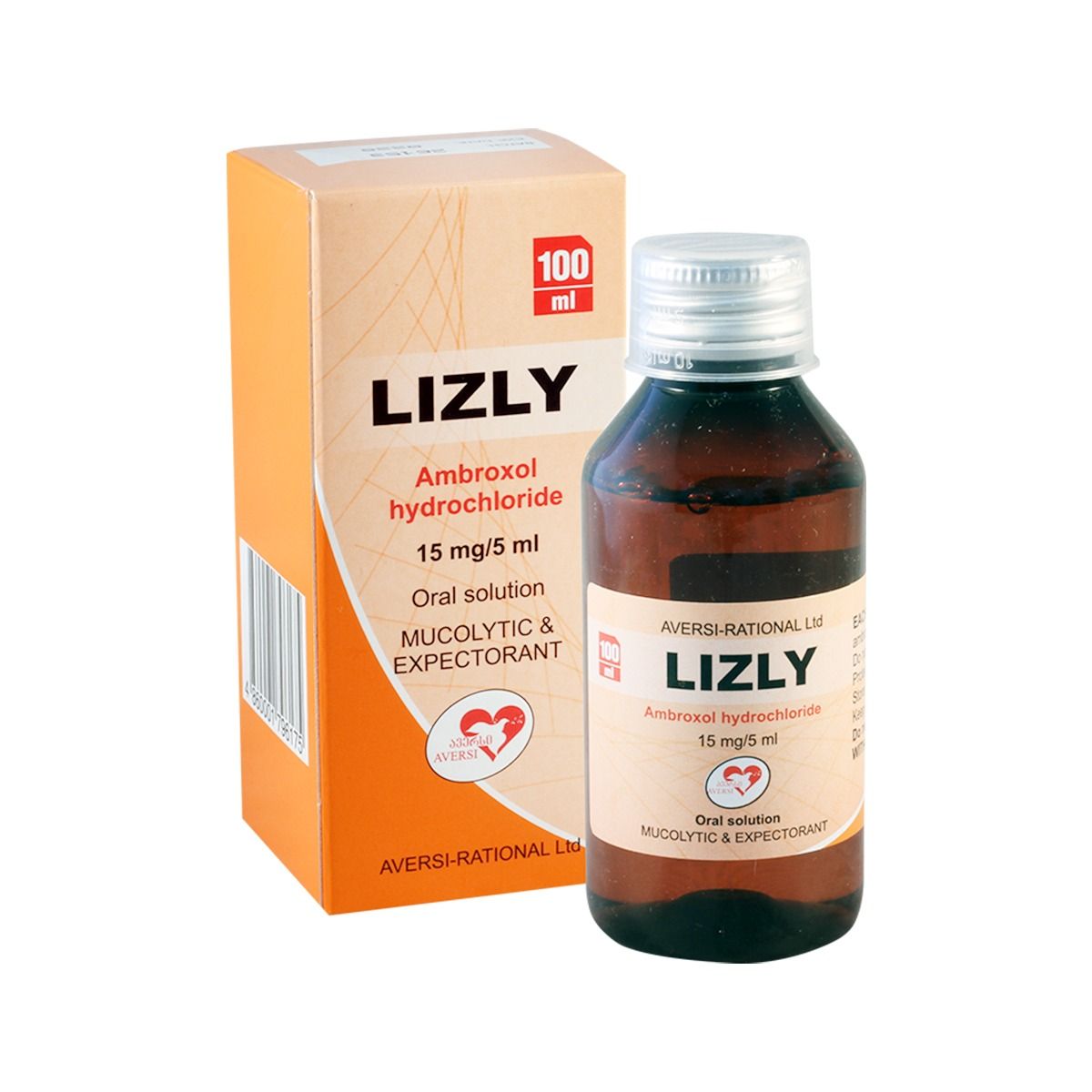
Lizly - Lizly Solution 15mg/5ml 100ml
| Status | Select a city |
| Brand | Aversi Rational / Aversi Rationali Rational |
| Brand country |  Georgia |
| Quantity and shape | 1 vial |
| Generics | ambroxol |
| Volume | 100 მლ |












- Description
- Reviews
LIZLY
LIZLY
General characteristics:
International non-proprietary name: Ambroxol;
Main physical-chemical properties:
Colorless, transparent solution with a characteristic odor;
Composition:
5 ml of solution contains:
Ambroxol hydrochloride – 15 mg;
Excipients: hypromellose, benzoic acid, sucralose, peppermint flavor, raspberry flavor, purified water.
Dosage form:
Oral solution, 15 mg/5 ml.
Pharmacological group:
Mucolytic and expectorant agent.
ATC-code: R05CB06
Pharmacological properties:
Ambroxol hydrochloride is an active metabolite of bromhexine, characterized by mucolytic and expectorant action. The drug stimulates the secretion of the mucous membrane of the bronchi by adenocytes. It activates hydrolytic enzymes and enhances the release of lysosomes from Clara cells, which leads to the breakdown of acid mucopolysaccharides in the bronchial secretion. Ambroxol hydrochloride enhances the process of surfactant formation in the alveoli and bronchi, improves the rheological parameters of bronchial secretion, reduces its viscosity and adhesive properties. The drug stimulates the movement of the cilia of the ciliated epithelium of the bronchi, which facilitates the evacuation of sputum, reduces spastic hyperreactivity of the bronchi.
Pharmacokinetics:
Ambroxol is rapidly and almost completely absorbed from the gastro-intestinal tract. Maximum concentration in plasma is reached in 1-2.5 hours. The drug's bioavailability is approximately 70-80%. Plasma proteins bind the drug by approximately 90%. Ambroxol crosses the blood-brain and placental barriers, passes into breast milk. The active substance's highest concentration is observed in the lungs.
The drug undergoes first-pass metabolism in the liver forming inactive conjugates (dibromanthranilic acid, glucuronides) . CYP3A4 is responsible for the metabolism of ambroxol hydrochloride to dibromanthranilic acid. It is excreted from the body via the kidneys: 90% – as metabolites , 10% – unchanged . T1/2 is approximately 10 hours.
Indications:
Acute and chronic diseases of the respiratory system, accompanied by difficult expectoration of sputum: acute bronchitis, exacerbation of chronic bronchitis, asthmatic bronchitis, bronchiectasis disease, pneumonia, bronchial asthma, chronic obstructive pulmonary disease; inflammatory diseases of the rhinopharyngeal tract: laryngitis, pharyngitis, sinusitis, rhinitis (as part of complex therapy).
Method of administration and dosage:
In adults and children over 12 years of age, during the first 2-3 days of treatment, it is recommended to take 10 ml of solution 3 times a day, then - 10 ml 2 times a day. In adults, it is possible to take 20 ml 2 times a day to enhance the therapeutic effect.
In children from 6 to 12 years of age, it is recommended to take 5 ml 2-3 times a day.
From 2 to 6 years of age in children it is recommended 2.5 ml 3 times a day.
Under 2 years of age in children the preparation is prescribed only under medical supervision. The recommended dose is 2.5 ml 2 times a day.
The solution is taken after meals with a sufficient amount of liquid , which helps to enhance the mucolytic effect of the preparation. It is not recommended to take the solution immediately before bedtime.
In case of acute renal failure or severe liver impairment it is necessary to reduce the dose of the drug or increase the interval between doses.
The duration of treatment is determined individually by the doctor and depends on the severity of the illness. Long-term use of the drug requires medical supervision.
Side effects:
The frequency of side effects is given according to the following classification: very common (≥ 1/10); common (≥ 1/100, < 1/10); uncommon (≥1/1000, < 1/100); rare (≥ 1/10000, < 1/1000); very rare (< 1/10000), not known (cannot be estimated from the available data).
Immune system disorders: Rare - hypersensitivity reactions; Frequency not known - anaphylactic reactions, angioneurotic edema.
Gastrointestinal system disorders : Common - nausea; Uncommon - vomiting, abdominal pain , dry mouth, diarrhea and other dyspeptic symptoms, transient oropharyngeal hypesthesia, very rarely - salivation.
Respiratory system disorders: Dryness of the respiratory tract mucosa, dyspnea (as a symptom of an allergic reaction).
Nervous system disorders: Common - dysgeusia (taste disturbance).
Skin and subcutaneous tissue disorders: Rare - rash, itching, urticaria; Frequency unknown - skin reactions (including erythema multiforme, Stevens-Johnson syndrome, toxic epidermal necrolysis, acute generalized exanthematous pustulosis).
Other: Uncommon - fever, mucous membrane reactions.
In the event that a side effect occurs that is not mentioned in the instructions for use, the patient should consult their attending physician.
Contraindications:
Hypersensitivity to any component of the drug.
Interaction with medicinal products and other forms of interaction:
Ambroxol promotes the penetration into bronchial mucosa and secretions of antimicrobial agents (amoxicillin, cefuroxime, erythromycin, doxycycline, sulfonamides) .
It is not recommended to use the drug with antitussive agents (including codeine) together, because cough suppression hinders sputum expectoration.
Over dose:
Specific symptoms of overdose are not known. Symptoms observed during overdose/and accidental use of the drug correspond to known side effects and require symptomatic therapy.
Pregnancy and lactation:
Ambroxol crosses the placental barrier, therefore the use of the drug during pregnancy (especially in the I trimester) is not recommended. The drug passes into breast milk, which is why breastfeeding should be discontinued during treatment.
Animal studies have not revealed direct or indirect negative effects of ambroxol on fertility.
Special instructions:
In case of gastric and duodenal ulcer disease, it is necessary to refrain from taking the drug.
Lizli should be used with caution in case of impaired renal/function and severe liver damage; also in motor bronchopathy during, since a delay in sputum evacuation is expected.
Taking the drug is safe for patients with diabetes, however, proper control of blood sugar levels is required.
The drug contains benzoic acid, which may increase the risk of jaundice in newborns.
The patient should be informed, that in case of deterioration of the condition, it is necessary to consult a doctor.
Effect of the drug on the ability to drive vehicles and mechanisms:
The preparation does not affect the ability to drive vehicles and concentrate attention.
Packaging:
100 ml solution in an orange polymer bottle with a measuring cap, one bottle in a cardboard box.
Storage conditions:
Store at a temperature not exceeding 25ºC in the original packaging, protected from light and out of reach of children. Do not freeze the solution.
After opening the bottle the solution is suitable for use for 30 days.
In case of any defect found as a result of visual inspection, the use of the preparation is unacceptable.
Shelf life:
2 years. Do not use the preparation after the expiry date stated on the package.
Dispensing conditions:
Pharmaceutical product group III, dispensed without a prescription.
Manufacturer:
LLC “Aversi-Rational” (Georgia).
Also, see: Lizly 30mg 50 Tablets
Translated by AI


