

 Select a city
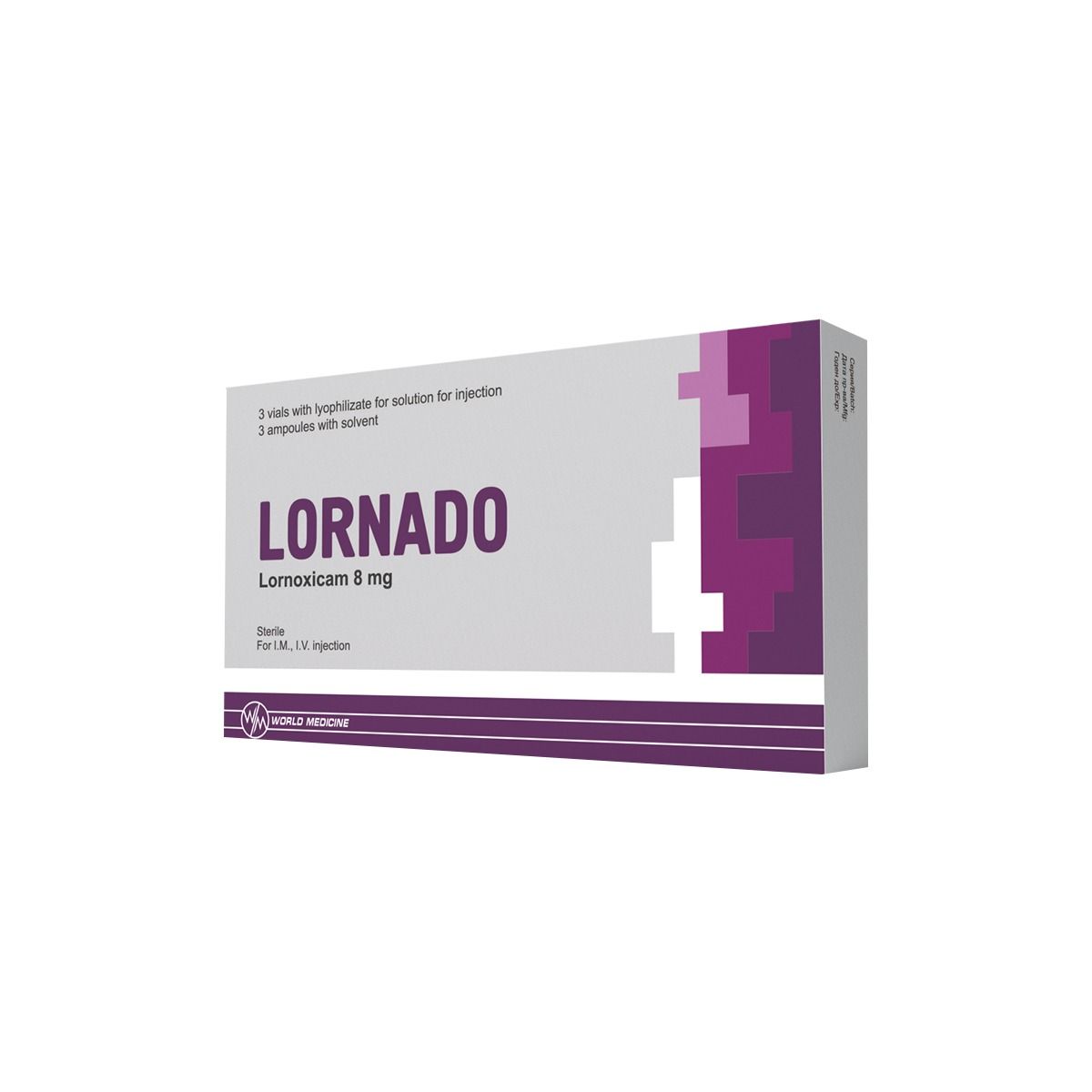
Lornado - Lornado Lyophilized 8mg 3 vials + solvent
| Status | Select a city |
| Brand | World Medicine / World Medicine |
| Brand country |  Turkey |
| Quantity and shape | 3 ampoules |
| Generics | lornoxicam |
















- Description
- Reviews
Lornado
Name of the medicinal product
Lornado, Lornado
International non-proprietary name
Lornoxicam, Lornoxicam
Composition
1 vial with lyophilisate contains
Active substance: Lornoxicam 8 mg .
Excipients: Mannitol, Tromethamine , Disodium edetate.
Solvent: Water for injection 2 ml.
Dosage form
Lyophilisate for the preparation of injection solution complete with solvent.
Description: Lyophilized yellow powder;
Solvent: Clear, colorless liquid.
Indications for use
Symptomatic short-term therapy in adults with acute mild or moderately expressed pain.
Method of administration and doses
Dosage
Lornoxicam should be administered parenterally only in cases where it is necessary to rapidly relieve the pain syndrome or when the drug cannot be used in oral or rectal form. As a rule, Lornado in the form of injections is used once, as initial therapy.
The dose of lornoxicam and the duration of treatment are determined individually, depending on the nature and severity of the disease.
The risk of adverse reactions can be minimized by using the lowest effective dose of lornoxicam for the shortest possible duration, which is necessary to control the pain syndrome.
The recommended dose for pain syndrome therapy is lornoxicam 8 mg as a single dose intravenously (IV) or intramuscularly (IM). During the first 24 hours, in some patients it may be necessary to re-administer the drug at a dose of 8 mg. The daily dose of lornoxicam should not exceed 16 mg.
Special patient groups
Children and adolescents
Data on the safety and efficacy of lornoxicam in children and adolescents under 18 years of age are not available, therefore the use of Lornado is not recommended in this age group of patients.
Elderly patients
In patients older than 65 years without renal or hepatic impairment, no dose adjustment of lornoxicam is required.
However, Lornado should be used with caution in patients of this age group, as they tolerate adverse reactions of the gastrointestinal (GI) tract more poorly.
Patients with renal impairment
In patients with mild or moderate renal impairment, a reduction in the dose of lornoxicam should be considered. The use of Lornado in patients with severe renal impairment is contraindicated.
Patients with hepatic impairment
In patients with moderate hepatic impairment, a reduction in the dose of lornoxicam should be considered. The use of Lornado in patients with severe hepatic impairment is contraindicated.
Method of administration
The drug is intended for I/V or I/M administration only.
I/V infusion duration should be no less than 15 seconds, the preparation must be administered I/M over at least 5 seconds.
The lyophilized powder in the vial should be diluted with the solvent contained in the ampoule, immediately before use; the prepared solution is free from visible particles a clear greenish-yellow solution. If its appearance changes it must be disposed of in accordance with local requirements.
The prepared solution should be used immediately after preparation.
After preparing the solution, the needle must be changed. For I/M administration of the solution a long needle should be used.
The preparation is intended for single use only.
Lornoxicam is compatible with 0.9% (9 mg/ml) sodium chloride solution, 5% (50 mg/ml) glucose solution, and Ringer's solution.
Contraindications
- Hypersensitivity to the active substance or any excipient of the drug;
- Hypersensitivity (such symptoms as bronchial asthma, angioedema, rhinitis, urticaria) to other non-steroidal anti-inflammatory drugs (NSAIDs), including acetylsalicylic acid (ASA);
- Thrombocytopenia;
- Severe heart failure;
- Gastrointestinal, cerebrovascular, or other bleeding;
- History of gastrointestinal bleeding or perforation related to previous NSAID therapy;
- Acute peptic ulcer or gastrointestinal bleeding, recurrent ulcer or gastrointestinal bleeding in history (two or more confirmed episodes of ulcer formation or bleeding development );
- Severe hepatic impairment;
- Severe renal impairment (blood plasma creatinine concentration (Ccr) greater than 700 µmol/L);
- Third trimester of pregnancy.
Special warnings and precautions for use
Lornoxicam inhibits platelet aggregation and prolongs bleeding time, therefore Lornado should be used with caution in patients with an increased tendency to bleed.
In the following situations, lornoxicam should be used only after a careful assessment of the benefit/risk ratio:
- In patients with mild ( Ccr 150-300 µmol/L) and moderately ( Ccr 300-700 µmol/L) impaired renal function Lornoxicam should be used with caution due to the fact that prostaglandins are essential for maintaining renal blood flow. In case of deterioration of renal function, the medicinal product's use should be discontinued.
- During Lornado therapy in patients after major surgery, with heart failure, receiving diuretics or drugs that may cause kidney damage, it is necessary to monitor renal function.
- Lornado therapy in patients with blood coagulation disorders should be carried out with clinical status carefully monitored and laboratory parameters evaluated (e.g., activated partial thromboplastin time).
- Lornado therapy in patients with hepatic impairment (e.g., cirrhosis), clinical status monitoring and laboratory parameter evaluation should be performed regularly (e.g., liver enzyme levels in blood plasma), since lornoxicam at daily doses of 12-16 mg may accumulate in the body (increase in the area under the "concentration-time" curve (AUC)). Other pharmacokinetic parameters of the medicinal product when used in patients with hepatic impairment do not change significantly compared to healthy subjects.
- Lornado therapy in elderly patients (over 65 years) requires monitoring of renal and hepatic function; the drug should be used with caution after surgical interventions.
Simultaneous use with NSAIDs
Lornoxicam should not be used with other NSAIDs, including selective inhibitors of cyclooxygenase-2 (COX-2).
Minimization of the risk of adverse reactions
The risk of adverse reactions can be minimized by using the lowest effective dose of lornoxicam for the shortest possible duration necessary to control pain syndrome.
Gastrointestinal bleeding, ulceration and perforation
Gastrointestinal bleeding development, ulcers and perforation formation cases, sometimes fatal outcome, reported with NSAID group medicines at various stages of treatment, regardless of the presence of previous symptoms or severe diseases of the gastrointestinal tract in the history.
The risk of gastrointestinal bleeding developing, ulcers or perforations forming increases with NSAIDs dose increase in patients with a history of ulcerous disease, especially complicated by bleeding or perforation , and also elderly patients; in such situations treatment should be initiated with the lowest possible dose of lornoxicam . In such patients, as well as in patients taking low-dose ASA or other drugs that increase gastrointestinal tract adverse reactions developing risk, should be considered the use of gastroprotective therapy possibility (e.g., misoprostol or proton pump inhibitors (PPIs)).
In similar situations with Lornado during therapy careful monitoring of the patients' clinical status should be conducted.
Patients, especially elderly ones, who had gastrointestinal tract adverse reactions in their anamnesis, should report to the doctor any unusual abdominal symptoms (in particular, gastrointestinal bleedings), especially at the beginning of treatment with Lornado.
Caution should be exercised when using Lornado in patients who simultaneously take medicines that increase the risk of ulcer formation or bleeding, such as oral use glucocorticosteroids (GCS), anticoagulants, for example warfarin, selective serotonin reuptake inhibitors (SSRIs) or antiplatelet agents, such as ASA.
If Lornado therapy causes the patient to develop gastrointestinal bleeding or ulcer, the use of the drug must be stopped.
In patients with a history of gastrointestinal diseases (ulcerative colitis, Crohn's disease), NSAIDs should be used with caution, because they can exacerbate the aforementioned diseases.
Elderly patients
In elderly patients the frequency of adverse reactions associated with the use of NSAIDs, especially gastrointestinal bleeding and perforations, which can have a fatal outcome , is increased.
Cardiovascular and cerebrovascular effects
Since the use of NSAIDs is associated with fluid retention and the development of edema in the body, during the use of Lornado, appropriate monitoring should be carried out and necessary recommendations given to patients with mild to moderate arterial hypertension and/or congestive heart failure (pre-existing or in history).
Clinical and epidemiological study results indicate that during therapy with certain NSAIDs (especially at high doses and long-term use) there may be a slight increase in the risk of arterial thrombosis (for example, myocardial infarction or stroke). Data to exclude such a risk for lornoxicam are insufficient.
In patients with uncontrolled arterial hypertension, congestive heart failure, diagnosed ischemic heart disease, peripheral arterial diseases and/or cerebrovascular diseases Lornado should be used only after careful evaluation of the benefit/risk. It is also necessary before starting Lornado therapy to evaluate the benefit/risk ratio in patients with risk factors for cardiovascular diseases (e.g., arterial hypertension, hyperlipidemia, diabetes mellitus, and smoking).
The simultaneous use of NSAIDs and heparin increases the risk of developing a spinal/epidural hematoma during spinal or epidural anesthesia.
Skin reactions
In very rare cases NSAIDs use developed severe skin reactions, such as, exfoliative dermatitis, Stevens-Johnson syndrome and toxic epidermal necrolysis, including fatal outcomes. Such reactions occurring highest risk is characteristic of the initial stage of therapy - they were mainly reported NSAID treatment in the first month. Lornado use should be discontinued as soon as skin rash, signs of mucous membrane damage or other symptoms of hypersensitivity appear.
Respiratory tract diseases
In patients with bronchial asthma, including in history, NSAIDs should be used
with caution, as they promote the development of bronchospasm.
Systemic lupus erythematosus and mixed connective tissue disease
In patients with systemic lupus erythematosus or mixed connective tissue disease caution should be exercised when using lornoxicam, as this may increase the risk of aseptic meningitis development.
Nephrotoxicity
Concomitant use of NSAIDs and tacrolimus may increase the risk of nephrotoxicity due to reduced renal prostacyclin synthesis. In patients receiving such combined therapy, careful monitoring of renal function is required.
Liver function test abnormalities
As with other NSAIDs use, when using lornoxicam, the concentration of transaminases, bilirubin, creatinine and urea nitrogen may increase in blood plasma, and changes may also occur in other laboratory parameters. If such changes are significant and occur over a prolonged period of time, the use of lornoxicam should be discontinued and appropriate investigations should be carried out.
Fertility
Lornoxicam, like other COX/prostaglandin synthesis inhibitors, may negatively affect fertility, therefore for women planning pregnancy, it is not recommended to use Lornado. In women who are unable to conceive or are undergoing relevant investigation for this, the issue of discontinuing the drug should be considered.
Chickenpox
In rare cases, when using NSAIDs against the background of chickenpox, severe infectious complications of the skin and soft tissues may develop. Since it cannot be ruled out that NSAIDs contribute to the worsening of the infection's severity, the use of lornoxicam during chickenpox should be avoided.
Excipients
The medicine contains less than 1 mmol (23 mg) sodium per vial, that is to say essentially "sodium-free".
Incompatibilities
The medicine must not be mixed with other medicinal products, except those preparations listed in the section "Special precautions for disposal and other handling".
Interaction with other medicinal products and other forms of interaction
Cimetidine
Increased concentration of lornoxicam in blood plasma, which may be associated with an increased risk of adverse reactions (interaction between lornoxicam and ranitidine or antacids has not been demonstrated).
Anticoagulants
NSAIDs may enhance the effects of anticoagulants such as warfarin. When used in combination, the International Normalized Ratio (INR) should be carefully monitored.
Phenprocoumon
Decreased efficacy of phenprocoumon.
Heparin
When used concurrently with NSAIDs during spinal or epidural anesthesia, the risk of bleeding and spinal or epidural hematoma development increases.
Angiotensin-converting enzyme (ACE) inhibitors
The antihypertensive effect of ACE inhibitors may be reduced.
Diuretics
Decreased diuretic and antihypertensive effect of loop, thiazide, and potassium-sparing diuretics (increased risk of hyperkalemia and nephrotoxicity).
β-adrenoblockers
Decreased antihypertensive effect of β-adrenoblockers.
Angiotensin II receptor blockers (ARB)
ARBs antihypertensive effect reduction.
Digoxin
Decreased renal clearance of digoxin and increased risk of its toxic effects.
GCS
Gastrointestinal bleeding occurrence and ulcer development increased risk.
Quinolone group antibiotics (e.g., levofloxacin, ofloxacin)
Increased risk of developing seizures.
Antiplatelet agents (e.g., clopidogrel)
Increased risk of gastrointestinal bleeding.
Other non-steroidal anti-inflammatory drugs
Increased risk of gastrointestinal bleeding and ulcers developing .
Methotrexate
Increased concentration of methotrexate in blood plasma, which may increase its toxic effects.
During combined use it is necessary to conduct patients' careful monitoring.
SSRIs
Increased risk of occurrence of gastrointestinal bleeding.
Lithium preparations
NSAIDs reduce the renal clearance of lithium, which may lead to an increase in its concentration in the blood plasma and the development of toxic effects.
During combined use it is necessary to monitor lithium levels in blood plasma, especially at the beginning of treatment, when adjusting the dose, and also after discontinuation of therapy.
Cyclosporine
Increased concentration of cyclosporine in blood serum. Renal toxicity of cyclosporine may be enhanced due to effects caused by renal prostaglandins indirectly. During joint therapy it is necessary to carry out renal function monitoring.
Sulfonylurea derivatives (e.g., glibenclamide)
Increased risk of developing hypoglycemia.
Known inducers and inhibitors of CYP2C9 isoenzymes
Lornoxicam (like other NSAIDs metabolized by cytochrome P450 2C9 (CYP2C9 isoenzyme)) interacts with known inducers and inhibitors of CYP2C9 isoenzymes.
Tacrolimus
Increased risk of nephrotoxic effects due to decreased prostacyclin synthesis in the kidneys.
Renal function monitoring is necessary during combined use.
Pemetrexed
NSAIDs may reduce the renal clearance of pemetrexed, which may be accompanied by increased nephrotoxic, gastroenterotoxic, and myelosuppressive effects.
Fertility, pregnancy and lactation
Pregnancy
The use of Lornado is contraindicated in women during the third trimester of pregnancy.
There are no clinical data on the use of lornoxicam in women during the first and second trimesters of pregnancy and during childbirth, therefore Lornado should not be used in this category of patients.
Adequate data on the use of lornoxicam in pregnant women are not available. Animal studies have shown that lornoxicam has reproductive toxicity.
Prostaglandin synthesis inhibition may negatively affect pregnancy and/or embryo's/fetal development. Epidemiological studies data suggest, that the use of prostaglandin synthesis inhibitors in early pregnancy is associated with an increased risk of miscarriage and cardiac malformations. The risk increases with dose increase and duration of use. Animal studies have shown, that the use of prostaglandin synthesis inhibitors increases embryo-fetal lethality pre- and post-implantation period. Therefore, in the first or second trimester of pregnancy Lornado should be used only in case of extreme necessity.
Starting from the 20th week of pregnancy lornoxicam use may be associated with the development of oligohydramnios as a result of fetal renal dysfunction. These changes are observed from the start of treatment within a short period of time, usually, they are reversible after discontinuation of therapy. In addition, there have been reports of fetal ductus arteriosus constriction when using the drug in women during the second trimester of pregnancy, in most cases the changes were reversible after discontinuation of therapy. In women during the I and II trimesters of pregnancy lornoxicam should be used only in cases of extreme necessity . In women planning pregnancy, as well as in the I and II trimesters of pregnancy, the drug should be used at the lowest doses for the shortest possible period of time.
Starting from the 20th week of pregnancy, if lornoxicam is used for several days, fetal monitoring should be performed for the development of oligohydramnios and constriction of the ductus arteriosus. Lornoxicam therapy should be discontinued in case of oligohydramnios or constriction of the ductus arteriosus occurrence.
Prostaglandin synthesis inhibitors when used in the third trimester of pregnancy may have adverse effects:
- on the fetus - cardiopulmonary toxicity (including premature closure of the ductus arteriosus/constriction (ductus Botalli) and development of pulmonary hypertension); renal dysfunctions (see above), sometimes with the development of renal failure and oligohydramnios;
- on the mother and the fetus (at the end of pregnancy) - possible increase in bleeding time duration; decreased uterine contraction ability , which may result in delayed and prolonged labor. Therefore, the use of lornoxicam is contraindicated in the third trimester of pregnancy.
Lactation
There are no data that lornoxicam is excreted in breast milk in humans. At the same time, lornoxicam is relatively highly detected in rats' breast milk. The use of Lornado is not recommended for women during breastfeeding.
Fertility
Lornoxicam, like any other inhibitor of COX/prostaglandin synthesis, may have a negative impact on fertility, therefore for women who are planning pregnancy, it is not recommended to use Lornado. In women who are unable to conceive, or who for this reason are undergoing appropriate investigation, the issue should be considered regarding the discontinuation of the drug.
Effects on driving and using machines
During the use of the drug symptoms such as dizziness and/or drowsiness may develop. In case of the development of the above or similar adverse reactions, you should refrain from driving and operating machinery.
Adverse reactions
NSAID use most commonly causes adverse reactions such as disorders of the gastrointestinal tract; among them may develop gastrointestinal bleeding, peptic ulcers, perforations, sometimes fatal in outcome, especially in elderly patients. During NSAID therapy, the following were reported as adverse reactions: nausea, vomiting, diarrhea, flatulence, constipation, dyspepsia, abdominal pain, melena, vomiting with blood impurities, ulcerative stomatitis, exacerbation of colitis and Crohn's disease; more rarely registered was gastritis.
Adverse reactions are expected to develop in approximately 20% of those patients receiving lornoxicam therapy. The most frequent adverse reactions that occur during the use of lornoxicam include: nausea, dyspepsia, indigestion, pain in the abdomen, vomiting, diarrhea. The results of clinical studies indicate that the aforementioned adverse reactions occur in less than 10% of patients.
During treatment with NSAIDs edema may develop, arterial hypertension and heart failure. The results of clinical and epidemiological studies indicate that during therapy with some NSAIDs (especially at high doses and with long-term duration use) the risk of slightly increased arterial thromboses (for example, myocardial infarction or stroke).
In rare cases, against the background of chickenpox when using NSAIDs, severe infectious complications of the skin and soft tissues may occur.
Below is information about adverse reactions that were observed in more than 0.05% of 6417 patients who received lornoxicam during clinical trials phases II, III and IV.
The frequency parameters of adverse reactions are defined as follows: very common (≥ 1/10); common (≥ 1/100, but < 1/10); uncommon (≥ 1/1000, but < 1/100); rarely (≥ 1/10000, but < 1/1000); very rarely (< 1/10000); frequency unknown (cannot be estimated from the available data).
Infectious and parasitic diseases: rarely - pharyngitis.
Blood and lymphatic system disorders: Rare - anemia, thrombocytopenia, leukopenia, increased bleeding time; very rare - ecchymosis.
It is established that NSAIDs can cause the development of severe hematological disorders (class effect), such as, neutropenia, agranulocytosis, aplastic and hemolytic anemia.
Immune system disorders: Rare - hypersensitivity reactions, including anaphylactoid reactions, anaphylactic shock .
Metabolism and nutrition disorders: Uncommon - anorexia, body weight changes.
Psychiatric disorders: Uncommon - insomnia, depression; rare - confusion, nervousness, agitation.
Nervous system: frequently - mild and transient headache, dizziness; rarely - somnolence, paresthesias, dysgeusia, tremor, migraine; very rarely - aseptic meningitis in patients with systemic lupus erythematosus and mixed connective tissue disease.
Visual organs: infrequently - conjunctivitis; rarely - visual impairment.
Hearing organs and labyrinthine disorders : rarely - dizziness, tinnitus.
Heart: infrequently - palpitations, tachycardia, edemas, heart failure.
Vascular system: infrequently - skin redness, edemas; rarely - arterial hypertension, flushes, bleeding, hematoma.
Respiratory, thoracic and mediastinal disorders: uncommon - rhinitis; rare - dyspnea, cough, bronchospasm.
Gastrointestinal tract disorders : common - nausea, abdominal pain, dyspepsia, diarrhea, vomiting; uncommon - constipation, flatulence, eructation, dry mouth, gastritis, gastric and duodenal ulcer, upper abdominal pain, ulcerative stomatitis; rare - melena, hematemesis, stomatitis, esophagitis, gastroesophageal reflux, dysphagia, aphthous stomatitis, glossitis, peptic ulcer perforation, gastrointestinal bleeding.
Hepatobiliary disorders: uncommon - elevated liver enzymes (alanine aminotransferase (ALT) or aspartate aminotransferase (AST)) levels in blood plasma; very rare - toxic effect on the liver, which may result in liver failure, hepatitis, jaundice, cholestasis.
Skin and subcutaneous tissue disorders: uncommon - rash, pruritus, hyperhidrosis, erythematous rash, urticaria and angioedema, alopecia; rare - dermatitis, eczema, purpura; very rare - edemas and bullous reactions, Stevens-Johnson syndrome, toxic epidermal necrolysis.
Musculoskeletal and connective tissue disorders : uncommon - arthralgia; rare - bone pain, muscle spasms, myalgia.
Renal and urinary disorders : rare - nocturia, urination disorders, increased blood urea nitrogen and creatinine levels in blood plasma; very rare - acute renal failure in patients with pre-existing renal function impairment (in such patients when using lornoxicam, as a result of prostaglandin synthesis inhibition, further reduction of renal blood flow is possible ) .
It has been established that NSAIDs may cause a nephrotoxic effect (class effect), including the development of nephritis and nephrotic syndrome.
General disorders and administration site conditions: Rarely - malaise, facial edema; rarely - asthenia.
Reporting of suspected adverse reactions
Reporting suspected adverse reactions after registration of the medicinal product is important. When a patient experiences a serious adverse reaction to the medicinal product or when a new adverse reaction occurs, which is not described in this section, please provide information in accordance with the national pharmacovigilance system.
Overdose
Currently, there is no experience with lornoxicam overdose treatment, which would allow determining its consequences and or suggesting special therapeutic measures. In the event of lornoxicam overdose, it is expected to produce symptoms , such as nausea, vomiting, cerebral symptoms (dizziness, visual disturbances), including severe, ataxia (including the development of coma and convulsions), liver and kidney damage, and also blood coagulation disorders.
In case of actual or suspected overdose, lornoxicam intake must be stopped. Lornoxicam has a short half- life and is rapidly eliminated from the body. There is no specific antidote. Lornoxicam is not eliminated from the body by dialysis. For the treatment of gastrointestinal disorders may be used prostaglandin analogues or ranitidine.
Pharmacological properties
Pharmacodynamic properties
Pharmacotherapeutic group: Non-steroidal anti-inflammatory and antirheumatic drugs. Oxicams. ATC code: M01AC05 .
Mechanism of action Lornoxicam is a non-steroidal anti-inflammatory drug with analgesic properties, belonging to the oxicam class. The mechanism of action of lornoxicam is mainly related to the reduction of prostaglandin synthesis (due to COX inhibition), which leads to the inhibition of the inflammatory process and desensitization of peripheral nociceptors. It is also likely that the drug has a central nociceptive action, which is not related to the anti-inflammatory effect.
Pharmacodynamic effects
Lornoxicam does not affect basic vital signs (e.g., body temperature, respiratory rate, heart rate, blood pressure, electrocardiography (ECG) and spirometry data).
Clinical efficacy and safety
The analgesic properties of lornoxicam have been confirmed in several clinical trials during the drug's development process.
When using lornoxicam, as well, as with the use of other NSAIDs, the most frequently developed adverse reactions are disorders of the gastrointestinal tract, which is associated with its local irritant and systemic ulcerogenic effect, which is caused by the inhibition of prostaglandin synthesis.
Pharmacokinetic properties
Absorption
Lornado lyophilisate for the preparation of injection solution included in the kit with solvent is intended for both I/V, as well as I/M administration . After I/M administration , the maximum concentration of lornoxicam in blood plasma is reached after 0.4 hours, absolute bioavailability (calculated based on AUC values) is 97%.
Distribution
The degree of lornoxicam binding to plasma proteins is 99% and is independent of the drug concentration. In blood plasma, lornoxicam is found in unchanged form and as a hydroxylated metabolite. With multiple use, the drug can be detected in synovial fluid.
Biotransformation
Lornoxicam is extensively biotransformed in the liver; during hydroxylation of the drug it predominantly forms the inactive metabolite 5-hydroxylornoxicam. CYP2C9 participates in the metabolism of lornoxicam, due to the genetic polymorphism of this isoenzyme, patients may belong to "fast" or "slow" metabolizers; in "slow" metabolizers the drug concentration in blood plasma may significantly increase. Lornoxicam is completely metabolized with the formation of a hydroxylated metabolite, which has no pharmacological activity; approximately 2/3 of the drug is excreted by the liver and 1/3 by the kidneys as an inactive metabolite. Animal studies have shown that lornoxicam does not have an inducing effect on liver enzymes.
Clinical trial results show that the medicinal product does not accumulate in the body upon multiple uses in recommended doses, this is confirmed by data, which were obtained from one-year monitoring studies of lornoxicam use.
Excretion
The half-life of lornoxicam averages 3-4 hours. After oral administration, of the drug approximately 50% of the administered dose is excreted via the gastrointestinal tract, 42% - by the kidneys, mainly in the form of 5-hydroxylornoxicam. The half-life of 5-hydroxylornoxicam after parenteral administration 1 or 2 times a day is approximately 9 hours. There is no data indicating that the drug's elimination rate changes with repeated administration.
In elderly patients (over 65 years of age), the clearance of lornoxicam is reduced by 30-40%, the drug's remaining pharmacokinetic parameters do not change significantly.
In patients with impaired liver or kidney function, no significant changes in the pharmacokinetic profile of lornoxicam were noted. It was established that when lornoxicam is used at a dose of 12 mg and 16 mg per day for 7 days in patients with chronic liver diseases, the medicinal product accumulates in the body.
Shelf life
3 years from the date of manufacture.
Do not use after the expiry date.
Special precautions for storage
Store in a place protected from light at a temperature not exceeding 25°C.
Keep out of the reach of children!
Type and contents of packaging
Solution for injection preparation lyophilisate in a yellow glass vial, sealed with a rubber stopper and a flip-off type cap, complete with 2 ml of solvent in a colorless glass ampoule.
1 vial with lyophilisate and 1 ampoule with solvent together with medical instructions for use in a cardboard box with a cardboard divider.
3 vials with lyophilisate and 3 ampoules with solvent together with medical instructions for use in a cardboard box with a cardboard divider.
Special precautions for disposal and other handling
The lyophilized powder in the vial must be diluted with the solvent, which is provided in the ampoule, immediately before use. The prepared solution is a clear greenish-yellow solution free from visible particles. If its visual appearance changes, it must be disposed of in accordance with local requirements.
The prepared solution is chemically and physically stable for 24 hours at 21°C±2°C.
From a microbiological point of view, the prepared solution should be used immediately. If the solution is not used immediately, the user is responsible for the storage time and conditions prior to use.
If the preparation/dilution of the solution does not take place in properly controlled aseptic conditions, then the solution should be stored for no more than 24 hours at 2 to 8°C.
After preparing the solution, the needle must be changed. When administering the solution i/m a long needle should be used.
The drug is intended for single use only.
Lornoxicam is compatible with 0.9% (9 mg/ml) sodium chloride solution, 5% (50 mg/ml) glucose solution and Ringer's solution.
Conditions of release from pharmacies
Pharmaceutical product group II, dispensed with form №3 prescription.
Also, see: Loxicam 8mg 3+3 ampoules
Translated by AI


