

 Select a city
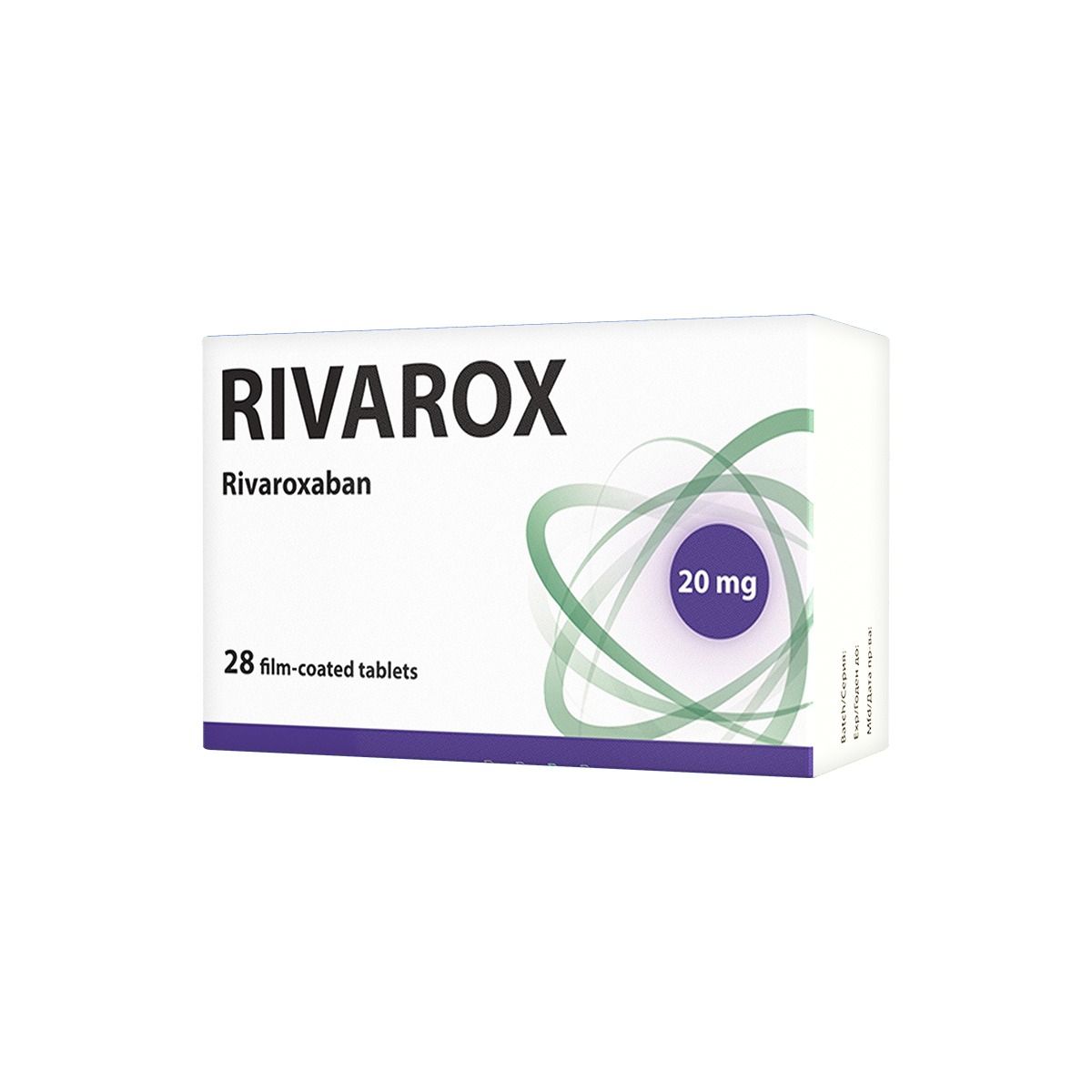
Rivarox - Rivarox 20mg 28 tablets
| Status | Select a city |
| Brand country |  Spain |
| Quantity and shape | 28 tablets |
| Generics | rivaroxaban |










- Description
- Reviews
Rivarox
RIVAROX
15 mg film-coated tablet
20 mg film-coated tablet
For oral use
· Active substance:
Rivaroxaban 15 mg or 20 mg;
· Excipients:
Microcrystalline cellulose PH101, lactose monohydrate, hypromellose, croscarmellose sodium, sodium lauryl sulfate, microcrystalline cellulose PH102, copovidone, magnesium stearate.
Tablet coating (for 15 mg): Opadry QX 321A250032 red.
Tablet coating (for 20 mg): Opadry QX 321A265022 brown..
Read the instructions carefully before taking the drug.
· Keep the instructions. You may need to read it again.
· If you have any further questions, ask your doctor or pharmacist.
· This medicine has been prescribed for you only. Do not pass it on to others, even if their symptoms are the same as yours.
· If any of the side effects gets serious, or if you notice any side effects not listed in this leaflet, please tell your doctor or pharmacist.
In this leaflet you will learn:
1. What Rivarox is and what it is used for
2. What you need to know before you take Rivarox
3. How to take Rivarox
4. Possible side effects
5. How to store Rivarox
6. Other information
1. What Rivarox is and what it is used for
Rivarox is:
Round, red, film-coated tablets (Rivarox (15 mg)).
Round, brown, film-coated tablets, with a score line on one side (Rivarox (20 mg)).
Rivarox (15 mg): Each box contains 28 film-coated tablets.
Rivarox (20 mg): Each box contains 28 film-coated tablets.
Rivarox contains the active substance rivaroxaban and is used in adult patients:
· To prevent blood clots in the blood vessels of the brain (stroke) and also in other blood vessels (systemic thromboembolism), when there is an irregular heartbeat caused by so-called non-valvular atrial fibrillation.
· For the treatment of blood clots in the veins of the lower limbs (deep vein thrombosis) and in the lungs (pulmonary embolism) and to prevent their recurrence blood.
Rivarox is an antithrombotic agent that works by blocking blood clotting (Factor Xa) and thus reduces the ability of blood to clot.
2. What you need to know before taking Rivarox
Do not take Rivarox if:
· You are allergic (hypersensitive) to any of the components of the drug.
· You have severe bleeding.
· You have a disease or pathological condition of any organ of the body that increases the risk of significant bleeding (e.g., stomach ulcer, injury or bleeding in the brain, recent surgery on the brain or eye.
· You are taking anticoagulant drugs (e.g., warfarin, dabigatran, apixaban, or heparin), except when anticoagulant therapy is changed or heparin is administered into arteries and veins to prevent blockage of the blood vessel lumen.
· You have liver disease that increases the risk of bleeding.
· You are pregnant or breastfeeding.
Do not take Rivarox and tell your doctor if you have any of the above conditions.
Precautions:
Consult your doctor before taking Rivarox.
Precautions must be taken if you have:
· Increased risk of bleeding, which may be caused by the following conditions, such as:
- Severe renal impairment (kidney function affects the level of the drug in the blood)
- Taking other blood-thinning medications (e.g., warfarin, dabigatran, apixaban, or heparin), except when changing anticoagulant therapy or administering heparin into arteries and veins to prevent blood vessel blockage
- Bleeding disorders
- Very high blood pressure not controlled by medical treatment
- Gastrointestinal diseases that may be complicated by bleeding, e.g., inflammatory bowel diseases, inflammation of the esophagus caused by gastroesophageal reflux (stomach acid entering the esophagus)
- Vascular problems in the back of the eye (retinopathy)
- Respiratory disease with widened bronchi and sputum (bronchiectasis) or a history of bleeding from the lungs
· Artificial heart valve
· Antiphospholipid syndrome (a disease of the immune system that increases the risk of bleeding). Tell your doctor about this syndrome. The doctor will decide if the prescribed treatment needs to be changed.
· Unstable blood pressure or planned surgery to remove blood clots from the lungs
Before taking Rivarox, tell your doctor if you have any of the above conditions. Your doctor will decide if you need to take the medicine and if you need medical supervision.
If you need surgery:
· It is very important to take Rivarox before and after surgery at the exact time prescribed by your doctor.
· If the surgery involves catheterization or injection into your spinal cord (e.g., epidural or spinal anesthesia or pain relief):
- It is very important to take Rivarox at the exact time prescribed by your doctor, both before the injection or removal of the catheter, and after these procedures
- Tell your doctor immediately if you experience weakness or numbness in your legs, or problems with your bowels or bladder, which may occur when the anesthesia wears off, as these cases require urgent medical attention.
Children and adolescents:
Rivarox is not recommended for children and adolescents under 18 years of age. There is insufficient data on its use in children and adolescents.
Interaction with other medicinal products:
Tell your doctor or pharmacist if you are taking, have recently taken or might take any other medicines, including medicines obtained without a prescription.
· Medicines for fungal infections (e.g., fluconazole, itraconazole, voriconazole, posaconazole), unless they are only applied topically
· Ketoconazole tablets (for the treatment of Cushing's syndrome, when the body produces excess cortisol)
· Some antibacterial medicines (e.g., clarithromycin, erythromycin)
· Some antiviral drugs used in the treatment of HIV infection (e.g., ritonavir)
· Other blood-thinning drugs (e.g., enoxaparin, clopidogrel or vitamin K antagonists such as warfarin and acenocoumarol)
· Anti-inflammatory and pain-relieving drugs (e.g., naproxen or acetylsalicylic acid)
· Dronedarone – a drug used to treat abnormal heart rhythm
· Some antidepressants (selective serotonin reuptake inhibitors or serotonin-norepinephrine reuptake inhibitors)
Since the above-mentioned drugs may increase the effect of Rivarox, inform your doctor about taking them before taking Rivarox. The doctor will decide on the necessity of prescribing the drug and medical supervision. In case of an increased risk of developing a stomach or intestinal ulcer, the doctor will prescribe anti-ulcer treatment.
Also inform your doctor if you are taking:
· Some anti-epileptic medicines (phenytoin, carbamazepine, phenobarbital)
· St. John's wort (Hypericum perforatum), a herbal remedy for depression
Since the above-mentioned drugs may cause a weakening of the effect of Rivarox, inform your doctor about taking them before taking Rivarox. The doctor will decide on the necessity of prescribing the drug and medical supervision.
Pregnancy and lactation period:
The use of the drug is contraindicated during pregnancy and lactation. To prevent pregnancy, use effective methods of contraception during treatment with the drug.
If you become pregnant while taking the drug, immediately inform your doctor, who will decide on the further tactics of your treatment.
Ability to drive and use machines:
Dizziness (common side effect) or fainting (uncommon side effect) may occur when using Rivarox. If these side effects occur, you should avoid driving and using machines.
Important information about some of the excipients in Rivarox:
Rivarox contains lactose. If you have an intolerance to some sugars, consult your doctor before taking this medicine.
3. How to take Rivarox
Take Rivarox exactly as prescribed by your doctor. If you have any questions, ask your doctor.
What dose of Rivarox should you take:
- For the prevention of blood clots in the blood vessels of the brain (stroke) and other blood vessels (systemic thromboembolism), the recommended dose of Rivarox is 20 mg once a day.
In patients with renal failure, the recommended dose is 15 mg once a day.
If you need a procedure to restore blocked blood vessels in the heart (so-called stenting), reducing the dose of the drug to 15 mg once a day (or to 10 mg once a day in case of renal failure) when taken with an additional antiplatelet drug, such as clopidogrel, is less likely.
- For the treatment of blood clots in the veins of the lower extremities (deep vein thrombosis) and lungs (pulmonary embolism) and for the prevention of recurrence, the recommended dose of Rivarox is 15 mg twice a day for the first three weeks of treatment. After three weeks, the recommended dose is 20 mg once a day.
After at least 6 months of antithrombotic treatment, your doctor may consider it necessary to continue treatment with either one 10 mg tablet once a day or one 20 mg tablet once a day.
If you have renal failure and are taking one 20 mg tablet once a day, your doctor may decide to reduce the dose after three weeks of treatment to 15 mg once a day (if the risk of bleeding outweighs the risk of developing blood clots).
Rivarox tablets should be taken with food.
If you have difficulty swallowing, the Rivarox tablet may be crushed and mixed with water or light food (e.g., apple puree) immediately before taking. After taking crushed tablets, food should be consumed.
In some cases, it may be necessary to administer the crushed Rivarox tablet via a gastric tube.
When to take Rivarox:
Take Rivarox every day as prescribed by your doctor. To easily remember when to take the medication, take the tablet at the same time each day. The duration of treatment will be determined by your treating physician.
In case you need to normalize your heart rhythm (cardioversion), take Rivarox as prescribed by your doctor.
If you take too much Rivarox, contact a doctor immediately. Taking too much Rivarox increases the risk of bleeding.
If you forget to take Rivarox:
- If you are taking one 20 mg or 15 mg tablet once a day and forget to take the tablet at the required time, take it as soon as you remember. Do not take more than one tablet a day to compensate for a missed dose. Take the tablet the next day and then continue taking the medication as recommended.
- If you are taking one 15 mg tablet twice a day and forget to take a tablet at the required time, take it as soon as you remember. Do not take more than two 15 mg tablets in a single day. If you forget to take the drug, it is possible to take two 15 mg tablets at the same time (30 mg as a single dose). The next day, continue taking the drug according to the recommended regimen (one 15 mg tablet twice a day).
Stopping Rivarox:
Do not stop taking Rivarox on your own without prior informing your doctor, as the drug is intended for the prevention and treatment of serious conditions.
If you have any additional questions, contact your doctor.
4. Possible side effects
Like all other medicines, Rivarox can cause side effects in some patients, although not in all patients.
Like other drugs with a similar action (antithrombotic agents), Rivarox may cause life-threatening bleeding and, consequently, a sudden drop in blood pressure (shock). In some cases, bleeding may be hidden.
Side effects that occur and are associated with bleeding
If any of the following side effects occur, tell your doctor immediately:
· Prolonged and severe bleeding
· Severe weakness, fatigue, paleness, dizziness, headache, unexplained swelling, shortness of breath, chest pain or angina attack
Side effects that manifest as serious skin lesions
If any of the following side effects occur, tell your doctor immediately:
· Skin rash that spreads quickly, blistering skin lesions, e.g., in the mouth or eye area (Stevens-Johnson syndrome / toxic epidermal necrolysis). These side effects occur very rarely (in 1 out of 10,000 cases)
· Drug syndrome that manifests with rash, fever, inflammatory processes in the body, hematological changes and systemic involvement (DRESS syndrome). This syndrome occurs very rarely (in 1 out of 10,000 cases)
Side effects that manifest as severe allergic reactions
If any of the following side effects occur, tell your doctor immediately:
· Swelling of the face, lips, mouth, tongue and larynx; difficulty swallowing; hives and difficulty breathing; sudden drop in blood pressure. These side effects occur very rarely (anaphylactic reactions including anaphylactic shock; occurs in 1 out of 10,000 cases) or uncommonly (angioedema and allergic swelling; occurs in 1 out of 100 cases)
Other possible side effects:
Common (less than 1 case in every 10 patients):
· Anemia, which manifests as pale skin, weakness, shortness of breath
· Bleeding from the gastrointestinal tract, genitourinary tract (including hematuria and menorrhagia), nose, gums
· Hemorrhage in the eye (including conjunctival bleeding).
· Hemorrhage in soft tissues (hematoma, bruising)
· Bloody sputum
· Skin and subcutaneous hemorrhages
· Postoperative bleeding
· Bloody discharge from a surgical wound
· Swelling of the extremities
· Pain in the extremities
· Impaired kidney function (determined by laboratory tests)
· Fever
· Abdominal pain, dyspepsia, nausea, constipation, diarrhea
· Low blood pressure (may manifest as dizziness or syncope)
· General weakness and lack of energy (including rapid fatigue and asthenia), headache, dizziness
· Skin rash, itching
· Increased activity of liver enzymes in the blood
Uncommon (less than 1 case in every 100 patients):
· Brain hemorrhage and intracranial hemorrhage
· Bleeding into joints, causing pain and swelling
· Thrombocytopenia
· Allergic reaction, allergic dermatitis
· Liver function impairment (determined by laboratory tests)
· Elevated bilirubin, pancreatic or liver enzymes, thrombocythemia according to laboratory tests;
· Loss of consciousness
· Feeling unwell
· Increased heart rate
· Dry mouth
· Hives
Rare (less than 1 case in every 1000 patients):
· Bleeding into muscles
· Cholestasis, hepatitis (including hepatocellular injury)
· Yellowing of the skin and sclera
· Local swelling
· Hematoma in the perineal area (as a complication of cardiac procedures when femoral artery catheterization is performed (pseudoaneurysm))
Unknown (frequency cannot be estimated from the available data):
· Renal failure following severe bleeding
· Bleeding in the limbs, causing swelling, pain, decreased sensation, numbness, or paralysis (compartment syndrome as a complication of bleeding)
· Anticoagulant-related nephropathy
If you experience any side effects, including those not described in this leaflet, consult your doctor.
5. How to store Rivarox
Store at a temperature not exceeding 25°C.
Keep out of the reach of children!
Dispensing rule: Pharmaceutical product group II, dispensed with a form #3 prescription.
Use taking into account the expiration date:
Do not use Rivarox after the expiry date which is stated on the carton.
Do not use Rivarox if you notice that the medicine or its packaging is damaged.
6. Other information
Marketing authorization / registration holder and manufacturer
Marketing authorization/registration holder
GM Pharmaceuticals LTD, Georgia
Manufacturer:
KERN PHARMA, S.L., Spain
Also, see: Rivarox - Rivarox 15mg 28 Tablets
Translated by AI


