

 Select a city
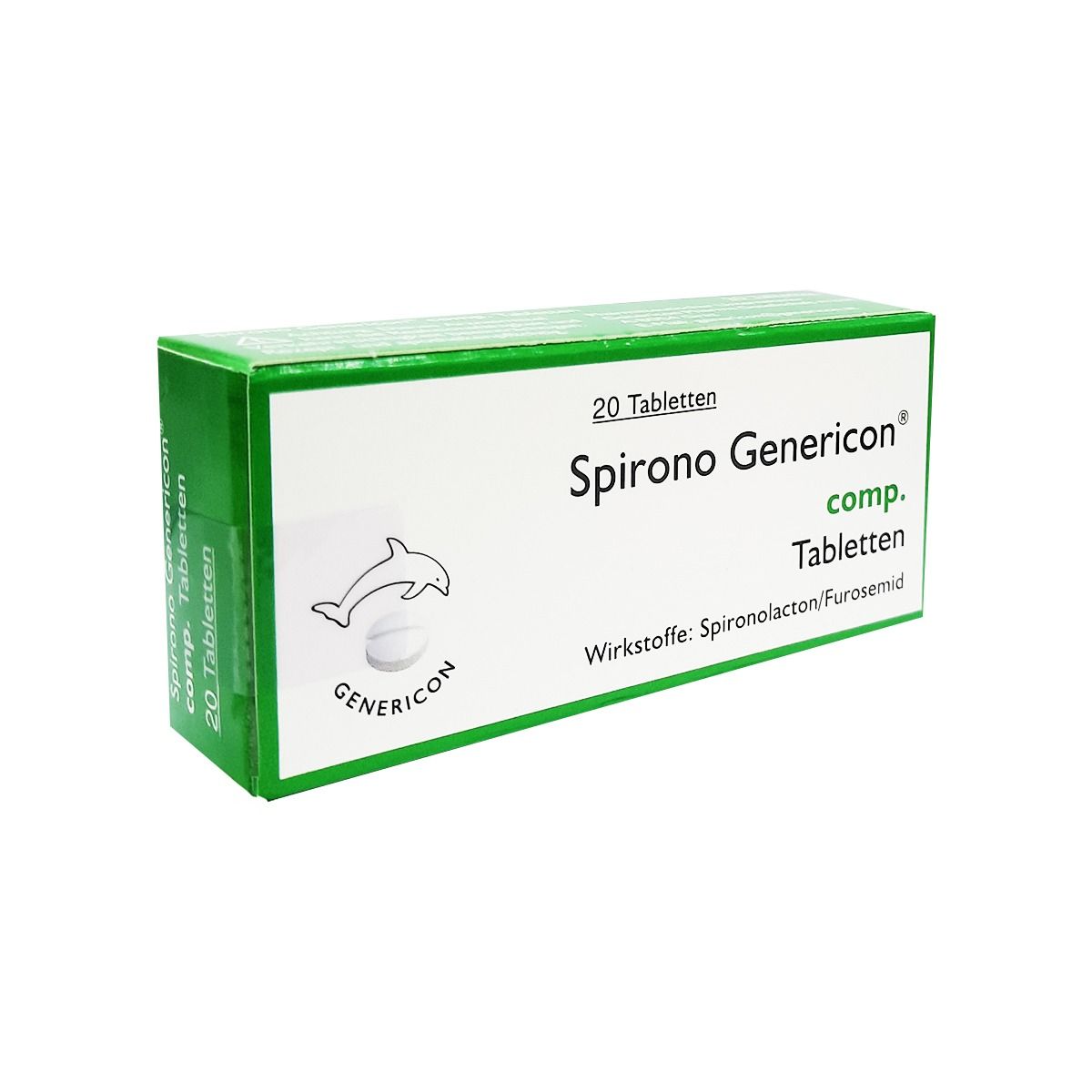
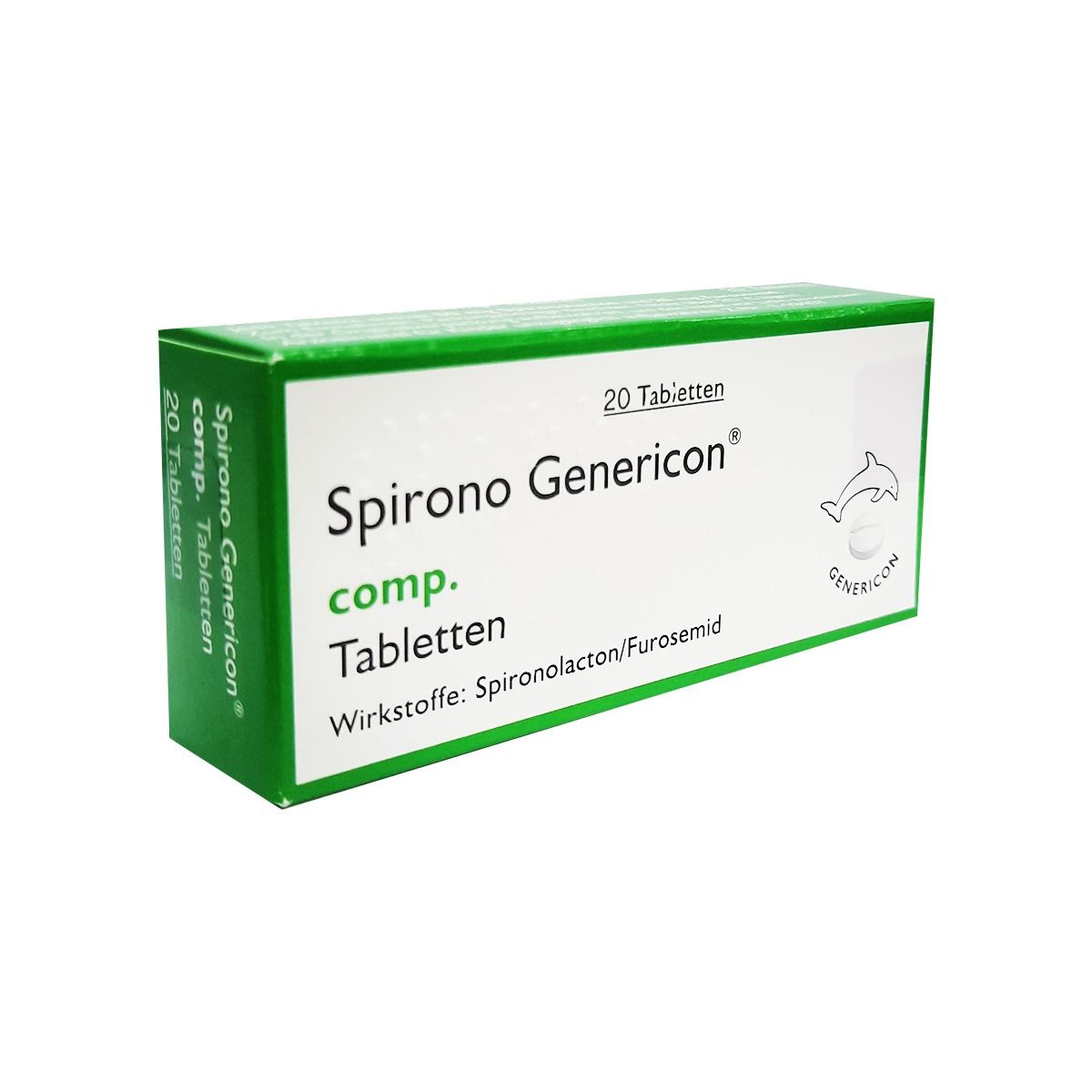
Spirono Genericon Comp. - Spirono Genericon Comp. 20 Tablets
| Status | Select a city |
| Brand country |  Austria |
| Quantity and shape | 20 tablets |
| Generics | spironolactone+furosemide |











- Description
- Reviews
Spirono Genericon Comp. Tablets
Active substance: Spironolactone / Furosemide
Read all of this leaflet carefully before you start taking this medicine because it contains important information for you.
- Keep this leaflet. You may need to read it again.
- If you have any further questions, ask your doctor.
- This medicine has been prescribed for you only. Do not pass it on to others. It may harm them, even if their signs of illness are the same as yours.
- If you get any side effects, talk to your doctor or pharmacist. This includes any possible side effects not listed in section 4 of this leaflet.
What is in this leaflet:
1. What is the medicine Spirono Genericon Comp. and what is it used for
2. What you need to know before taking Spirono Genericon Comp.
3. How to take Spirono Genericon Comp.
4. Possible side effects
5. How to store Spirono Genericon Comp.
6. Contents of the pack and other information
1. What is the medicine Spirono Genericon Comp. and what is it used for
Spirono Genericon Comp. is a medication, which increases urine output. As a result, Spirono Genericon Comp. can eliminate excess accumulated water from tissues. Spirono Genericon Comp. is used to treat the following diseases:
· Fluid accumulation in tissues (edema) and/or congestion in the lungs as a result of heart muscle weakness,
· Fluid accumulation in the abdominal cavity due to liver disease (ascites),
· Fluid accumulation in tissues as a result of kidney dysfunction (so-called "nephrotic syndrome"), where the main focus is on the therapy of the underlying disease.
The doctor will prescribe Spirono Genericon Comp., if the electrolyte balance is additionally disturbed due to hyperaldosteronism, if previous treatment measures caused hormone aldosterone excessive production and if previously used therapeutic measures were not found sufficient urine output to increase.
2. What you need to know before taking the medicine Spirono Genericon Comp.
Do not take the medicine Spirono Genericon Comp.
· if you are known to be allergic to spironolactone, furosemide or any other component of this medicinal product (listed in section 6 of the package leaflet);
· if you suffer from severe sodium deficiency
· if your blood potassium level is significantly increased or significantly decreased (see section 4 "Possible side effects")
· if you have severe renal failure (significant reduction or complete absence of urine output; creatinine clearance less than 30 ml/min/1.73 m2 of body surface, which corresponds to serum creatinine level 1.8-2 mg/100 ml)
· in renal failure with anuria (lack of response to furosemide therapy);
· During neuropsychiatric disorders, up to loss of consciousness caused by liver failure
· During hypovolemia or dehydration;
· If you are pregnant or breastfeeding a child.
· Spironolactone should not be used with mitotane, as it may block the effects of mitotane.
Patients allergic to sulfonamides (e.g., sulfonamide antibiotics or sulfonylurea derivatives) may show cross-sensitivity to furosemide.
Special warnings and precautions
Before starting to take Spirono Genericon Comp., consult your doctor or pharmacist.
Special caution is required when using Spirono Genericon Comp.
Your doctor will strictly monitor treatment with Spirono Genericon Comp.:
· if you have a potassium deficiency (before starting treatment, the doctor will compensate for acute potassium deficiency).
· if you have impaired kidney function (creatinine clearance 30-80 ml/min or serum creatinine level 1.3-1.8 mg/100 ml), there is a risk of hyperkalemia in the blood.
· if you have lost a large amount of salts or fluid from the body (as a result of vomiting, diarrhea, unusually heavy sweating, a low-salt diet, or taking diuretic drugs for a long period).
· If you have very low blood pressure.
· If you have high acidity in your blood
· In case of diabetes mellitus; regular blood sugar tests are required.
· If you suffer from gout; regular checking of serum uric acid is required.
· If you have an obstruction of urine flow (e.g., in case of urination problems, enlarged prostate, renal urinary retention, narrowing of the ureter). In this case, Spirono Genericon Comp. can only be used if free urine flow is ensured, as increased urination can lead to overstretching of the bladder.
· In case of reduced protein content in the blood (e.g., in case of kidney diseases accompanied by protein loss, lipid metabolism disorders, and water retention); careful dosing is required. The effect of the furosemide component may be weakened and hearing damage may be increased.
· If a sharp drop in blood pressure could have serious consequences for you (e.g., if you have blood circulation problems in the blood vessels of the brain or coronary arteries), in this case, an undesirable strong drop in blood pressure should be avoided
· If you are elderly, if you are taking other medications that can cause blood pressure to drop, and if you have other medical conditions associated with the risk of a drop in blood pressure.
· If you suffer from liver cirrhosis and simultaneous renal dysfunction
During treatment with Spirono Genericon comp., the doctor will prescribe regular monitoring of certain blood parameters, including potassium, sodium, calcium, bicarbonate, creatinine, urea, uric acid and blood sugar levels . Please, carry out continuous monitoring.
Strict monitoring is especially important, if you are prone to electrolyte disturbances or severe fluid loss (e.g., due to vomiting, diarrhea or heavy sweating). It may be necessary to stop treatment with Spirono Genericon Comp. until appropriate electrolyte levels or acid-base balance are restored.
Weight loss caused by increased urine output should not exceed 1 kg per day.
If you are severely dehydrated, during treatment with Spirono Genericon Comp, you should not use certain medications for pain, swelling or inflammation (i.e. non-steroidal anti-inflammatory drugs ), because they can cause acute kidney failure (see section "Other medications and Spirono Genericon Comp").
If you take Spirono Genericon Comp. for a long period, it is recommended to take Vitamin B1 (Thiamine) to compensate for its loss. Vitamin B1 supports heart function.
There is a risk of autoimmune disease, which may cause inflammatory changes in all organs, often joint pain, skin changes and kidney problems.
If your kidney function is impaired or if you simultaneously take medications, that may cause potassium levels to increase, it is especially important to regularly check potassium levels in the blood.
Taking Spirono Genericon comp. with certain medicines, potassium supplements and potassium-rich foods may cause severe hyperkalemia (increased potassium levels in the blood). Signs of severe hyperkalemia may include muscle spasms, irregular heart rhythm, diarrhea, nausea, dizziness or headache.
During treatment with Spirono Genericon Comp., certain forms of prostate cancer may cause tumor progression.
Spirono Genericon Comp. may affect certain laboratory tests (e.g., determination of serum digoxin concentration via RIA).
Spironolactone may cause voice changes. Before starting treatment with Spirono Genericon comp., special attention should be paid to this possibility in patients whose voice is particularly important for their work (e.g., actors, singers, teachers).
In premature infants, monitoring of renal function and ultrasound examination of the kidneys is necessary.
Children and adolescents
Spirono Genericon Comp.'s use is not recommended for children under 18 years of age and adolescents , because for this age group sufficient experience does not exist.
Other medicines and Spirono Genericon Comp.
Tell your doctor or pharmacist, if you are taking/using, have recently taken/used or might take/use any other medicines.
Spirono Genericon Comp. and other medicines may affect each other's effects.
Avoid combination with the following medicines and/or active substances .
Life-threatening increases in blood potassium levels have been reported when Spirono Genericon Comp. is used simultaneously with the following medications:
- Potassium- containing preparations
- Medications, which are known as "ACE inhibitors" (medications, which lower blood pressure using active substances , such as captopril, enalapril)
- Potassium-sparing diuretics (active substances: triamterene, amiloride).
Spironolactone should not be used with mitotane (a cytostatic drug, which is used to treat cancer) together, because it can block its effects.
Furosemide
The reduction of the effect is caused by:
- Non-steroidal anti-inflammatory drugs (NSAIDs) (specific medications, that are used against pain, swelling and inflammation ), including acetylsalicylic acid (aspirin): they may reduce the blood pressure-lowering effect of Spirono Genericon Comp. They may cause sudden kidney failure in patients, who have reduced water and blood levels.
Furosemide may exacerbate salicylates' adverse effects.
- Phenytoin (seizure treatment medicine).
- Sucralfate (stomach ulcer treatment medicine): This reduces from the intestines Spirono Genericon Comp.-'s absorption. When both medications are used simultaneously, they should be taken with at least a 2 hour interval.
- Aliskiren (high blood pressure treatment medicine): Inform your doctor, if you are taking aliskiren.
Enhanced effect:
- Other blood pressure lowering or diuretic medications: may occur blood pressure more severe drop (potentially with shock, renal function worsening or acute renal failure).
Therefore, if possible, Spirono Genericon comp.-treatment should be stopped, or the dose should be reduced before starting treatment at least three days prior, namely, ACE inhibitors or Angiotensin II receptor antagonists, or increase its dose.
- Specific anesthetics and curare-like muscle relaxants (for muscle relaxation during anesthesia), whose effect is enhanced by Spirono Genericon Comp. Please, inform your anesthesiologist, if you take Spirono Genericon Comp..
- Blood coagulation inhibiting specific medications (i.e. blood thinning drugs, oral anticoagulants): The dose adjustment of these drugs may be necessary.
- Probenecid (anti-gout drug), methotrexate (antirheumatic and immune defense suppressant drug) and other drugs, which are excreted by the kidneys, for example, furosemide: their effects and side effects may be enhanced by Spirono Genericon Comp. Such drugs may simultaneously reduce the effect of furosemide.
- Theophylline (asthma medication).
Electrolyte disturbances:
- Laxatives and medications that contain active substances: glucocorticoids ("cortisone"), carbenoxolone, adrenocorticotropic hormone, salicylates, amphotericin B or penicillin G: simultaneous use of furosemide may cause increased potassium loss (risk of severe potassium loss).
In this regard, large amounts of licorice may have a carbenoxolone -like effect.
- The sensitivity of the heart muscle to specific heart medications (known as cardiac glycosides) increases if a potassium or magnesium deficiency develops due to treatment with Spirono Genericon Comp.
Also increases heart rhythm disorders (including those, Torsades de Pointes) risk, if electrolyte disorders with patients concurrently use medications, which may cause ECG-on specific change (QT interval prolongation).
This includes, for example, terfenadine (to combat allergies) and specific medications used to treat cardiac arrhythmias (I and III class antiarrhythmic drugs).
Kidney damage (nephrotoxicity), hearing damage (ototoxicity):
- Aminoglycosides (e.g.., kanamycin, gentamicin, tobramycin) and other medications' by on hearing harmful effects, which may cause hearing damage, may be enhanced furosemide simultaneous intake. Hearing loss cases may permanent be. The doctor will prescribe aminoglycosides simultaneous use only in cases, if it is unavoidable.
- Medications with harmful side effects on the kidneys (e.g., antibiotics such as aminoglycosides, cephalosporins, polymyxins): Furosemide may enhance the side effects and cause deterioration of kidney function.
- Cisplatin (a cancer treatment drug): When used concurrently with furosemide, there is a possibility of hearing loss. In addition, the risk of kidney damage increases.
- Patients at high risk of kidney damage from radiocontrast agents: Deterioration of kidney function was more common when these patients were treated with furosemide after an X-ray examination using a contrast agent than in patients who only received intravenous fluids prior to the examination using a contrast agent.
Other interactions:
- Blood sugar-lowering and blood pressure-increasing drugs (e.g., epinephrine, norepinephrine): Their effect may be slightly reduced when used concurrently with Spirono Genericon Comp.
- Cyclosporine A: Concurrent use with Spirono Genericon Comp. is associated with an increased risk of joint inflammation caused by gout (gouty arthritis).
- Lithium (to combat specific forms of depression): Concurrent use with Spirono Genericon Comp. may lead to an enhancement of harmful side effects on the heart and nerves. It is necessary to check the lithium level in the blood.
- High dose intake of salicylates (painkillers): the side effects of this drug on the central nervous system may be enhanced by the simultaneous use of Spirono genericon comp.
- Risperidone: the doctor will carefully evaluate the advantages and disadvantages of simultaneous treatment with Spirono genericon comp.
- Levothyroxine: high doses of furosemide may inhibit the binding of thyroid hormones to carrier proteins, leading to a temporary increase in free thyroid hormones at the beginning of therapy, followed by a general decrease in total thyroid hormone levels. Monitoring of thyroid hormone levels is necessary.
Spironolactone
Other interactions:
- Non-steroidal anti-inflammatory drugs (specific medications, which are used against pain, swelling and inflammation): combination with spironolactone may cause an increase in potassium levels in the blood and consequently, muscle paralysis and cardiac arrhythmias. In addition, the effect of spironolactone may be reduced.
- Spironolactone potassium salts, potassium excretion inhibiting medications, non-steroidal anti- inflammatory drugs, ACE inhibitors (e.g., captopril, enalapril), angiotensin II antagonists (e.g., candesartan, valsartan) or potassium sparing diuretic medications (triamterene, amiloride) concomitant use may cause severe blood potassium levels and
Potentially life threatening increase.
-Carbenoxolone (stomach ulcer treatment drug): Spironolactone and carbenoxolone may mutually impair each other's drug action. In this regard, licorice large quantities action may carbenoxolone like be carried out.
- A sharp blood pressure drop is expected, if Spirono Genericon Comp-with together is taken other blood pressure lowering drugs.
- Neomycin (active substance against bacterial infections ): spironolactone stomach absorption may be delayed.
- Spirono Genericon comp. may cause active substance digoxin (heart strengthening) blood concentration increase.
- Cholestyramine (lipid lowering drug): simultaneous use of spironolactone and cholestyramine may cause an increase in blood potassium levels.
- Trimethoprim and trimethoprim-sulfamethoxazole.
- Tell your doctor, if you are taking abiraterone for the treatment of prostate cancer.
Interaction with laboratory tests
Spirono Genericon comp. may affect the blood digoxin concentration laboratory determination. Spironolactone may cause false high cortisol levels in the Mattingly assay.
Additional information
If furosemide (injection form) and active ingredient chloral hydrate (sleeping pills) were used within 24 hours , in isolated cases were reported heat feeling, sweating, restlessness, nausea, blood pressure increase and pulse acceleration. Such reaction may also develop Spirono Genericon Comp. when used.
Therefore, the use of furosemide with chloral hydrate is not recommended.
Taking Spirono Genericon comp. with food and drink
To prevent excessive loss of potassium, a potassium-rich diet is recommended, for example, lean meat, potatoes, bananas, tomatoes, cauliflower , spinach, dried fruits.
On the other hand, consuming large amounts of licorice can lead to increased potassium loss. The absorption of spironolactone increases if Spirono Genericon Comp. is taken with food.
Pregnancy and breastfeeding
If you are pregnant or breastfeeding a baby, think, that you may be pregnant or are planning to have a baby, before taking this medicine ask your doctor or pharmacist.
During pregnancy you should not take Spirono Genericon Comp. There are hormonal balance disturbance signs in both female, and male sex offspring, which is caused by the active ingredient, spironolactone.
During breastfeeding you should not take Spirono Genericon Comp, because the active substances and their breakdown products pass into breast milk or inhibit milk production. If taking Spirono Genericon Comp is still necessary, you must stop breastfeeding.
Driving and using machines:
Warning:
This medication may impair reactivity and the ability to drive.
This applies more to the start of treatment, when increasing the dose or changing the medication, as well as when used in combination with alcohol.
Doping test
The medicinal product, Spirono Genericon Comp.-., may cause a positive result in doping tests.
3. How to take Spirono Genericon Comp.
Always take this medicine exactly as your doctor has told you. If you are not sure, check with your doctor or pharmacist.
Unless otherwise prescribed by your doctor, the usual dose is:
Adults
At the start of treatment:
If your disease is caused by heart muscle weakness - 2 tablets a day. If your disease is caused by liver damage - maximum 4 tablets a day.
Further treatment:
After starting treatment 3-6 days later - 1 to 2 tablets a day.
If necessary, the doctor may increase the dose 3 times, to one tablet a day. This dose is taken daily, every second or third day, as prescribed by the doctor.
Use in children and adolescents
Controlled clinical trials for use in children and adolescents have not been conducted.
Use in elderly patients
The appropriate dosage will be determined by the doctor.
Method of administration and duration
For oral use.
Take the tablets unchewed, with a sufficient amount of liquid (e.g., 1 glass of water) at breakfast or lunch. Evening administration is not recommended, especially at the beginning of treatment, due to the expected increase in urine output at night.
Treatment duration is determined by the doctor. This depends on your disease's type and severity and should be limited to the shortest possible period.
The tablet can be divided into equal doses.
If you take Spirono Genericon Comp. in a higher than necessary dose
Immediately inform your doctor, if you take more tablets than prescribed. They can, depending on the symptoms, make a decision about necessary measures.
Symptoms caused by overdose
Symptoms depend on water and electrolyte loss severity. These include: blood pressure drop, circulatory disorders when changing from a lying to a standing position , electrolyte disturbances (e.g. abnormal potassium, sodium, chloride levels in the blood) or acid-base imbalance.
After losing a larger amount of fluid, dehydration and a decrease in blood volume may develop. This can cause confusion and drowsiness, circulatory collapse , blood thickening (risk of blood clots) and acute kidney failure.
In case of rapid loss of water and electrolytes, confusion may develop . In rare cases, anaphylactic shock may develop (symptoms: sweating attacks, nausea, blue-red discoloration of the skin and mucous membranes , sharp drop in blood pressure , impaired consciousness, up to coma).
Very high levels of potassium in the blood can cause, cardiac arrhythmias, cardiac-arrest , ECG changes , drop in blood pressure and brain disorders (flaccid paralysis, apathy, state of confusion ).
Important information for the doctor is provided at the end of this leaflet.
If you forget to take Spirono Genericon Comp.
Do not take a double dose to compensate for a missed dose. Continue taking the medication according to the prescribed schedule.
If you stop taking Spirono Genericon Comp.
If treatment is stopped prematurely, the initial symptoms may reappear. The duration of treatment is determined by the doctor. Consult your doctor before deciding to stop or discontinue treatment.
If you have any further questions on the use of this medicine, ask your doctor or pharmacist.
4. Possible side effects
Like all medicines, this medicine can cause side effects, although not everybody gets them.
Very common (may affect more than 1 in 10 people):
- Electrolyte balance disorders (including symptomatic), decreased blood volume and dehydration (especially in elderly patients), increased creatinine in blood, increased lipids (triglycerides) in blood. The possible development of electrolyte disorders is influenced by pre-existing diseases (e.g., liver cirrhosis, heart failure), other drugs and diet.
- Electrolyte disturbances should be corrected, especially if they are pronounced. Drop in blood pressure and blood circulation disorders.
Common (may affect up to 1 in 10 people):
- Blood thickening may cause an increased thrombotic tendency, especially in elderly patients.
- Low levels of sodium (hyponatremia; can cause fatigue, confusion, muscle twitching, spasms and loss of consciousness), chloride, potassium (hypokalemia; can cause muscle weakness, twitching and changes in heart activity) in the blood; increased cholesterol levels in the blood; increased uric acid concentration in the blood (can cause gout attacks).
- Chronic liver disease can cause neurological symptoms (e.g., restlessness, forgetfulness, tremors, lethargy, disorientation, drowsiness).
- Increase in urine volume. Very high urine output can cause dehydration and, as a result, blood circulation collapse and blood thickening.
- Increased sensitivity when touching the nipples, breast pain. In men, there may be a usually temporary enlargement of the breasts.
Uncommon (may affect up to 1 in 100 people):
- A sharp decrease in the number of platelets, which leads to an increased risk of bleeding and a tendency to develop hematomas.
- Itching, allergic or allergic-like reactions of the skin and mucous membranes.
- During treatment with furosemide, blood sugar levels in patients may increase. This can lead to a deterioration of metabolic status in patients with pre-existing diabetes. Diabetes that was previously unknown may become manifest.
- Visual disturbances, sometimes even exacerbation of existing myopia.
- Usually, transient hearing loss. Patients with renal impairment are likely to be particularly sensitive to this. This event is especially expected after very rapid intravenous injections, especially in the simultaneous presence of impaired renal function or increased total protein (e.g., in the case of nephrotic syndrome).
- Deafness, sometimes irreversible.
- Nausea.
- Itching, skin and mucous membrane reactions with redness, blistering or peeling (bullous dermatitis, pemphigoid or exanthema, purpura, erythema multiforme, exfoliative dermatitis); increased sensitivity to light.
- Butterfly rash-like events have been described.
Rare (may affect up to 1 in 1,000 people):
- increase in certain leukocyte count (eosinophilia), decrease in all leukocyte count.
- Severe hypersensitivity reactions, such as circulatory collapse (anaphylactic shock). The first signs of shock are skin reactions, such as severe skin redness or hives , sweating attacks and bluish skin discoloration; also restlessness, nausea, head ache, shortness of breath.
- Sensation of tingling or numbness in the limbs. Confusion and apathy have been reported after taking very high doses. Headache, movement disorders (ataxia), drowsiness, sleepiness.
- Sudden or constant noise in the ear, tinnitus. Patients with kidney damage are particularly sensitive to this.
- Vascular inflammation; often on the skin with a rash together.
- in women voice pitch lowering, in men voice tone raising. Voice changes also may manifest as hoarseness . In some patients voice changes may permanent be.
- Gastro-intestinal tract complaints (e.g. vomiting, diarrhea).
- Kidney inflammation.
- Febrile conditions. Very high urine output can lead to dehydration and, as a result, circulatory collapse and blood thickening. Blood thickening can lead to an increased tendency for thrombosis, especially in elderly patients.
Very rare (may affect up to 1 in 10,000 people):
- Anemia caused by the breakdown of red blood cells can cause a pale facial color, weakness and shortness of breath; a sharp decrease in certain white blood cells with a tendency to infection and serious general symptoms (aplastic anemia, agranulocytosis).
- Pancreas inflammation, which causes severe pain in the stomach/abdomen lower part and back area.
- Bleeding stomach mucous membranes, stomach/intestinal ulcer (also with bleeding).
- Biliary tract obstruction and liver specific indicators (transaminases) increase.
- Liver enzymes increase, liver inflammation.
- Inflammatory redness of the skin (also in the form of lichenoid lesions), hair loss. Softening of bones.
Unknown (frequency cannot be estimated from the available data):
- Decrease in the concentration of calcium and magnesium in the blood; increase in the level of urea in the blood; as a result of loss of electrolytes and fluids, a disturbance of the metabolic acid-base balance may develop (metabolic acidosis) or worsening of already existing alkalosis.
- Kidney dysfunction (so-called pseudo-Bartter's syndrome), which is associated with misuse and/or long-term treatment with furosemide.
- A sharp increase in blood potassium levels can cause muscle paralysis, cardiac arrhythmias, dizziness and leg cramps.
- Blood acidity may develop or worsen. Temporary increase of nitrogenous substances in urine is possible.
- Blood clot formation (so-called thrombosis).
- Blood circulation problems, headache, dizziness, vision disorders, xerostomia, thirst.
- Gastrointestinal spasms.
- severe skin disease with general well-being impairment, appearance of painful blisters on the skin, especially in the mouth cavity, eyes and genital organs areas; severe disease of skin and mucous membranes, which is accompanied by extensive blisters appearance and redness.
- Skin inflammatory changes with pustule development (AGEP, acute generalized exanthematous pustulosis or acute febrile drug eruption).
- Dizziness, fainting or loss of consciousness (caused by symptomatic hypotension), headache.
- Drug rash with an increase in certain white blood cells and adverse effects on general health (DRESS).
- Increased hair loss in women.
- May develop or worsen urinary tract obstruction (e.g.., prostate enlargement, hydronephrosis, urethral stricture cases). In urine sodium and chlorine concentration increase. This may cause urinary retention (ischuria) further complications.
- Renal failure.
- Premature infants may develop kidney tissue calcification and kidney stones.
- In premature infants with respiratory distress syndrome, treatment with furosemide during the first weeks of life may increase the risk of a specific heart defect (the open connection between the aorta and the pulmonary artery remains open longer than under normal conditions; known, as patent ductus arteriosus). Bone damage in newborns.
- In women are described mammary glands' painful swelling, mammary glands' enlargement and menstrual irregularities or absence, while in men may occur potency disorders. Disease progression during certain forms of prostate carcinoma.
- Muscle damage (muscle weakness, tightness or pain, which is called rhabdomyolysis), often associated with significantly decreased blood potassium levels (see section 2. "Do not take Spirono Genericon Comp").
- Autoimmune reaction, which may cause inflammatory changes in all organs, often joint pain, skin changes and kidney problems (so-called systemic lupus erythematosus).
- Lichen-like skin reactions.
Reporting of suspected adverse reactions
If you experience any side effects, contact your doctor. This recommendation applies to any side effects, including those not listed in this package leaflet.
By reporting side effects you can help provide more information on the safety of this medicine.
5. How to store Spirono Genericon Comp.
Store at a temperature not exceeding 25°C.
Store in the original package in order to protect from light.
Keep out of the reach of children.
Do not use this medicine after the expiry date which is stated on the carton and blister after "EXP". The expiry date refers to the last day of that month.
Do not throw away any medicines via wastewater or household waste. Ask your pharmacist how to throw away medicines you no longer use. These measures will help protect the environment.
6. Contents of the pack and other information
What Spirono Genericon Comp. contains
- The active substances are spironolactone and furosemide. Each tablet contains 50 mg spironolactone and 20 mg furosemide.
- The other ingredients are:
Calcium sulfate dihydrate, corn starch, povidone, magnesium stearate, colloidal silicon dioxide.
What Spirono looks like Genericon Comp. and contents of the pack
White, round, biconvex tablets with a score line on one side. The tablet can be divided into equal doses.
Spirono Genericon Comp. is packed in blister packs, which contains 20 and 50 tablets.
Also, see: Semilact - Semilact 50/20mg 10 tablets
Translated by AI


