

 Select a city
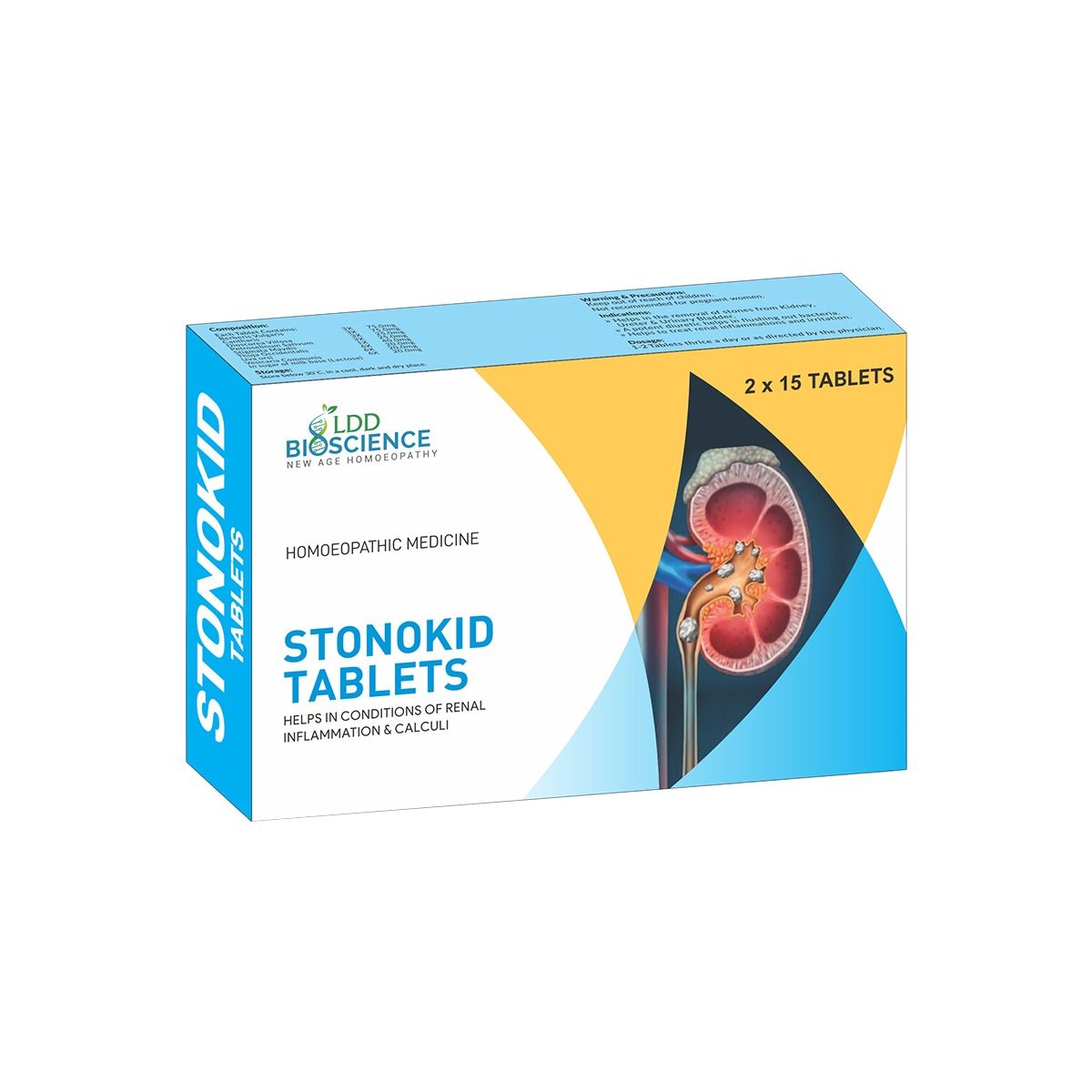
Stonokid - Stonokid Oral 30 Tablets
| Status | Select a city |
| Brand country |  India |
| Quantity and shape | 30 Tablets |
| Generics | homeopathic drug |






- Description
- Reviews
Stonokid — Tablets
Homeopathic medicine
Composition
Each tablet contains:
|
Ingredient |
Potency |
Quantity |
|
Berberis vulgaris (Common barberry) |
3X |
75.00 mg. |
|
Cantharis (Spanish fly) |
3X |
75.00 mg. |
|
Dioscorea villosa (Wild yam) |
3X |
25.00 mg. |
|
Petroselinum sativum (Parsley) |
3X |
25.00 mg. |
|
Stigmata maydis (Corn silk) |
1X |
40.00 mg. |
|
Thuja occidentalis (Northern white-cedar) |
6X |
20.00 mg. |
|
Uva Ursi (Bearberry) |
6X |
20.00 mg. |
|
Vesicaria communis (Bladderpod) |
6X |
20.00 mg. |
Based on milk sugar (lactose)
Indications for use
Pharmacological and clinical characteristics by ingredients:
Berberis Vulgaris (Common Barberry)
Used to relieve abdominal and lumbar pain caused by kidney stone disease. Effectively reduces the feeling of bladder fullness and radiating, stabbing ("stitching") pain in the body.
Cantharis (Spanish Fly)
Obtained from the beetle Lytta vesicatoria, commonly known as the "Spanish fly". Plays an important role in the relief of acute, burning pain and dysuria (painful urination) caused by urolithiasis. In addition, it promotes the fragmentation and breakdown of calculi in the ureter and bladder into small particles.
Dioscorea Villosa (Wild Yam)
A widely used herbal remedy for the management of renal colic and associated pain syndrome. Its main active component is diosgenin, which has a pronounced analgesic and anti-inflammatory effect — through the effective suppression of pro-inflammatory cytokine production.
Petroselinum sativum (Parsley)
It is a herbaceous plant characterized by pronounced antibacterial activity against major uropathogens. Its biologically active compounds — flavonoids, ascorbic acid, carotenoids, myristicin, apiole, terpenoids, phthalides, phenylpropanoids, coumarins, and furanocoumarins — determine its antiurolithiatic effect.
The plant prevents the formation of calculi by reducing calcium excretion and protein elimination in the urine (which inhibits crystallization nucleation), optimizing urine pH (creating an unfavorable environment for calcium oxalate crystallization), and increasing diuresis, which reduces urine supersaturation.
Stigmata maydis (Corn silk)
It is rich in phenolic compounds (especially flavonoids), proteins, vitamins, carbohydrates, essential oils, steroids, and trace elements (calcium, potassium, magnesium, sodium). It has an enveloping and soothing effect on the mucous membrane of the bladder and ureters, thereby effectively reducing irritation of the urinary tract and inflammatory processes of the prostate gland.
Thuja occidentalis (Western thuja)
It is known as the "tree of life" (Arborvitae) or white cedar. It is distinguished by diuretic properties and is widely used in the management of cystitis and overactive bladder syndrome, as it reduces the imperative (sudden, urgent) need to urinate and incontinence. Studies have confirmed its immunomodulatory effect — it stimulates T-lymphocyte activity and interleukin-2 (IL-2) production.
Uva Ursi (Bearberry)
Characterized by a pronounced antibacterial effect, which is due to its main active glycoside — arbutin, which is metabolized in the body into an active compound (hydroquinone glucuronide). It reduces inflammatory processes and strengthens the mucous membrane of the urinary tract. Thanks to the plant tannins in its composition, it is characterized by complex — anti-inflammatory, antiviral, antifungal, and antiproliferative activity.
Vesicaria communis (Bladderpod)
An herbaceous plant that is widespread and cultivated in North America (mainly in Tennessee and Alabama). Traditionally used in the management of irritation of the mucous membrane of the ureter and bladder, burning sensation, and pollakiuria (frequent urination).
It has therapeutic efficacy in conditions such as cystitis, prostatitis, nephralgia (kidney pain), hematuria (blood in the urine), and albuminuria caused by gonococcal infection.
|
Route of administration |
Oral |
|
Dosage |
1–2 tablets three times a day or as directed by a doctor |
|
Overdose |
Cases of overdose and side effects have not been recorded |
|
Side effects |
Adverse and side reactions have not been identified |
|
Safety measures |
Keep out of reach of children |
|
Pregnancy and lactation |
Use is not recommended during pregnancy and breastfeeding |
|
Contraindications |
Not identified |
|
Interaction with other medications |
Clinically significant interactions with other medications have not been described |
|
Toxic effect |
Not recorded |
|
Shelf life |
5 years from the date of manufacture |
|
Form of release |
2 blisters, each blister 15 tablets, packed in a single box, together with instructions |
|
Storage conditions |
Store at a temperature below 30°C, in a cool, dark and dry place |
|
Pharmacy dispensing conditions |
With or without a prescription |
Pharmacy dispensing conditions: Dispensed without a prescription or with a prescription.
Translated by AI


