

 Select a city
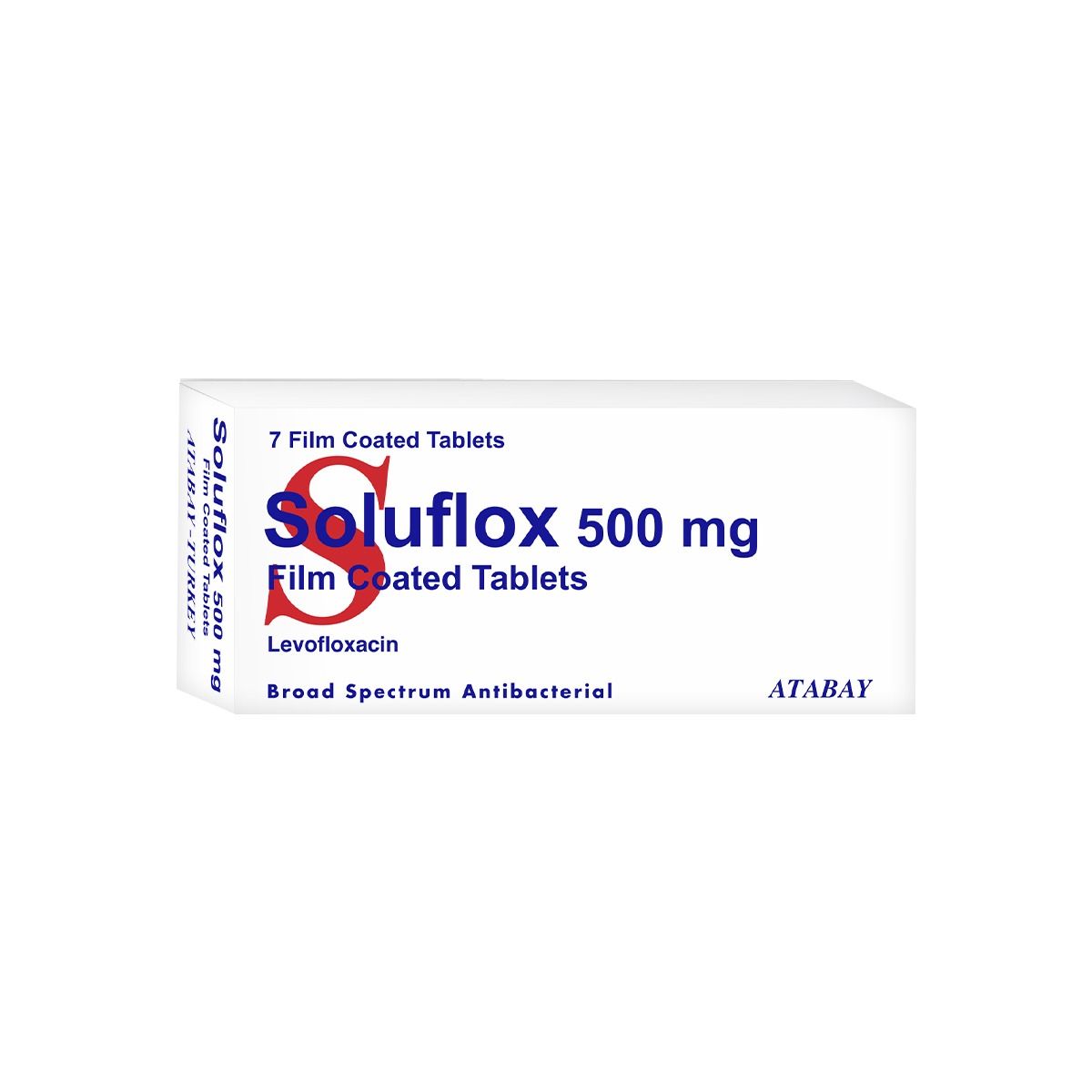
Soluflox - Soluflox 500mg 7 Tablets
| Status | Select a city |
| Brand country |  Turkey |
| Quantity and shape | 7 ტაბლეტი |
| Generics | levofloxacin |





- Description
- Reviews
სოლუფლოქსი /Soluflox / 500მგ შემოგარსული ტაბლეტები
პერორალური გამოყენებისთვის.
აქტიური ნივთიერება: თითო შემოგარსული ტაბლეტის შემადგენლობაში შედის 512,46მგ ლევოფლოქსაცინის ჰემიჰიდრატი, რაც 500მგ ლევოფლოქსაცინის ექვივალენტურია.
შემავსებლები: Avicel pH 102, კროსპოვიდონი, ჰიპრომელოზა, დისტილირებული წყალი, ნატრიუმის ოქტადეცენილ წყალბადის ფუმარატი, Opadry pink (გარსი).
|
პრეპარატის მიღებამდე ყურადღებით გაეცანით ინსტრუქციას, რადგანაც ის შეიცავს თქვენთვის მნიშვნელოვან ინფორმაციას. · შეინახეთ ინსტრუქცია. შეიძლება დაგჭირდეთ მისი გადაკითხვა. · If you have any further questions, ask your doctor or pharmacist. · This medicine has been prescribed for you. Do not pass it on to others. · If you go to a hospital, tell the doctor that you are taking this medicine. · Follow the instructions. Do not use higher or lower doses than recommended. |
Contents:
1. What Soluflox is and what it is used for
2. What you need to know before you take Soluflox
3. How to take Soluflox
4. Possible side effects
5. How to store Soluflox
1.What is Soluflox and when is it used
· Soluflox tablets are taken orally. The package contains 7 film-coated tablets, each containing 500mg of levofloxacin. The score line is intended for dividing the tablet.
· It belongs to the group of antibiotics called "fluoroquinolones". It inhibits the growth and multiplication of bacteria and helps to destroy them.
· Soluflox is used to treat infections caused by bacteria sensitive to the active substance, levofloxacin.
· Soluflox kills the bacteria causing the infection.
· Soluflox is used to treat the following infections:
-Sinusitis;
-Pulmonary infections in people with long-term breathing problems and pneumonia;
-Urinary tract infections, including bladder and kidney infections;
-Prostate gland infection, long-lasting;
-Skin and subcutaneous tissue infections, including muscles (often called soft tissues).
In some special cases, Soluflox tablets are used to reduce the risk of developing pulmonary disease, anthrax, or to prevent the worsening of the disease.
2.What you need to know before taking Soluflox
Do not take Soluflox if:
· You are allergic to levofloxacin, or any of the ingredients of this medicine, or other quinolone antibiotics (moxifloxacin, ciprofloxacin, or ofloxacin). Signs of an allergic reaction include: rash, difficulty swallowing or breathing, swelling of the lips, face, throat, or tongue.
· You have ever had epilepsy.
· You have ever had tendon problems, such as tendinitis (a tendon is the connective tissue that attaches muscle to bone), related to the use of quinolone antibiotics;
· You are a child or adolescent;
· You are pregnant, suspect you are pregnant, or are planning to become pregnant;
· You are breastfeeding.
Do not take this medicine if any of the above apply to you. If in doubt, consult your doctor or pharmacist before taking Soluflox.
Take special care with Solufloxacin if:
· you are 60 years of age or older;
· you are taking corticosteroids, which are also known as steroids (see section "Using Soluflox with other medicines");
· you have had a seizure/epileptic fit;
· you have suffered brain damage due to a stroke or other traumatic brain injury.
· you have kidney problems;
· you have glucose-6-phosphate dehydrogenase deficiency. In this case, when taking the drug, you will have blood-related problems;
· you have had mental health-related problems;
· Have you had heart-related problems: caution is required when using this medication if you personally have or have a family history of congenital QT interval prolongation (which is seen on an ECG, electrocardiogram of the heart), have a salt imbalance in the blood (especially low levels of potassium or magnesium in the blood), have a very slow heart rhythm (bradycardia), have a weak heart (heart failure), have a history of a heart attack (myocardial infarction), are female or elderly, or are taking other medications that cause changes on an ECG, or are taking a Vitamin K antagonist (such as warfarin), which may cause an increase in coagulation test values and/or bleeding (see section "Using Soluflox with other medications");
· Have you had liver-related problems;
· Do you have myasthenia gravis;
· Your diagnosis is an enlargement of a large blood vessel (aortic aneurysm or peripheral vascular aneurysm);
· Have you had an aortic dissection (tearing of the aortic wall);
· you have heart valve regurgitation;
· you have a family history of aortic aneurysm or aortic dissection or congenital heart valve disease, or other risk factors or predisposing factors (e.g., connective tissue disorders such as Marfan syndrome or Ehlers-Danlos syndrome, Turner syndrome, Sjogren's syndrome [inflammatory autoimmune disease] or Takayasu's arteritis, giant cell arteritis, Behcet's disease, high blood pressure or atherosclerosis or rheumatoid arthritis [joint disease], or endocarditis [heart infection]);
· you have diabetes;
· in case of sudden severe pain in the abdomen, chest or back, which may be a symptom of an aortic aneurysm or dissection (enlargement or swelling or rupture of the aorta), seek emergency medical attention immediately. The risk may increase if treated with systemic corticosteroids.
· If you develop shortness of breath, especially when lying on your back in bed, or notice swelling of your ankles, legs, or abdomen, or experience heart rhythm disturbances (a feeling of a fast and irregular heartbeat), contact a doctor immediately.
If you have experienced any serious adverse reactions in the past when taking a quinolone or fluoroquinolone, do not take fluoroquinolone/quinolone class antibacterial agents, including Soluflox. In this case, contact your doctor.
In rare cases, joint pain and swelling or tendon inflammation or rupture may occur. The risk is especially high if you are elderly (over 60 years of age), have had an organ transplant, have kidney problems, or are being treated with corticosteroids. Tendon inflammation and rupture may occur within the first 48 hours of starting treatment and up to several months after stopping treatment with Soluflox. At the first sign of pain or inflammation of a tendon (e.g., ankle, wrist, elbow, shoulder, or knee), stop taking Soluflox and contact your doctor. Avoid physical activity, as this may increase the risk of tendon rupture.
When taking Soluflox, avoid direct sunlight, and do not use sunlamps or solariums. If you have additional questions, contact your doctor before starting to take Soluflox.
In rare cases, symptoms of nerve damage (neuropathy) may develop, such as a feeling of pain, burning, tingling, numbness and/or weakness especially in the upper and lower limbs. In this case, stop treatment with Soluflox and contact a doctor immediately to prevent the development of a potentially irreversible condition.
Severe skin adverse reactions have been reported with the use of levofloxacin, including Stevens-Johnson syndrome, toxic epidermal necrolysis (TEN), and drug reaction with eosinophilia and systemic symptoms (DRESS).
· In the event of developing Stevens-Johnson syndrome/toxic epidermal necrolysis (SJS/TEN), red spots or circular patches initially appear, with blisters in the center. Also, ulcers may develop in the mouth, throat, nose, genitals, and eyes (red and swollen eyes). These serious skin reactions are often preceded by fever and / or flu-like symptoms. The rash may progress and cause peeling of large areas of the skin, a life-threatening complication, or a fatal outcome.
· In the case of DRESS, flu-like symptoms and a rash on the face appear, which spreads to the body and is accompanied by a high temperature, elevated liver enzyme levels, an increase in white blood cells (eosinophilia), and enlarged lymph nodes.
In case of serious skin reactions or the development of these signs and symptoms, immediately stop treatment with Soluflox and contact your doctor.
Fluoroquinolone/quinolone antibacterial agents, including Soluflox, are associated with very rare but serious side effects, some of which are long-lasting (months or years) or potentially irreversible or cause disability. This includes tendon, muscle and joint pain in the upper and lower limbs, difficulty walking, abnormal sensations such as burning, tingling, numbness (paraesthesia), sensory disturbances including impaired vision, taste, smell and hearing, depression, memory impairment, fatigue and serious sleep disturbances.
If you develop any side effects after taking Soluflox, stop treatment and contact your doctor immediately. Your doctor will decide whether to continue treatment considering other classes of antibiotics.
If any of the above applies to you, contact your doctor.
Taking Soluflox with food and drink
The absorption of Soluflox is not affected by food. The number of tablets recommended by your doctor can be taken before or after meals.
Pregnancy
Consult your doctor or pharmacist before taking this medicine.
Do not take Soluflox if you are pregnant, suspect you are pregnant, or are planning to become pregnant.
If you become pregnant during treatment with this medication, contact your doctor or pharmacist immediately.
Lactation
Consult your doctor or pharmacist before taking this medication.
Do not take Soluflox if you are breastfeeding.
Driving and using machines
Side effects such as dizziness, drowsiness, vertigo, or visual disturbances may occur when taking Soluflox. Some of these side effects may negatively affect your ability to concentrate and react. In such cases, avoid driving and performing tasks that require maximum concentration.
Important information about some of the ingredients of Soluflox
It does not contain any excipients that require a warning.
Using Soluflox with other medications
Tell your doctor or pharmacist if you are currently taking, have recently taken, or might take any other medicines, as these medicines may affect the effect of Soluflox or vice versa.
Tell your doctor, especially if you are taking any of the following medicines, as taking Soluflox with them may increase the risk of side effects:
-Corticosteroids, also known as steroids, which are used to treat inflammation: tendon inflammation and/or rupture may occur.
-Vitamin K antagonists, such as warfarin, which are used to thin the blood: bleeding may occur. Your doctor may ask you to have regular blood tests to check your blood clotting.
-Theophylline, which is used for breathing problems: when taken with Soluflox, a fit (seizures) may occur.
-Non-steroidal anti-inflammatory drugs (NSAIDs), which are used for pain and inflammation, such as: fenbufen, ketoprofen, ibuprofen, aspirin and indomethacin. When taken with Soluflox, a fit (seizures) may occur.
-Cyclosporine, which is used after organ transplantation: side effects of cyclosporine may occur.
-Drugs that affect heart rhythm: antiarrhythmic drugs (e.g. quinidine, hydroquinidine, disopyramide, sotalol, dofetilide, ibutilide and amiodarone), antidepressants (tricyclic antidepressants such as amitriptyline and imipramine), antipsychotics and antimicrobials (macrolide antibiotics such as erythromycin, azithromycin and clarithromycin).
-Probenecid, used to treat gout, or cimetidine, used to treat ulcers and heartburn. Special care is needed when using these medicines with Soluflox. If you have kidney problems, your doctor will prescribe a lower dose.
Do not take Soluflox with the following medicines. Soluflox may affect how these medicines work:
Iron preparations used to treat anaemia; zinc supplements; antacids containing magnesium or aluminium used to treat acidity or heartburn; didanosine or sucralfate used to treat stomach ulcers (see section 3).
Urine tests may show a false positive result in patients taking strong painkillers "opiates" along with Soluflox. If your doctor has prescribed a urine test, tell them you are taking Soluflox tablets.
Soluflox may cause a false negative result during laboratory tests for tuberculosis.
Tell your doctor or pharmacist if you are taking or have recently taken any other medicines, including medicines obtained without a prescription.
3.How to take Soluflox
Instructions, doses/frequency of administration:
Your doctor will tell you what dose and how long to take the medicine. The dose of treatment depends on the type and location of the infection.
Soluflox is recommended to be taken in the following doses:
|
Type of infection |
Daily dose (depending on the severity of the infection) |
|
Sinusitis |
500 mg once a day |
|
Lung infections, in patients with long-term breathing problems |
500 mg once a day |
|
Pneumonia |
500 mg once or twice a day |
|
Urinary tract infections, including kidneys and bladder |
250 mg or 500 mg once a day |
|
Skin and subcutaneous tissue infections, including muscles |
500 mg once or twice a day |
|
Prostate gland infections |
500 mg once a day |
|
Anthrax (post-exposure) |
500 mg once a day |
The duration of treatment depends on the severity of the infection.
Method of administration
Soluflox film-coated tablets are taken orally. Swallow the tablet whole with water. You can divide the tablet at the score line. The tablets can be taken with or without food at any time.
If you are taking iron-containing preparations, zinc supplements, antacids, didanosine or sucralfate, do not take them together with Soluflox. There should be an interval of at least 2 hours between taking these medications and Soluflox.
Sun protection
Avoid direct sunlight during treatment with this medication or for 2 days after stopping it. Your skin may become more sensitive to the sun, causing burns or blisters. Therefore, use a sunscreen with a high SPF. When going out in the sun, always wear a hat and clothing that covers your arms and legs. Avoid sunbathing.
Different age groups:
Children:
Soluflox is not used in children and adolescents.
Elderly:
შესაძლოა საჭირო გახდეს სოლუფლოქსის დოზის შემცირება ხანდაზმულებში, თუ არსებობს თირკმლის პრობლემები.
განსაკუთრებული პირობები:
თირკმლის ფუნქციის დარღვევა:
თირკმლის ფუნქციის დარღვევის შემთხვევაში, რეკომენდებულია სოლუფლოქსის დოზის შემცირება და რეგულარული მონიტორინგი.
ღვიძლის ფუნქციის დარღვევა:
ღვიძლის ფუნქციის დარღვევის დროს სოლუფლოქსის დოზის კორექცია საჭირო არ არის.
ექიმი გადაწყვეტს სოლუფლოქსით მკურნალობის ხანგრძლივობას. არ შეწყვიტოთ მკურნალობა ექიმთან კონსულტაციის გარეშე.
გაიარეთ კონსულტაცია ექიმთან ან ფარმაცევტთან, თუ ფიქრობთ რომ სოლუფლოქსის ეფექტი ძალიან ძლიერია ან ძალიან სუსტი.
დოზის გადაჭარბება
დანიშნულზე მეტი დოზის მიღების შემთხვევაში, დაუყოვნებლივ მიმართეთ ექიმს ან ფარმაცევტს.
თუ შემთხვევით მიიღეთ დანიშნულზე მეტი დოზა, დაუყოვნებლივ მიმართეთ ექიმს ან ფარმაცევტს. თან იქონიეთ წამლის კოლოფი, რათა ექიმმა იცოდეს, რა მედიკამენტი გაქვთ მიღებული. შეიძლება განვითარდეს შემდეგი სიმპტომები: კრუნჩხვითი შეტევები, კონფუზია, თავბრუსხვევა, გონების დაკარგვა, ტრემორი, გულის პრობლემები, არათანაბარი გულისცემა და გულისრევა ან კუჭის წვა.
დოზის გამოტოვება
If you forget to take a dose, take it as soon as you remember, unless it is almost time for your next dose.
Do not take a double dose to make up for a forgotten dose.
Stopping treatment with Soluflox
Do not stop treatment with Soluflox, even if you feel better. It is important that you complete the course prescribed by your doctor. If you stop taking the tablets too soon, the symptoms of the disease may return, your condition may worsen, or the bacteria may become resistant to the medication.
4.Possible side effects
Like all medicines, Soluflox can cause side effects, although not everybody gets them.
The frequency of side effects is defined as follows:
Very common: may affect more than 1 in 10 people
Common: may affect up to 1 in 10 people
Uncommon: may affect up to 1 in 100 people
Rare: may affect up to 1 in 1,000 people
Very rare: affects less than 1 in 10,000 patients
Frequency not known: cannot be estimated from the available data.
If any of the following side effects occur, stop taking Soluflox and contact your doctor or the nearest hospital emergency department immediately:
Frequency not known
· Allergic reaction: Symptoms: rash, difficulty swallowing or breathing, swelling of the lips, face, throat, or tongue.
These side effects are of serious severity.
The occurrence of any of these symptoms means that you have a serious allergy to Soluflox. You may need urgent medical attention or hospitalization.
If any of the following side effects occur, contact your doctor or the nearest hospital emergency department immediately:
Rare (affects less than 1 in 1,000, but more than 1 in 10,000 patients)
· Bloody diarrhea, which may be accompanied by cramps and high temperature. This may indicate serious bowel problems.
· Inflammation and pain in the tendons. The Achilles tendon is particularly sensitive, in some cases the tendon may rupture.
· Convulsions (seizures).
Very rare (affects less than 1 in 10,000 patients)
· Burning, tingling, pain or numbness. These may be signs of neuropathy.
Unknown frequency
· Serious skin rash, including blisters and peeling of the skin around the eyes, lips, mouth, nose and genitals.
· Loss of appetite, yellowing of the skin and sclera of the eyes, dark urine, itching, abdominal pain. This may indicate liver problems.
If your vision deteriorates or any kind of problem develops while taking Soluflox, contact an ophthalmologist immediately.
All these side effects are of serious severity. You may need urgent medical attention.
If you experience any of the following symptoms, contact your doctor:
Common
· Sleep problems
· Headache, dizziness
·Nausea (vomiting) and diarrhea
· Increase in the level of some liver enzymes in the blood
Uncommon
· Changes in the number of other bacteria and fungi, infections caused by Candida fungi, which require treatment.
· Change in the number of white blood cells, which is shown in blood test results (leukopenia, eosinophilia).
· Agitation, confusion, nervousness, sleepiness, trembling, dizziness (vertigo).
· Shortness of breath (dyspnea).
· Decreased sense of taste, loss of appetite, gastrointestinal disorders (dyspepsia), abdominal pain, bloating and constipation.
· Itching and skin rash, severe itching and hives (urticaria), excessive sweating (hyperhidrosis).
· Muscle or joint pain.
· Blood tests may show changes in the liver (increased bilirubin) or kidneys (increased creatinine).
· Weakness
Rare
· Bruising and bleeding caused by a decrease in the number of platelets (thrombocytopenia).
· Decrease in white blood cells (neutropenia)
· Increased immune reactions
· Decrease in blood sugar level (hypoglycemia). This is important for people with diabetes.
· Hallucinations, paranoia (the patient sees and hears things that do not exist outside their mind), altered thoughts (psychotic reactions), suicidal thoughts or actions.
· Depression, mental problems, restlessness (agitation), abnormal dreams or nightmares.
· Tingling sensation in the legs and arms (paresthesia);
· Vision (blurred vision) and hearing (ringing in the ears) problems;
· Increased heart rate (tachycardia) or low blood pressure (hypotension);
· Muscle weakness. This is important for people with myasthenia gravis (a rare disease of the nervous system);
· Convulsions
· Changes in kidney function and in some cases kidney failure, caused by an allergic reaction of the kidney, so-called interstitial nephritis.
· Impaired water excretion from the body due to the inability to suppress the secretion of antidiuretic hormone located in the brain (syndrome of inappropriate antidiuretic hormone secretion).
· Fever
Side effects of unknown frequency
· Decrease in red blood cells (anemia), which causes pale or yellow skin due to damage to red blood cells.
· Decrease in the number of all types of blood cells (pancytopenia).
· Fever, sore throat, and general weakness caused by a decrease in white blood cells (agranulocytosis).
·Anaphylactic shock
· Increase in blood sugar level (hyperglycemia) or decrease, which may cause coma (hypoglycemic coma). This is important for patients with diabetes.
· Loss of sense of smell and taste (parosmia, anosmia, ageusia).
· Difficulty moving and walking (dyskinesia, extrapyramidal disorders).
· Temporary loss of vision
· Hearing impairment or loss
· Rapid heartbeat, life-threatening irregular heart rhythm, including cardiac arrest, change in heart rhythm (prolongation of the QT interval on ECG, electrical activity of the heart).
·Difficulty breathing or shortness of breath (bronchospasm).
· Allergic lung reactions
· Inflammation of the pancreas (pancreatitis)
· Inflammation of the liver (hepatitis)
· Increased skin sensitivity to sun and ultraviolet radiation (photosensitivity)
·Inflammation of blood vessels caused by an allergic reaction (vasculitis).
·Inflammation of the oral cavity tissues (stomatitis)
·Muscle breakdown and damage (rhabdomyolysis)
· Joint swelling and redness (arthritis).
· Pain in the back, chest, and upper and lower limbs.
· Porphyria attacks (a disease affecting metabolism) in patients with porphyria.
· Chronic headache with or without visual impairment (mild form of intracranial hypertension).
· Temporary loss of consciousness (syncope).
· Serious skin rash, including Stevens-Johnson syndrome, erythema multiforme, and toxic epidermal necrolysis. Characterized by reddish flat spots or circular spots with blisters in the center, skin peeling, and ulcers may also develop in the mouth, throat, nose, genitals, and eyes. In many cases, it is preceded by fever and/or flu-like symptoms.
· Loss of appetite, yellowing of the skin and whites of the eyes, dark urine, itching, abdominal pain. This may indicate liver problems, including fatal liver failure.
· Bloody diarrhea, which may be accompanied by cramps and high fever. This may indicate serious bowel problems.
· Inflammation and pain of tendons and ligaments. The Achilles tendon is particularly sensitive.
· Risk of suicidal thoughts or behavior.
Long-lasting (for months and years) or permanent adverse reactions, such as abnormal sensations (neuropathy), tendon inflammation, tendon rupture, joint pain, limb pain, difficulty walking, feeling of pain, burning, tingling, numbness, depression, fatigue, sleep disturbances, memory impairment, as well as impairment of vision, taste, smell and hearing, have been associated with the use of fluoroquinolone and quinolone group antibiotics, in some cases, regardless of pre-existing risk factors.
Cases of enlargement of the aortic wall and weakening or rupture of the aortic wall (aneurysm and dissection), as well as heart valve regurgitation, which can be fatal, have been reported in patients receiving fluoroquinolone/quinolone (see section 2).
These are mild side effects of Soluflox.
If you experience any side effects not described in this leaflet, contact your doctor or pharmacist.
5. How to store Soluflox
Keep out of the reach of children, in the original packaging.
Store at a temperature not exceeding 25°C, in the original packaging.
Dispensing rule:
Pharmaceutical product group II, dispensed with form №3 prescription
Use according to the expiration date.
Do not use Soluflox after the expiration date printed on the label or packaging.
Do not use Soluflox if the product and/or packaging is damaged.
Also, see: Levostar 500mg 7 tablets GMP
|
Warning: Serious adverse reactions, including tendinitis and tendon rupture (inflammation or tearing of the tissues connecting bones and muscles), peripheral neuropathy (damage to peripheral nerves for any reason - loss of sensation), central nervous system effects, and exacerbation of myasthenia gravis (a form of muscle weakness). · Fluoroquinolone antibiotics, including levofloxacin, the active substance of Soluflox, can cause potentially irreversible adverse reactions and disabling conditions: -Tendon inflammation (tendinitis; symptoms may include severe joint pain, swelling, and redness) and tendon rupture (symptoms may include severe muscle pain, sudden and rapid bruising, weakness, inability to move) -Damage to peripheral nerves for any reason - loss of sensation (peripheral neuropathy; symptoms may include nerve pain, numbness and tingling in the hands and feet, muscle weakness, trembling hands) -Effects on the central nervous system (symptoms may include hallucinations (the patient sees and hears things that do not exist outside their mind), anxiety reactions, depression, suicidal thoughts or behavior, insomnia, severe headache, and confusion). If these reactions occur, stop taking Soluflox immediately and contact your doctor or pharmacist. · Fluoroquinolones, including Soluflox, may exacerbate muscle weakness in patients with myasthenia gravis (a disease that causes muscle weakness). The use of Soluflox is not recommended in patients with any form of muscle weakness. Consult a doctor before taking Soluflox. · Since fluoroquinolones, including Soluflox, are known to cause serious adverse reactions, their use for the following indications is possible only in the absence of alternative treatment options. -Acute bacterial sinusitis (newly developed inflammation of the sinuses), uncomplicated urinary tract infection (uncomplicated infection of the urinary tract), acute bacterial exacerbation of chronic bronchitis (re-exacerbation of chronic inflammation of the bronchial mucosa). |
Translated by AI


